
To Become an Emissary of the Tathagata? Begin Within Your Own Heart
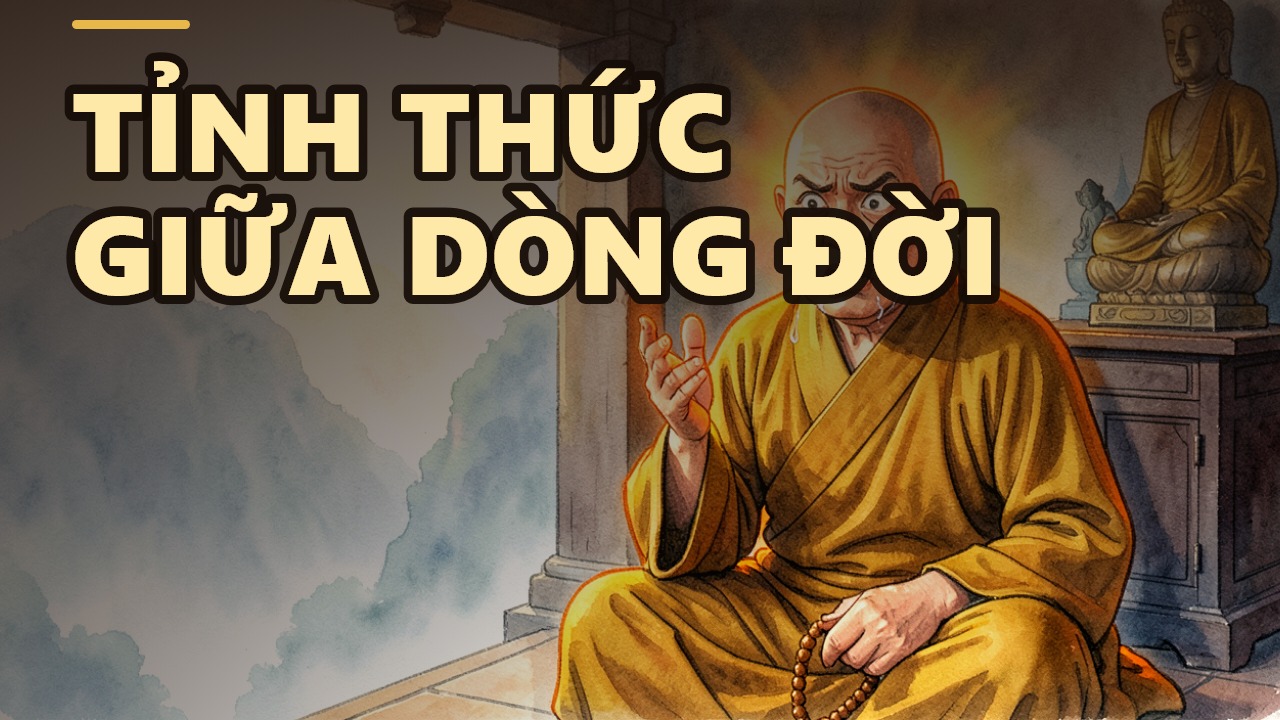
Have you ever paused amidst the rush of life and asked yourself: “What am I living for?” Many people, whether wealthy or poor, experience a sense of weariness and confusion when looking back on a life filled with duties, responsibilities, and worries. On the summit of Huong Mountain, amidst the mist, Master Thich Chan Quang posed this very question for us, and offered a direction: to become an emissary of the Tathagata, we must first turn our gaze inward to ourselves.
## Awakening to This Human Life
Life is a series of hardships and concerns. Everyone must experience aging, illness, and death. But what is more frightening is that most of us do not know where we are headed after we close our eyes. The Master says:
> Death is gradually approaching; hair has turned grey, health has declined, and diseases have begun to encircle us. Not knowing what we live for, not knowing where we go after death.
This is a profound reminder: without awakening, we will continue to drift in ignorance, unable to see the path home.
## Over Ninety Percent of Beings Become Hungry Ghosts After Death – Do Not Be Complacent
The Master warns that the majority of beings become hungry ghosts after death, and the cause lies in our small daily habits: pouring away leftover rice, discarding half-finished drinks, wasting food. These seemingly harmless actions create the karma for experiencing constant hunger. He teaches:
> Eating half a bowl of rice and throwing the rest away. Dumping spoiled food from the refrigerator… All these causes lead to becoming a hungry ghost.
The ancients said, “a grain of rice is like a jewel from heaven,” but today we waste it freely. There is a story of an old abbot who secretly ate his disciples’ leftover rice to prevent them from creating negative karma for the entire monastery, fearing everyone would sow the seeds for a life as a hungry ghost. This action reflects deep compassion and understanding of the law of cause and effect.
## Karma Never Disappears – Every Action Leaves an Imprint
The Master tells a story of two friends: one left home to become a monk and attained the first stage of enlightenment, while the other was wealthy but unintentionally asked that saint to fetch his comb, forcing the saint to become his servant for thirty lifetimes. This illustrates how karma is incredibly subtle and formidable. The Master emphasizes:
> Karma is terrifying in this way. Therefore, in this life, there are times when we unintentionally, unknowingly, out of ignorance, create evil or bad karma that others are unaware of.
Thus, each of us must be mindful in every thought, word, and deed, because every action impacts our own future.
## The Opportunity to Become an Emissary of the Tathagata
When we encounter the Buddha’s teachings, we realize we have lived wrongly, and we begin to repent and practice. At the temple, we receive three supreme blessings that the world cannot offer: paying homage to the Buddha, chanting and reading the Buddha’s words, and living close to the monastic Sangha. The Master says:
> We receive the first blessing of paying homage to the Buddha. We get to read and chant the Buddha’s teachings. We get to be near ordained monks and nuns.
These three blessings plant noble seeds for future lives: wealth, status, or talent. But more importantly, we gain a refuge for our mind and heart, a direction to become an emissary of the Tathagata, bringing the Dharma to all.
## Living as an Emissary of the Tathagata
To be an emissary of the Tathagata is simply to live mindfully, without waste, without creating harmful karma, and always oriented toward the Three Jewels. The Master encourages us: “From now on, strive to practice, strive to cultivate merit so that when we die, we do not fall back into the wretched cycle of human destiny.” If one is reborn, a person with merit can choose their own path, their work, and where to bring the Dharma. This is the path of a noble being.
## Conclusion: Begin Today
Every time we visit the temple, every time we bow to the Buddha or chant sutras, let us remember that we are taking refuge in the Three Jewels, planting seeds of peace and wisdom. Let us start with the smallest things: not wasting food, guarding our speech, thinking kindly. This is how you become an emissary of the Tathagata in your daily life. The mist may cover Huong Mountain, but the light of the Dharma still shines for those who know how to return.
AI-assisted translation from the Vietnamese original.
Read in Vietnamese →