
The Purpose of Practice: Have You Identified It Correctly?
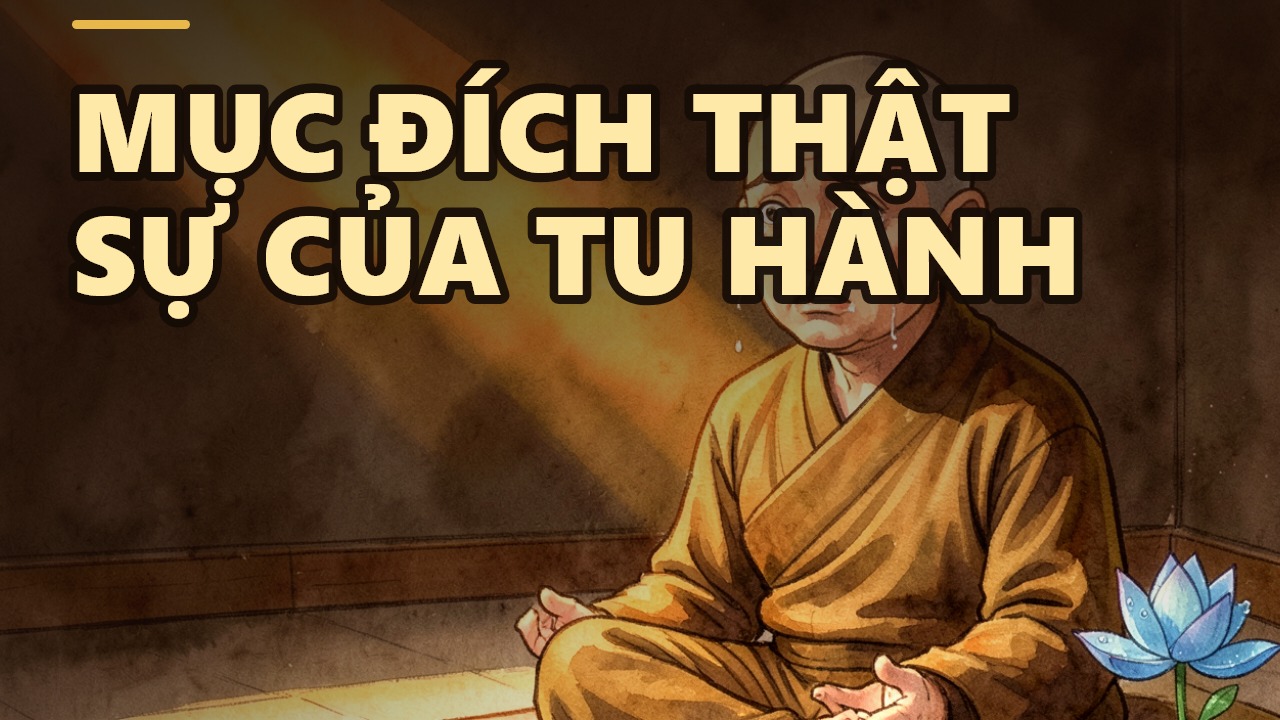
Have you ever asked yourself, "What is the purpose of spiritual practice?" Some say it is for peace, others for health, and still others to avoid calamity. However, in his first dharma talk at the Hue Minh Monastery retreat, Venerable Thich Chan Quang revealed a deeper purpose — one that not everyone recognizes.
### The Primary Goal: Liberation and Enlightenment
When asked why they practice, many people answer, "To achieve liberation and enlightenment." This is a correct response, but it remains only a foundation. The Venerable emphasized that while enlightenment and liberation are the primary goals, truly understanding this depth is not easy for ordinary minds. Anyone who approaches Buddhism without recognizing this truth does not yet understand the Dharma, and their practice may go astray.
To genuinely yearn for liberation, we must see the true nature of suffering in life. Ordinary people often drown in illusory happiness, but those with superior wisdom recognize that everything is impermanence (anicca) and suffering (dukkha). This is why, when the Buddha taught on the Truth of Suffering, the Arhat disciples immediately attained realization — because they already possessed the wisdom to see reality as it is.
### Secondary Goals: Right View and Ethics
On the path of cultivation, besides the main goal, we must also achieve secondary objectives. These include taking monastic vows to advance further on the path of liberation, cultivating right view to understand scriptures correctly and avoid wrong views, building holy ethics to purify the mind/heart, and associating with good spiritual friends to learn from wise teachers and virtuous companions.
The Venerable warned that without right view, the more one practices, the more merit is lost, and the more one deteriorates. If practice nurtures pride or a sense of superiority over others, then wrong view has already entered. Therefore, the first step for a student of the path is to pray for meeting a wise teacher and good friends, so as to receive right view and avoid getting lost in the forest of wrong views.
### Cultivating a Holy Ethical Mind
This is a goal that society can accept and highly value. A practitioner, regardless of religion or title, should be seen as ethical, gentle, free from anger, and uncorrupted. To achieve this, we must fight against the fetters — the instincts of greed, hatred and delusion, selfishness, and pride — which surge forth every day.
The Venerable taught about "wise attention" (yoniso manasikara), which is how we direct our mind/heart in each action. When receiving offerings, we should think: "This comes from the sweat and tears of others; I vow to practice diligently to repay their kindness." When someone bows to us, we should reflect: "I am not yet worthy; I offer this bow to the Buddha." Through such wise attention, we eradicate pride and build a holy character.
Once the mind is purified, every step and gesture radiates proper dignity and adherence to the Dharma, inspiring respect in others and strengthening faith in the Three Jewels. This generates boundless blessings from merit.
### Associating with Good Friends and Creating Positive Connections
Living in a world full of faults, we need a favorable environment for practice. The Venerable shared that happiness lies in living within a Sangha community composed entirely of sincere practitioners. However, to help sentient beings, we must actively create positive connections with them rather than passively waiting. In the Avatamsaka Sutra, the Buddha said, "Be an uninvited guest for the sake of sentient beings."
A true practitioner does not fear solitude, but for the benefit of all beings, they proactively reach out to everyone, sowing seeds of connection to guide them. Both aspects of merit — self-liberation and helping others — must be cultivated over many lifetimes.
### Living Fully in Each Moment
Spiritual practice is not something distant. In every meal, every greeting, and every interaction, we can practice wise attention. Let us begin today with a determination: to practice with the correct purpose, maintain right view, build ethics, and open our hearts to all beings. This is the path that leads us to liberation, enlightenment, and the fulfillment of the bodhisattva vow.
AI-assisted translation from the Vietnamese original.
Read in Vietnamese →