
The Purpose of Life: A Light at the End of the Road or a Dark Shadow?
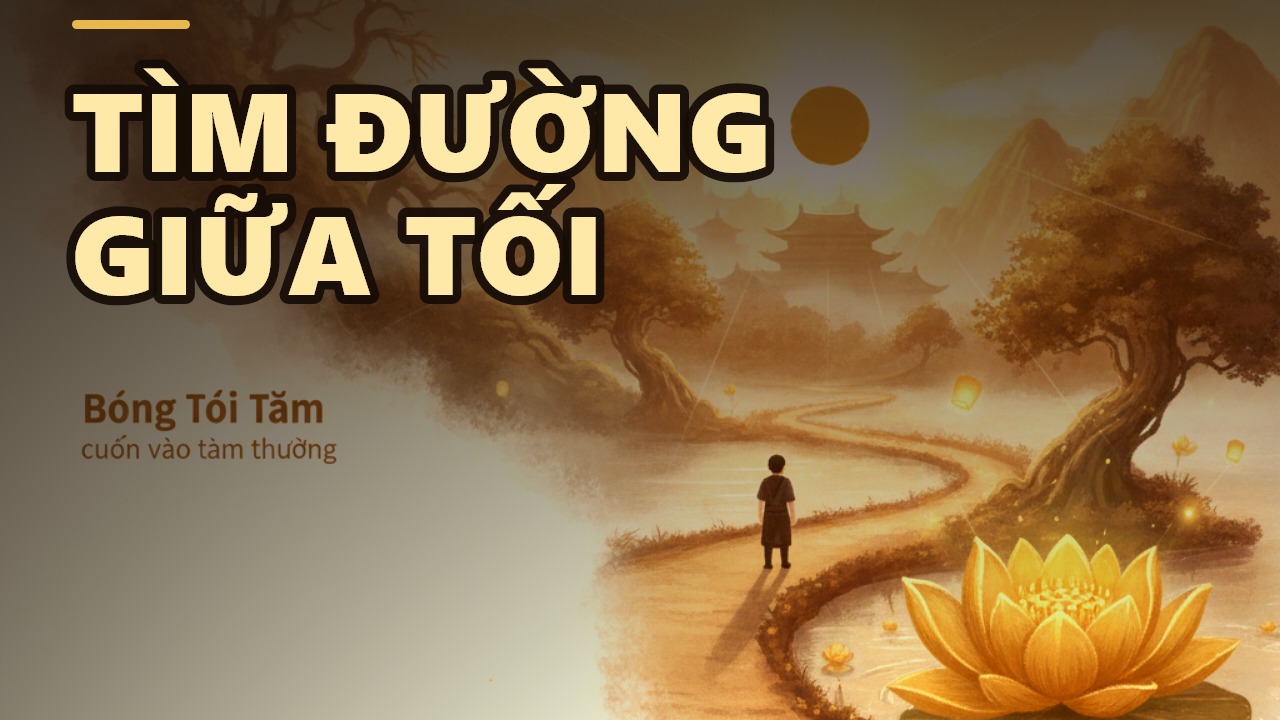
In the Vu Lan season, as we return to remember profound debts of gratitude, we often hear that life is a journey. But does this path have a destination? And if it does, what is yours? This seemingly simple question marks the beginning of an important spiritual journey.
Venerable Thich Chan Quang guided the assembly in his dharma talk on "The Purpose of Life." He led us from that initial question to deep answers, prompting each person to reflect on the path they are currently walking.
## A Path Without a Destination Sweeps Us Away
According to the Venerable, if we do not find a purpose for our lives, the flow of existence will sweep us into mediocrity, sin, and suffering. Ancient sages and enlightened beings diligently sought noble purposes so that at the end of their journey, light would shine brightly and happiness would overflow. Conversely, if we only chase fleeting pleasures along the roadside, we will eventually stop in darkness and mud.
"If we cannot find that purpose of life, the stream of existence will carry us away with its trivialities, sins, and sufferings."
This is a warning for those living aimlessly. A meaningless path leads to a tragic conclusion where one realizes too late that they lived in ignorance. It is not just the pain of old age, but also poverty, loneliness, and illness. As illustrated by the story of a woman who indulged in reckless behavior, she ended up alone in sickness, abandoned by everyone.
## Seeing Far – The Mark of Wisdom
In his teaching, the Venerable highlighted the difference between a wise person and a shallow one. Those lacking wisdom see only what is immediately before them; they only recognize anger when someone’s face turns red or they start shouting. A wise person, however, recognizes emotions before they arise, allowing them to avoid negative actions. Life is similar. If we only know how to work today to eat tomorrow, we belong to the category of the unenlightened. But by understanding cause and effect (karmic law) across many lifetimes, we can see the past, present, and future, attaining true wisdom.
"A person without wisdom sees only a very short span of time. A person with wisdom sees a very long span of time."
From this, we learn tranquility. Wise people are rarely entangled by minor issues spanning mere months or years. They think about future lives. The Venerable stated that even the most basic Buddhist practitioner must be able to look ahead several hundred years, which means planning for the next few rebirths. This is the life purpose we should strive toward.
## Indulgence Increases Ego, Depleting Blessings Quickly
A key principle of the mind/heart is that the more we indulge in pleasure, the more selfish we become. The Buddha taught us to restrain sensations, not to live dryly, but because increased pleasure strengthens the ego, thickens attachment to self, and deepens delusion. This causes us to lose the path to liberation. Using spending as an example, three people might spend the same amount, but using it for merit increases blessings, meeting needs keeps them stable, while wasting it on frivolous entertainment depletes them a hundredfold. Places like nightclubs, bars, and drug dens are factories for producing selfishness.
"The more we seek out sensations and pleasures, the stronger the tendency toward selfishness becomes in our minds."
People who live for temporary passions do not truly love anyone. They merely use each other for sensation. When their blessings run out, they face loneliness, illness, and even fall into suffering. This is the fate of those without purpose.
## Those Who Know the Dharma Live for Others
In contrast, those who understand the Dharma devote their entire lives to serving others with humility. They do not seek personal joy, so they are not besieged by selfishness. In old age, they are supported by their accumulated merit. The Venerable shared a story of a person who neither married nor became a monk, worrying about who would care for them in old age. The answer was simple: "Society will take care of you." This is actually blessings from merit sustaining them. Those with merit have people around them who care; those without merit lie in nursing homes, where one caregiver tends to ten residents. Thus, living virtuously is the way to accumulate merit and the vehicle leading to happiness.
"Devote yourself humbly to caring for everyone."
The Vu Lan season reminds us of the kindness of parents and teachers. It also prompts us to ask: What is my life’s purpose? Begin by expanding your vision, trusting in cause and effect (karmic law), and living altruistically and humbly. This is how we reach the end of the road bathed in light and blooming flowers, as the Venerable wishes. Life is a journey, and the best destination is the path we walked with compassion and wisdom.
AI-assisted translation from the Vietnamese original.
Read in Vietnamese →