
One Plate of Rice, Two Hearts: Helping or Serving?
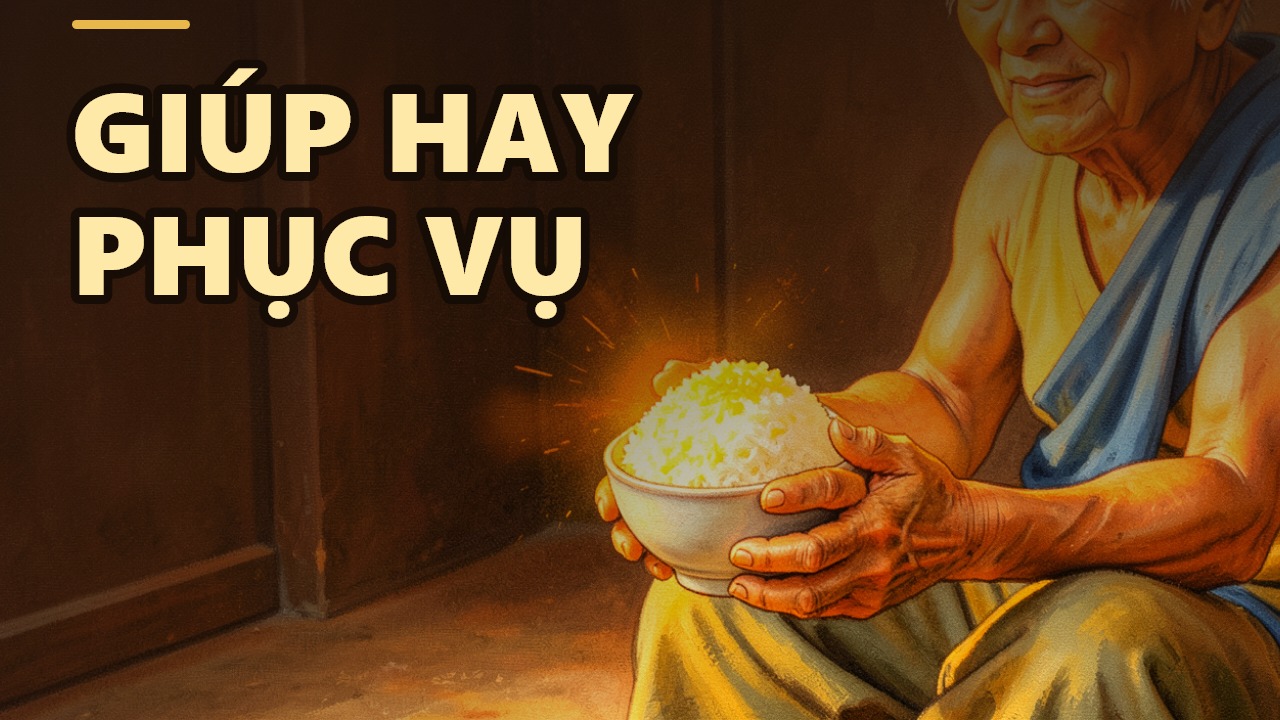
Helping or serving? They may seem similar, but they represent two distinct states of mind that determine the merit and demerit of a practitioner. This is the core teaching of Venerable Thich Chan Quang.
Have you ever carried a plate of rice to a poor person sitting in a corner of the temple? A gentle joy rises within you as you think, "I am helping someone." But there is a subtle question: Is this truly helping, or is it serving? And what lies hidden behind such an action?
## Life is Full of Difficult Problems
When we are born into this world, we face countless difficult problems. From raising children and managing finances to our spiritual practice, life presents endless challenges. Confucius once lamented, "Being human is difficult." Venerable Thich Chan Quang begins his dharma talk with this very sentiment.
Confucius sighed that being human is indeed hard. We often harbor the illusion that we have no faults. In reality, everyone has shortcomings. Those who do not practice the Dharma believe they have nothing to improve upon. Only those who engage in practice realize their own limitations and thus become humble.
Ordinarily, people think they are without error. All of us suffer from the delusion that we are perfect. This is why we must study the Buddha's teachings (Dharma) and expand our knowledge to navigate myriad situations. Wisdom helps us avoid many mistakes, from sophisticated deceptions to improper conduct toward others.
## Status and Distinction
Invisible distinctions exist among us regarding status: wealth, poverty, education, and position. When a rich person sits beside a poor one, both feel uncomfortable. Yet, separating them would be a moral failing. How should we handle this? It requires a pure mind to see clearly. Venerable Chan Quang explains:
If we lack morality, we might ignore the poor, thinking they deserve their fate due to past stinginess. However, if deep morality resides in our heart and soul, we naturally wish for the other person not to remain in suffering. Even if we cannot help yet, this mere intention is morality. It is conscience; it is wisdom.
This desire gives rise to the humane slogan, "No one left behind." In truth, this reflects the morality deeply embedded in each person’s conscience.
## Helping or Serving?
Imagine two people before you: one poor, one rich. You bring a plate of rice to both. The action appears identical, but the meaning differs. For the poor, it is helping; for the rich, it is serving. The teacher clarifies:
If you help someone because they are poor, what is your psychological state? Do you feel a slight pride? Conversely, if the person is wealthier than you, your mindset becomes one of humility because you are serving.
These two mental states determine karma and merit. Pride diminishes blessings from merit, while humility creates merit. Controlling these impulses is difficult; only through meditative concentration can we perceive the subtle movements of the mind.
## The Desire to Help and Responsibility Toward Suffering
When we witness suffering, we bear responsibility. If we cannot assist physically, we must at least hold the desire to help. The teacher emphasizes:
If any scene of suffering enters your sight, it suddenly becomes your responsibility. Your heart must wish to help. Keep that desire intact. By wanting to help, you avoid creating negative karma.
Hearing of suffering without the desire to help immediately generates bad karma. Holding the wish to help blocks this negativity and plants good causes for future lives. This is the seed of a generous and abundant spirit in the future.
## Equality is Morality, Not a Mechanism
When the temple serves meals, everyone receives the same plate of rice. Both the rich and the poor find joy in this equality. The teacher notes:
Equality is a form of morality, not merely a mechanism. People treat each other equally because they possess morality and kindness, not because they are forced by threat.
True equality does not come from coercion but from compassion. When carrying a plate of rice, you serve without distinguishing who the recipient is. That is genuine equality.
Life offers many difficult problems, but some are small, like bringing a plate of rice. Start there. Each time you carry food or offer water, ask yourself: Is my heart proud or humble? This is the most subtle path of practice, and it is the way to navigate a life full of uncertainty.
AI-assisted translation from the Vietnamese original.
Read in Vietnamese →