
An Effective Buddhism: How Can the Temple Become a Home for Lay Followers?
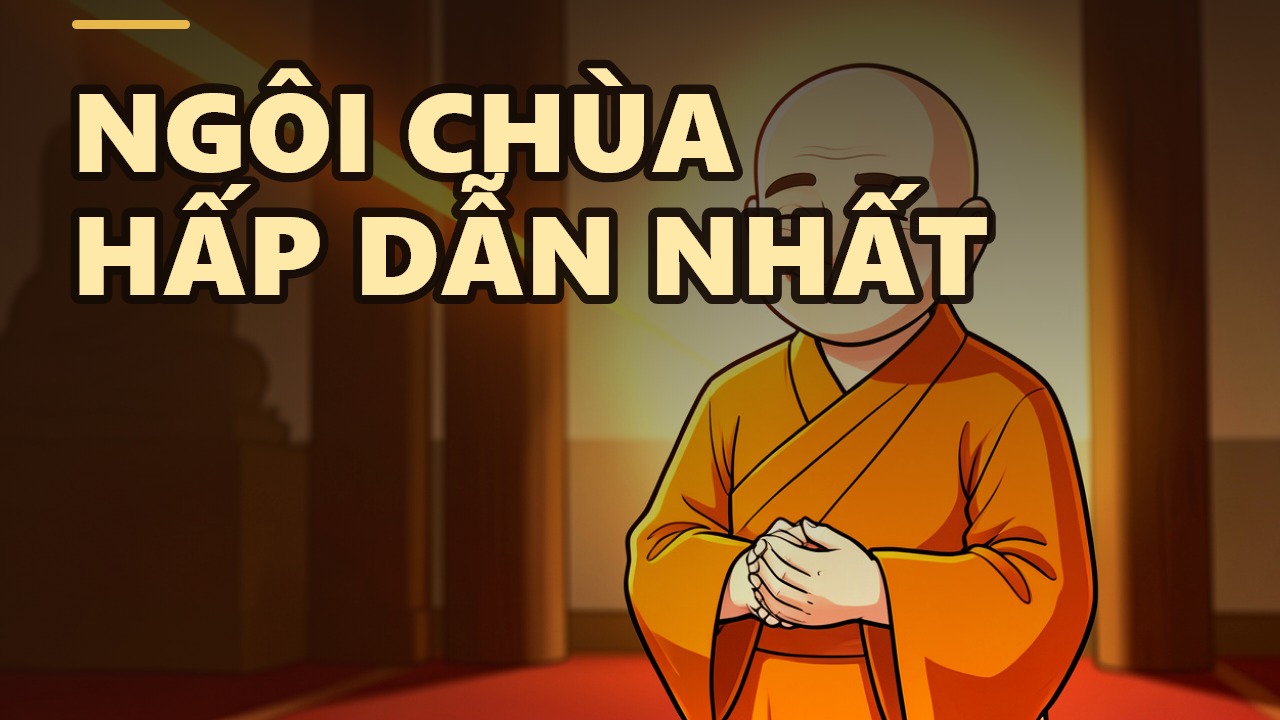
Have you ever stepped into a temple and felt lost, unsure of who you are in that space? Or perhaps there is a temple where you feel as though you have returned home, wrapped in an unfamiliar warmth and peace. This difference does not lie in beautiful Buddha statues or lush greenery, but in the people living within those walls. Venerable Thich Chan Quang has shared valuable insights on building an effective practice of the Buddha's teachings (Dharma). His talk in Thanh Hoa was addressed not only to monastics but also to lay followers, with the sincere wish to create a vibrant and meaningful Buddhist community.
### The Attraction of the Temple: Not Found in Statues or Trees
Many believe that a beautiful temple, large statues, or abundant fruit trees attract lay followers. However, Venerable Thich Chan Quang observes that it is the practitioners residing there who truly draw people in. A temple may fall into disuse if no one practices there. Conversely, when there is a virtuous teacher with strong moral integrity, lay followers will seek them out, even if the temple is small.
It is the conduct of the practitioners inside that makes the temple attractive; the building itself holds no power to draw people.
Therefore, the role of the Sangha in teaching and transforming hearts is vital. They are not merely residents of the temple, but lamps illuminating the human heart, serving as bridges connecting lay followers to the Buddha's teachings (Dharma).
### Two Types of People Who Come to the Path: Wisdom and Emotion
The Venerable analyzes two types of people who approach Buddhism. The first group possesses wisdom. They study sutras and books independently, developing a love for the path through understanding. These individuals do not place heavy demands on the monastics. The second group consists of ordinary people who live emotionally. They rely heavily on their teachers and expect care and attention. Such people often seek a teacher with "spiritual" abilities—someone who can offer guidance during crises or provide reassurance. So, which path should a practitioner follow?
### Morality and Spirituality: The Practitioner Needs Both
Venerable Thich Chan Quang emphasizes that an excellent teacher must possess both morality and spiritual capacity. Morality is the foundation and core, while spirituality serves as a skillful means to help sentient beings in urgent distress. Practitioners should choose the fundamental path of ethics, yet they also need certain spiritual capabilities to rescue those who suffer.
A true teacher must embody both qualities. Only by having both can a teacher truly attract lay followers.
Nevertheless, the Venerable reminds us: Monastics must never forget the goal of non-self (anatta) taught by the Buddha. In every action and thought, practitioners must orient themselves toward non-self (anatta), ensuring they are not controlled by the ego.
### Rituals Must Be Inclusive: Do Not Let Chanting Become a Wall
Another crucial point is ritual. If chanting is reserved solely for monastics, leaving lay followers confused, the temple becomes alienating. On the other hand, when chants are adapted into Vietnamese so everyone can participate and understand the meaning, emotions arise naturally. At Phat Quang Pagoda, texts were revised so that after chanting, each person feels as if they have drunk a bowl of honey. Practice becomes cohesive, and lay followers feel the temple is their true home.
### Food Is a Sign of Affection: The Temple Must Be a Home
Do not underestimate small gestures. A meal or a cup of tea offered to visitors expresses love and respect. The Venerable recounts a story of a nun who refused to cook for lay followers, noting that such behavior drives people away. He states:
Food may seem trivial, but what is it really? It is affection, dignity, and care.
Thus, when lay followers visit, they must be invited to eat and cared for. The temple is not just a place to worship the Buddha; it is a second home where everyone is loved.
### Bold Innovation: Meditative Concentration and the Door to the Era
Times change, and young people seek new values. The Venerable mentions that temples must adapt to music, science, and social media. Most importantly, we must practice meditative concentration. Westerners turn to meditation as a healing method, and Vietnam must promote this strongly. He cites the example of Master Thich Thanh Tu, who broke from tradition to bring meditation to all, revitalizing Buddhism.
### Conclusion: Building an Effective Buddhism
An effective practice of the Buddha's teachings (Dharma) is not an alien place, but a warm home where everyone integrates, practices, and feels loved. Practitioners must be lamps, possessing both morality and spiritual insight, understanding the times while holding firm to the goal of non-self (anatta). Let the temple become a sanctuary, a place where every lay follower wishes to return.
AI-assisted translation from the Vietnamese original.
Read in Vietnamese →