
New or Old: Why Not Rush to Dismiss the Old or Crave the New?
A dharma talk by Thầy Thích Chân Quang invites us to reflect on life: what is new, what is old, and what truly matters? Live with wisdom, without clinging, to find genuine happiness.
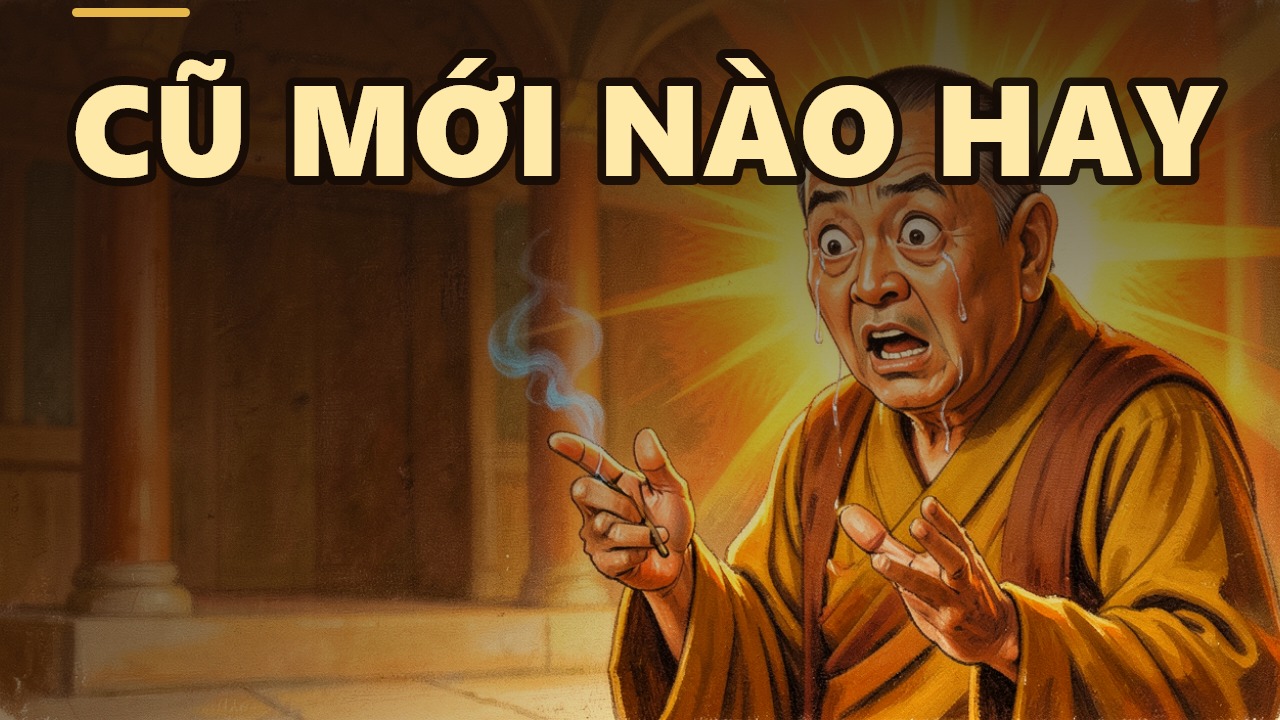
The new year arrives, and everyone eagerly welcomes it. But why do we rejoice? Is it because the new year brings hope, or simply because the old year has passed? This question seems simple, yet it touches something deep in our lives: are we clinging to the new, or to the old?
"Life rises and falls without warning. Many times the old year was actually happier than the new one, and we never even knew it."
With this very question, Thầy Thích Chân Quang skillfully draws us into his dharma talk, "New or Old." In life, we often assume that whatever is new must be better. But is that really true? And is the old always outdated?
When the New Is Truly Better
It cannot be denied that in many fields, the new surpasses the old. Each generation of phones is better than the last, and motorcycles grow more convenient with every model. Thầy tells a humorous story about an old three-wheeled taxi: "Running an errand for the church association, I had to stop at the repair shop three times in one hour. After that, I was simply exhausted."
But we should not rush to conclude that everything new is good. Science has theories that seem like progress, yet still stall before basic mysteries such as gravity.
When the Old Becomes Precious
On the other hand, some things grow more valuable with age. Antiques, however unattractive, cost more than gleaming new items. And then there is old friendship—childhood friends—how rich, how peaceful it feels. Thầy shares:
"When you meet an old friend from your school days, you feel something so rich, so peaceful, and so profound."
That kind of affection involves no calculation or scheming. But what about the overly clever person? Thầy points out: "A person who is too clever, who calculates too much, cannot be loyal or faithful." It is precisely the person who is "a little simple" who can live a life of complete devotion and gratitude.
Do Not Cling to the Path—Look to the Destination
The problem is that we often get stuck between the new and the old, arguing endlessly about the way forward while forgetting the goal. Thầy tells the story of three people who all wanted to visit a temple: one insisted on having a car, one would only walk, and one preferred a motorcycle. Who was right? Here is the answer:
"What matters is arriving at the temple to pay homage to the Buddha, to listen to the Dharma, and to practice—not the road you take."
In the Buddha's teachings, breaking free from attachment to rules and rituals is the first step of wisdom. When we know the purpose is happiness, we no longer need to cling to money, power, or romantic love as specific paths. All of these are merely means.
Truths That Never Grow Old
Some things exist eternally and cannot be changed. Thầy emphasizes:
"There are teachings that cannot be changed, called unshakable truths. From ancient times it has been said: if I speak falsely in this life, I will fall straight into hell."
The words of the Buddha, such as the karmic law of cause and effect (karmic law) and filial devotion, are absolute truths. We may add to them and refresh how they are expressed, but we must never overturn them.
Test It for Yourself
Yet "believing" does not mean blind faith. The Buddha himself instructed:
"Do not believe anything simply because you heard someone say it. Instead, reflect deeply until you reach the very end of the teaching, and then live it and verify it for yourself."
Wisdom and ethics go hand in hand. A wise person will not hastily believe baseless claims, but neither will they reject what the ancients have already proven.
Something to Reflect On
Whether something is new or old matters less than what we are truly searching for. Live with an open heart, without clinging to appearances, and turn toward peace and liberation. As Thầy said: "Happiness is something entirely different."
Do not let the years slip by into regret. Return to your own mind/heart, so that each day becomes a steady step on the path to enlightenment.
Wishing all Buddhist practitioners a new year of peace, wisdom, and joy!
AI-assisted translation from the Vietnamese original.
Read in Vietnamese →