
Everything Is Relative: Advice for Liberation from Suffering
Understanding that everything in life is relative helps reduce afflictions, not to encourage complacency, but to strive for self-perfection according to the Buddha's teachings.
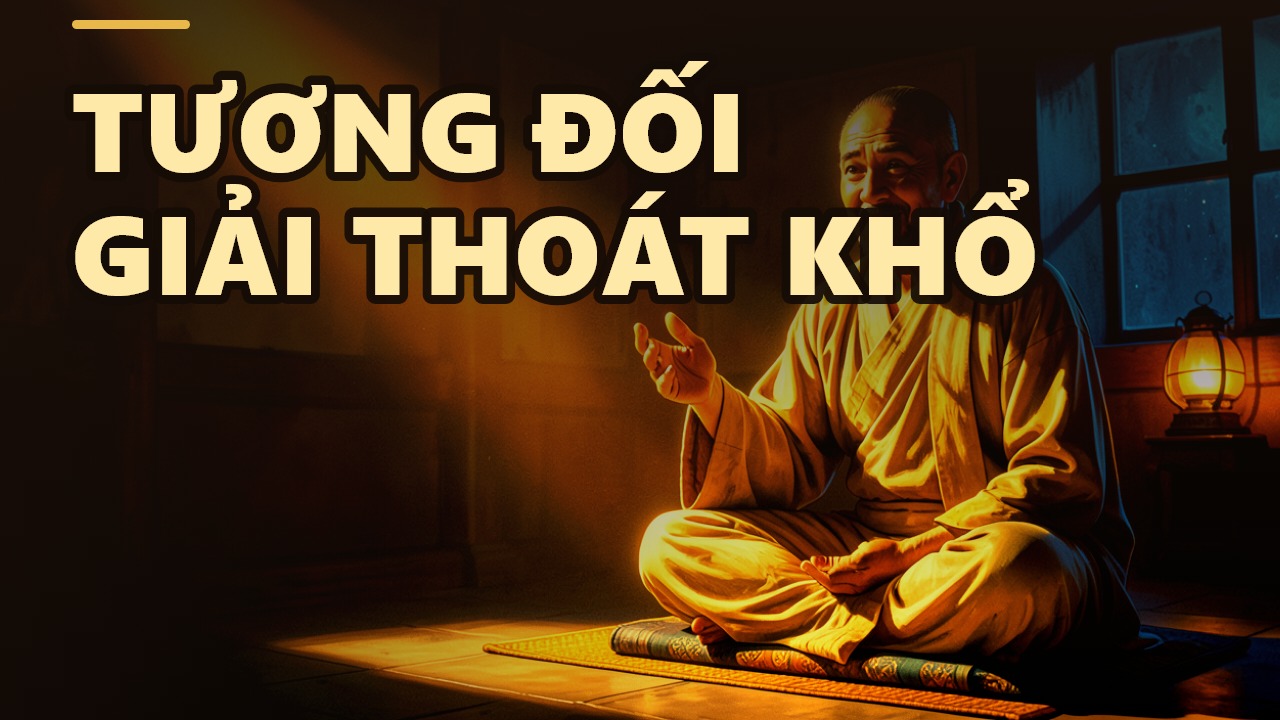
Have you ever felt helpless when things did not go as planned? A job that fell short of expectations, a relationship that lacked completeness, or beautiful intentions that vanished like smoke? During the Mid-Autumn Festival, amidst the moonlight and laughter, Venerable Thich Chan Quang shared a profound yet simple philosophy of life: everything is relative. This is not merely a casual consolation, but a truth that allows us to view life with greater lightness, yet also with more resilience.
Why do we say "everything is relative"?
In daily life, we often tend toward perfectionism, hoping for flawless outcomes. However, the reality is that no person and no thing is absolutely perfect. The Venerable reminds us:
"In this world, everything is relative. This serves to remind us never to demand perfection, nor to expect anything to be completely flawless."
Consider your partner, a family member, or even yourself: everyone possesses both strengths and weaknesses. If we fixate solely on shortcomings, we remain trapped in suffering and dissatisfaction. Accepting relativity fosters tolerance toward others and ourselves.
Not complacency, but striving upward
However, understanding that "everything is relative" does not mean giving up or accepting fate passively. The Venerable emphasizes:
"If we simply accept our lot in life, will we make an effort to practice? No. And if we do not make an effort to practice, remaining suspended between good and evil—good in one aspect, evil in another—we will continue to drift endlessly through samsara (cycle of rebirth)."
Indeed, while we cannot demand immediate perfection from others, we can dream and strive to become better versions of ourselves. Instead of forcing, let us encourage. Instead of blaming, let us empathize. This is how we progress together on the path of spiritual cultivation.
The Creator and the law of cause and effect (karmic law)
Many believe that a supreme deity holds absolute power over all destinies. Yet, the Venerable explains that even the Buddha had the "three impossibilities"—three things he could not do. One of these was the inability to transform the fixed karma of sentient beings. This reveals that the law of cause and effect (karmic law) is not rigid, but highly dynamic:
"Because there is such a law of cause and effect (karmic law), we must strive. Only by striving can we change our lives."
While some past karma cannot be altered, new causes can be planted today. For instance, coming to the temple to listen to a dharma talk may mark the beginning of a positive connection with the Buddha's teachings (Dharma). Every good action and every wholesome thought creates positive changes for the future.
Dreams versus demands – two different attitudes
One of the most valuable lessons is distinguishing between "dreams" and "demands." The Venerable teaches:
"A dream is different from a demand. What does demanding mean? It means forcing others to be a certain way when they are not yet capable, leading to blame, anger, and resentment, which give rise to afflictions (kleshas)."
When we wish for our loved ones to improve their spiritual practice, let us be role models and share gently, rather than imposing our will. As illustrated in the story about vegetarianism: if someone is just starting out, do not force them to adopt a strict vegetarian diet immediately; instead, encourage small steps. Skillfulness and tolerance will help them change voluntarily.
Applying this to daily life
By understanding that "everything is relative," we become less harsh with ourselves and others. When facing failure, we do not collapse, knowing it is merely part of life. When encountering difficult people, we look for their good qualities. When we make mistakes, we do not torment ourselves but correct our errors and move forward.
Remember, this life is inherently imperfect, but this very imperfection is the motivation for us to cultivate and rise above. The Venerable concludes:
"Living in this human realm, when we meet one another, we must understand that humans are incomplete; everyone gains in some areas and loses in others."
Therefore, dear friend, do not be too strict with yourself or others. Learn to accept relativity, but never stop striving for improvement. Each day, sow seeds of goodness, nurture your mind/heart, and trust that true happiness lies in inner peace, not external perfection. May you find tranquility amidst this imperfect world.
AI-assisted translation from the Vietnamese original.
Read in Vietnamese →