
Where Does Superstition Come From? A Buddhist Answer for the Modern World
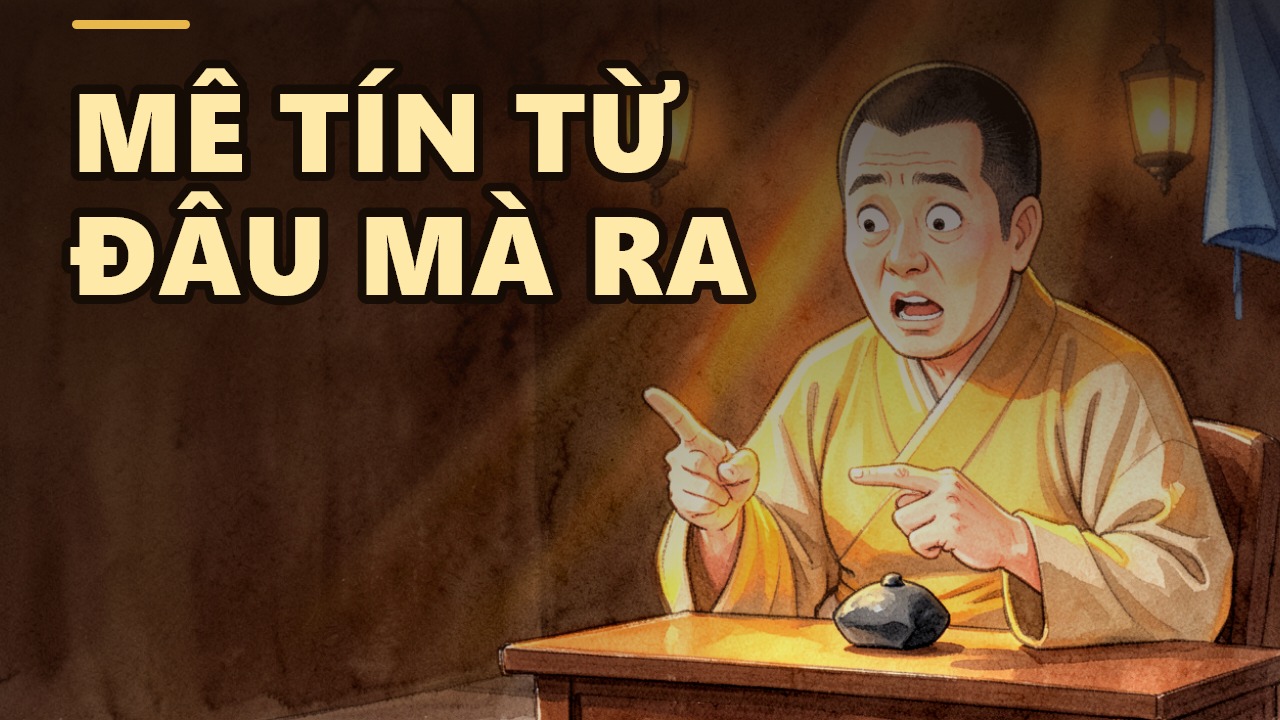
A talk by Venerable Thích Chân Quang helps us distinguish the boundary between genuine spirituality and superstition. It reveals the root of superstition and guides us on living according to karmic law for a peaceful and happy life.
Have you ever wondered why people believe in amulets, fortune-telling, or place a stone in their home hoping for wealth? And why can we, as Buddhists, sometimes fall into such superstitions? During a ceremony at Hưng Long Pagoda, Venerable Thích Chân Quang shared profound insights into the origins of superstition and how we can maintain a sincere faith amidst the fluctuations of modern life.
**The Return of Buddhism and the Meaning of Spirituality**
The image of a temple being built with the joy of Buddhists reminds us of the glorious Lý-Trần era, when Buddhism was chosen as the spiritual foundation for the nation. Venerable Thích Chân Quang emphasized that renovating and building temples today is not merely about physical structures. It is the first step to re-establishing a firm spiritual foundation for the country. He said:
"We are now in the first stage, mirroring the old Lý-Trần period. Second, we are opening a path into the future for our nation in this world ahead."
Spirituality, he notes, remains a mystery to science, yet it plays a crucial role in human life. Buddhism offers ethical values, teaching people to live well and virtuously, while also containing metaphysical and mythical elements about realms and spiritual realization. This combination creates a comprehensive religion but also a fertile ground for superstition to arise if we are not mindful.
**Superstition Stems from the Desire for Gain**
So where does superstition come from? Venerable Thích Chân Quang points out profoundly that people only believe in things that promise personal benefit. Superstition exploits this very desire for gain. He told a story about a small shrine honoring two young men who died in a reckless car accident. Rumors suddenly spread that praying there was "effective" for winning lottery numbers. People flocked there to make offerings and pray. He observed:
"Sentient beings only fall into superstition when they see profit. And those who create superstitions use profit to lure people."
Clearly, those two young men had nothing extraordinary, yet people were willing to prostrate themselves because of rumors of lottery wins. This is the very origin of superstition. He warned that when someone promises great benefits with little effort, be cautious. The Buddha's teaching to "see profit but do not dip your hand in" is the guiding principle to stay away from the temptations of superstition.
**Superstition is Believing What Contradicts Karmic Law**
Another characteristic of superstition is believing in things that defy the law of cause and effect (karmic law). To sow one kind of seed and expect a different harvest is unrealistic. He gave the example of buying a stone supposedly "sacred" from Tibet to place at home, hoping money will flow in naturally. How absurd! To have wealth, one must plant the seeds of generosity, making offerings, and helping others. He affirmed:
"The cause of placing a stone in your house will never result in the effect of money flowing in. For money to fill the home, you must offer money as generosity and support."
Cause and effect is a universal law operating in the cosmos, unchangeable by feng shui items or burning gold paper. One who understands the teachings will never believe in such irrational things.
**Wanting Great Gain with Little Effort – A Sign of Superstition**
Another element of superstition is the mindset of "wanting great gain with little effort." He stated directly: "If you offer a small bunch of bananas and a few cakes, yet wish to buy a whole car—that is superstition." In reality, many people visit temples only to seek blessings and fortune, not understanding that blessings from merit must be created through effort and actions that benefit others. The wisdom of Buddhism teaches that to reap good fruits, we must sow good seeds. No one can harvest without first planting.
**Distinguishing Genuine Spirituality from Superstition**
How then can we distinguish genuine spirituality from superstition? Venerable Thích Chân Quang offers a clear criterion: alignment with truth and science. He cited that over two thousand years ago, the Avatamsaka Sutra described a vast universe with countless celestial bodies, which modern astronomy is only gradually uncovering. The Buddha's words are eternal truths that will forever align with science, both present and future. Superstition is the opposite; it makes people deluded, lowers their self-worth, and leads to wrong actions.
He also emphasized that Buddhists do not come to temples to seek superstitious favors, but to learn ethics, cultivate wisdom, and develop spiritually. A person who visits a temple and returns home must become better and wiser, not become a fanatic.
**Practicing Cause and Effect: The Path of Wisdom**
Instead of believing in superstitions, Venerable Thích Chân Quang advises us to practice the law of cause and effect (karmic law) in concrete ways. He gave very practical examples: to have children who excel in studies, donate land to build schools or contribute to school construction; to have healthy descendants, help build hospitals or clinics; to prosper in business, donate land for roads without accepting compensation. He shared about his own mother, who despite her age, saved to build a bridge for her hometown community and felt serene and content. He said:
"Try to help others within your ability; do not be stingy with your time or possessions. In this world, all things are impermanent; we cannot take anything when we die. We can only carry along our merit and our sins."
This is the way to create true merit, benefiting both ourselves and the world. This is the path of wisdom, not superstition.
Superstition is not something far away; it can creep into our consciousness through small, petty desires. But with wisdom and mindfulness, we can completely recognize and avoid it. Let us return to the Buddha's teachings, live according to the law of cause and effect, do good deeds, and help everyone. This is the only way to find true happiness and peace in the present, while sowing good seeds for the future. May each of us, wherever we are, always be clear-minded children of the Buddha, never swayed by superstition.
AI-assisted translation from the Vietnamese original.
Read in Vietnamese →