
Where Does Good Fortune Come From? Lessons from Master Thích Chân Quang
Master Thích Chân Quang explains the definition of good fortune and the secret to attaining true good fortune: praying to the right object, living ethically, and staying away from superstition.
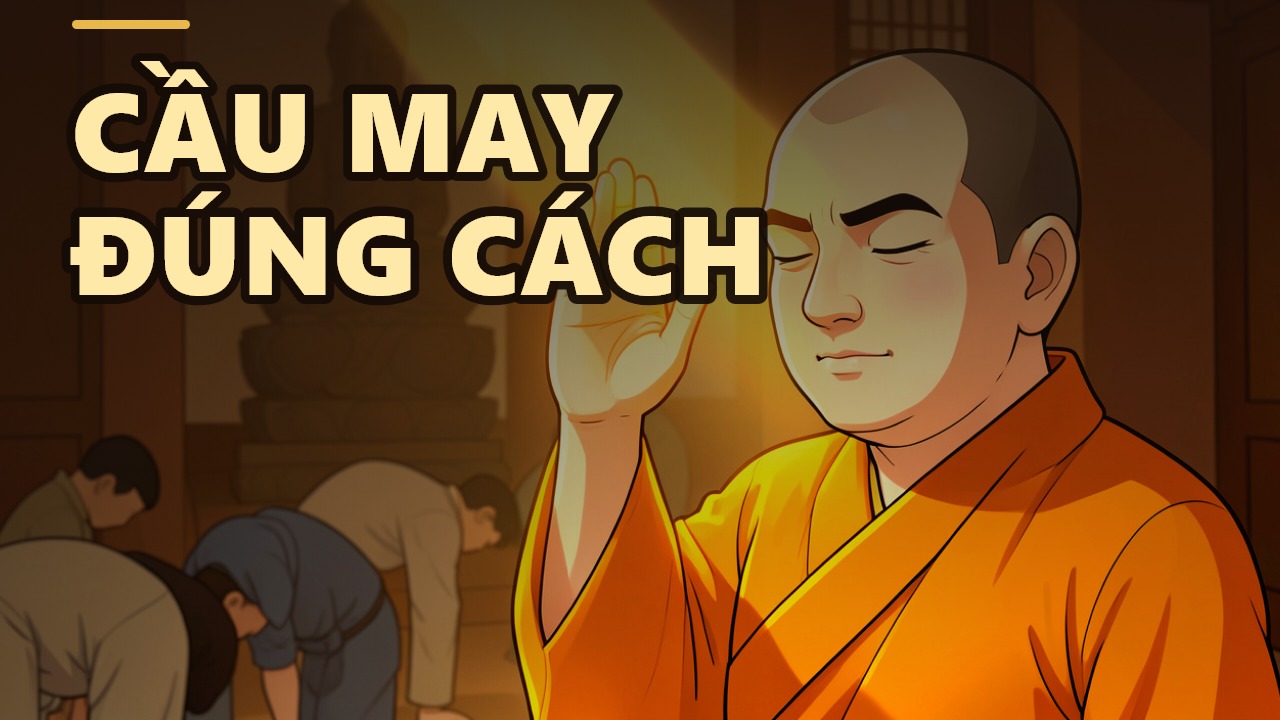
Every year at the start of the new year, people flock to temples to pray for good fortune. But where does true good fortune actually come from? Is praying alone enough? In his dharma talk "Where Does Good Fortune Come From," Master Thích Chân Quang examined this question thoroughly, with surprising insights.
The Definition of Good Fortune
The Master began with a very clear definition: good fortune is not something that falls within our expectations. Good fortune is when we attain something good beyond our own abilities and plans, or escape danger that we cannot control. He gave an example: a student who takes an exam feeling uncertain but passes—that is good fortune. For someone who is confident in their work, passing is simply to be expected.
"Good fortune means we attain something good that is beyond what we are capable of achieving, beyond what we predicted or calculated beforehand, beyond the plans we laid out in advance."
Why Do Human Beings Always Crave Good Fortune?
By nature, human beings worry about the future. Whether we are wealthy or powerful, none of us can be certain about tomorrow. It is this very insecurity that drives us to seek out supernatural forces and pray for good fortune. Master Thích Chân Quang emphasized that this is a natural psychology, but praying in the right way is what truly matters.
"Human beings are completely lacking in confidence about their own future. We are lost, unable to be certain of anything. And so we must pray, we must do many things—sometimes very strange things—hoping that good fortune will come to us."
Praying for Good Fortune the Right Way: Pray to the Buddha
Many people believe that praying at this place or that place makes no difference. But the Master pointed out that a disciple of the Buddha should pray to the supreme one, because celestial beings and holy spirits all hold the Buddha in reverence. Praying to the Buddha is precisely the way to receive the protection of celestial beings, because the Buddha is the teacher of gods and humans.
"Because we pray directly to the teacher of the gods themselves. Then the gods hold us dear. That is, the Buddha is the teacher of gods and humans."
But praying to the Buddha does not mean we will be granted whatever we ask for. More importantly, we must live ethically, do good deeds, and treat everyone with kindness. The Master taught that if we have a small house but treat our guests warmly, the house will expand; but if the house is large and we treat people poorly, it will shrink. This is cause and effect (karmic law), the very foundation of good fortune.
"If our house is small, but whoever comes to our home we treat with respect, then later our house will expand. But if our house is already large and grand, and whoever comes to our home we treat badly, then one day our house will shrink away."
Staying Away from Superstition
The Master also warned against misguided forms of praying for luck, such as petitioning wronged spirits or imagined idols. Such places not only fail to bring good fortune, but also lead us into superstition. He spoke very directly: most people are easily fooled, and we need to stay alert before all information.
"Ninety-five percent of us suffer from the disease of gullibility. Whatever anyone says, we believe it right away. So we must be careful with all information, and whatever goes against the principles of truth, we must cast it aside."
Conclusion: Good Fortune Comes from the Heart and from Merit
So where does true good fortune come from? It comes from the combination of sincere prayer directed to the right place, together with living virtuously and accumulating merit. Begin the new year with a sincere heart of aspiration, do one good deed each day, and live with compassion and loving-kindness. Good fortune will follow—not because of miracles, but because of your own virtue.
AI-assisted translation from the Vietnamese original.
Read in Vietnamese →