
The Pagoda Roof That Shelters the Soul of a Nation: A Place to Return to Peace Amid Life's Bustle
Discover the sacred meaning of the pagoda roof in the hearts of the Vietnamese people—a place of shelter, moral teaching, and human connection, through the teachings of Venerable Thích Chân Quang.
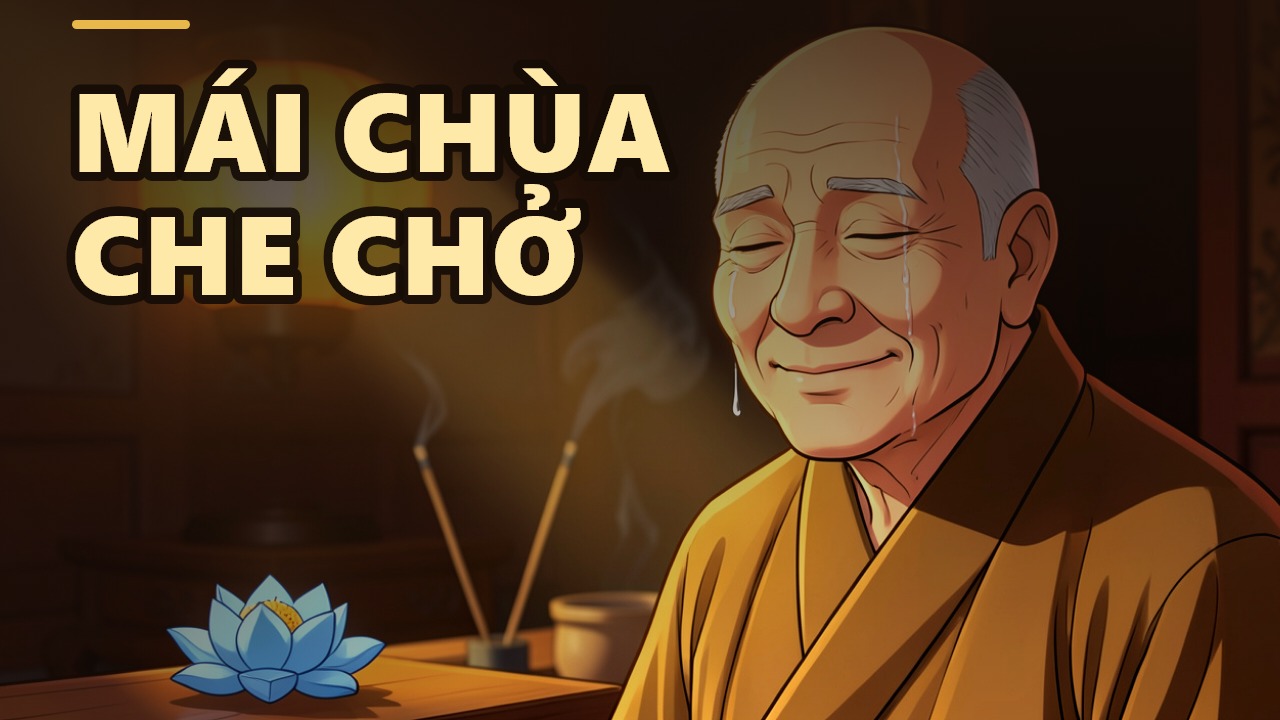
Have you ever felt your heart grow quiet and strangely peaceful whenever you step into a pagoda? Amid the rush of life, with all its worries and burdens, there is a place we always return to as a spiritual home. That place is the pagoda roof—deeply imprinted in the consciousness of countless generations of Vietnamese people. Today, let us listen together to the profound reflections of Venerable Thích Chân Quang on the sacred meaning of the pagoda in the life of our nation.
The Pagoda Roof—A Refuge for the Vietnamese Soul
When we speak of the pagoda roof, perhaps each of us has heard the famous verse: "The pagoda roof shelters the soul of the nation, the timeless way of life of our ancestors." That verse has entered people's hearts as something natural, awakening the deepest stirrings within the soul of every Vietnamese person. Venerable Thích Chân Quang shared:
"The pagoda roof shelters the soul of the nation, the timeless way of life of our ancestors. That comes from a very long poem. Since the days of departure, the pagoda's shadow has faded, and life's road has wearied of winning and losing. Within me a sorrow suddenly awakens, my heart trembles as I dream of returning to scenes of the past."
The pagoda is not only a place of worship, but also a symbol of culture, of moral teaching, of the spiritual values our forebears have preserved through so many generations. However far we may travel, however many of life's ups and downs we may endure, deep within the soul, the Vietnamese person always turns toward the pagoda roof as a haven of peace.
The Pagoda—A Place of Meeting and Moral Learning
In the past, when life was full of hardship and villages were sparsely populated, the pagoda was the cultural center, the place where people gathered and connected. Unlike the marketplace or the tavern, at the pagoda people naturally became reverent and learned to restrain their words. It was precisely because of this that the pagoda, almost unintentionally, taught each person their first lessons in morality, in how to treat others with kindness.
"At the pagoda, no one dared to argue and raise their voice like the guardian deities. The pagoda is heavenly, and everyone fears it. So when you come there, you must be reverent, you must be trusting. And it is precisely because of that reverence, that trust, that fear and awe, that people learned to restrain their mouths, to restrain their minds."
In the marketplace, people could laugh and speak freely, even crudely. But upon stepping into the pagoda, everything became solemn and dignified. This shows that the pagoda holds an invisible power, one that moves people to turn toward goodness and live better lives. For this reason, the pagoda roof is not merely shelter from rain and sun, but a shelter for the human soul as well.
Precious Teachings from the Eminent Masters
In the old days, the great abbots often spoke little, but every word they uttered carried immense value. They did not offer lengthy explanations, but gave short, concise advice that nonetheless had a profound influence on each person's life. Venerable Thích Chân Quang recounted a story:
"For example, someone would come and say, Venerable Sir, we have been married a long time, so why have we not yet been blessed with a child? Please give us your guidance. Instead of delivering a grand discourse on cause and effect (karmic law), on this and that, the venerable master would simply turn and say one sentence: My child, go and adopt a child."
Just one simple sentence, yet it brought an unexpected result. This shows the wisdom and deep understanding of the eminent masters. They did not need to say much, but every word was a truth that benefited the lives of all beings. And the pagoda is precisely the place that preserves those precious teachings.
Imprints from Past Lives
There is something wondrous: when people come to the pagoda, many feel a closeness, a familiarity, as if they had been here in some past life. According to the Venerable, those with an affinity for the Buddha's teachings (Dharma) often carry imprints from the past:
"Those who know the Buddha's teachings from the heavenly realms have characteristics like these. First, they are beautiful to behold. Their features are what we call fine and beautiful features. ... Those who come from the heavenly realms live very cleanly."
Those with wholesome roots often have dignified features and live cleanly and purely. They come to the Buddha's teachings (Dharma) naturally, as a return to their spiritual source. This explains why some people, though encountering the Buddha's path for the first time, feel an extraordinary sense of familiarity and connection.
Who Does the Pagoda Belong To?
An interesting question arises: who does the pagoda truly belong to? According to the Venerable, the pagoda has many owners:
"The sacred ownership belongs to the Buddha. The theoretical ownership, according to the laws and charters, belongs to the Church. The practical ownership belongs to the abbot. But the ownership of love and devotion, of effort and labor—whose is that? It belongs to the people. Truly, only now does it belong to the Buddhists."
Although it has many owners, the pagoda always lives in harmony, without dispute. For the Buddha never contends, the Church does not interfere too deeply, and the people always respect and care for it. This is what creates the sacredness and tranquility of the monastery.
Our Responsibility Toward the Pagoda
The pagoda is a place that nourishes the soul, a spiritual anchor for every Vietnamese person. Therefore, we each have a responsibility to preserve and promote these beautiful values. Let us regularly visit the pagoda, listen to the teachings of the monastics, take part in wholesome activities, and most importantly, apply the Buddha's teachings to our daily lives.
Each of us, wherever we may be, should always turn toward the pagoda roof with reverence and gratitude. This is how we preserve the cultural beauty of our nation, and it is also how our souls find peace and joy. For the pagoda roof shelters not only the soul of the nation, but the soul of each and every one of us as well.
AI-assisted translation from the Vietnamese original.
Read in Vietnamese →