
Gratitude: The Bridge from the Instinct of Ungratefulness to the Noble Ones
A Vu Lan dharma talk by Venerable Thich Chan Quang. Humans are naturally ungrateful, but through wisdom and ethics, we resist this instinct. By offering smiles and kind words, we shorten distances and become better beings.
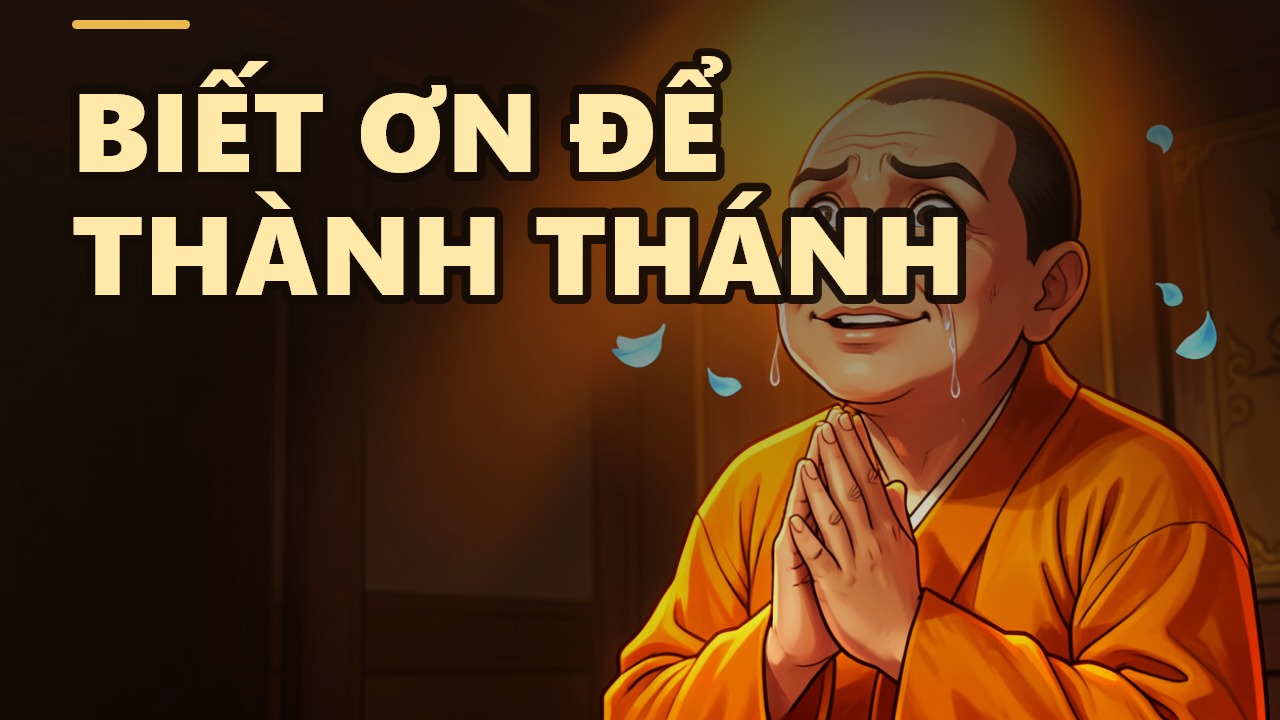
Have you ever wondered why we remember what we give away so vividly, yet forget almost immediately what we receive? When we help someone with a million dong, we recall it for a long time. But when we receive a million dong, we spend it and forget it just as quickly. This is a natural law of human nature – the law of ingratitude.
Humans Are Naturally an Ungrateful Species
On the day of Vu Lan, Venerable Thich Chan Quang began with a blunt statement. He said that humans are naturally an ungrateful species. He urged us not to be offended, reminding everyone that we all start from this baseline of ingratitude.
This may sound harsh, but he skillfully pointed out that it is an instinct shared by all living beings. Parents raise us with great hardship, yet we easily forget their efforts. Meanwhile, we worry constantly about our spouses and children. We remember how much money we gave to others, but we quickly forget those who gave to us.
Gratitude Is Resisting Instinct, Elevating Us to the Noble Ones
However, the teacher emphasized that humans possess wisdom, ethics, and conscience. We must resist this instinct of ingratitude. He explained that love for one’s family is a natural instinct. Caring only for parents, spouses, and children is biological. Yet, love for one’s country belongs to the realm of ethics.
Anyone can love their family, but being grateful to the nation, to teachers, and to all beings present in life requires cultivation, mindfulness, and moral discipline. Vu Lan is the day we practice gratitude, not only toward our parents but toward every kindness in our lives.
Three Cheapest Beautiful Gifts to Offer One Another
The teacher taught that when we cherish and respect each other, we offer beautiful things. These gifts do not require wealth; they consist of three simple elements. First, a smile and friendly eyes. Meeting someone with a warm gaze and a smile costs nothing at all.
Second, wearing beautiful attire. Dressing neatly and politely is also a way to show respect to others. Third, speaking kindly. Greetings, encouragement, and sincere thanks are powerful offerings. When we love and respect one another, we naturally share these beautiful qualities.
These are priceless gifts that anyone can give. Those who offer smiles will reap the karma of a beautiful appearance. Those who speak kindly will be loved and respected by everyone around them.
Hide the Bad, Show the Good – A Discipline of Life
Each of us has flaws within our mind. However, the teacher instructed that hiding bad traits and showing good ones is a necessary discipline of life, not hypocrisy. It is not about being fake, but about maintaining ethical standards.
We keep our inner faults private to work on self-improvement, avoiding hurting others by exposing them. Just as patriotism is a mandatory discipline in the military, mutual respect is a required discipline in society. We must uphold this standard to live harmoniously.
Shortening the Distance Between Outer Actions and Inner Mind
The most important goal is to let outer goodness penetrate into the inner mind. Experienced flight attendants often develop genuine warmth over time, no longer acting a role. The teacher hopes that each of us will align our inner state with our outer expressions.
When we express love, affection, and respect outwardly, our inner heart must truly feel that same respect and love. At that point, we are no longer ordinary beings, but are stepping onto the path of the noble ones. This is the spiritual journey that every Buddhist practitioner pursues.
Today, on Vu Lan, let us begin with the smallest actions. Smile warmly, speak kindly, and guard your mind from revealing negativity. Gratitude is the bridge that carries us from the instinct of ingratitude to the level of the noble ones. We can practice this right now.
AI-assisted translation from the Vietnamese original.
Read in Vietnamese →