
Heartfelt Words for a New Abbot: Be a Steadfast Refuge
This dharma talk by Venerable Thích Chân Quang reminds a new abbot of the role of the temple, the need for unshakable stillness amid favorable and adverse circumstances, and the fundamental duty of practice to extinguish the ego.
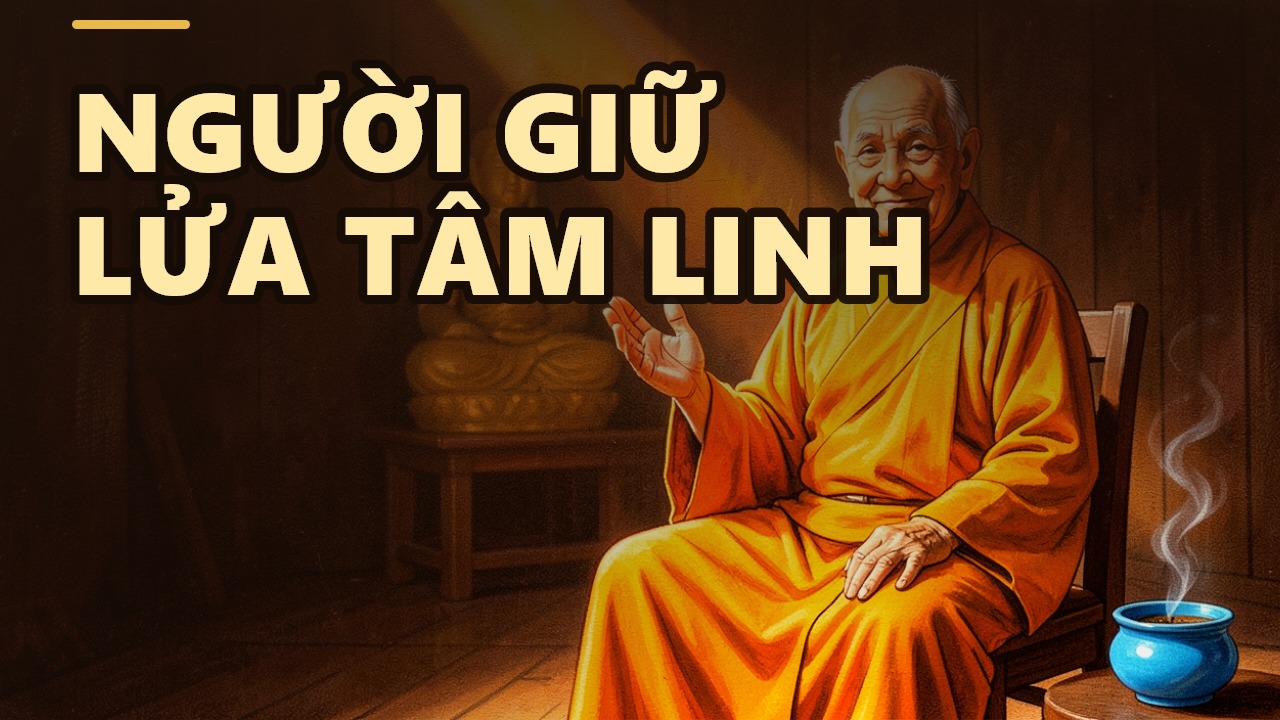
Have you ever wondered what a temple means in Buddhist life? And what role does the abbot play? Today, let us listen to the heartfelt words that Venerable Thích Chân Quang offered to a newly appointed abbot — words that may seem private, yet contain profound lessons for all of us.
The Temple: The Basic Unit of Buddhism
In the whole picture of Buddhism, the temple is the foundation. Venerable Chân Quang emphasizes that without temples, Buddhism could not exist. A temple is a place where there is the Buddha, the Dharma, and the Sangha — that is the Three Jewels. Without a temple, the Buddha statues gather dust, the scriptures go unread and ununderstood, and practitioners have no place to take refuge. The temple is also where the community connects and where spiritual life is nourished.
"The temple is the basic unit of Buddhism… When we speak of Buddhism, there are all kinds of traditions, organizations, methods, and theories. But without the temple, there is nothing at all."
For the people, the temple is not only a place of worship but also a spiritual home, a shelter in times of difficulty. That is why the abbot of a temple is the one who keeps the flame alive for the entire community.
The Abbot: The Point of Connection for Everything
The abbot is not merely the manager of the temple, but also the bridge between the Sangha organization, the laws of the nation, and the people. Venerable Chân Quang compares the abbot to a "point of connection" — where all sources of information and all relationships converge. The Sangha organization needs the abbot to teach and guide, the state needs the abbot to manage religious affairs, and Buddhist followers need the abbot for instruction.
"The abbot is the point of connection for the Sangha organization, for the laws of the nation, for the people, and for the Three Jewels."
Because of this important role, the abbot must be aware that he is no longer his own, but a "support" for so many people.
Be the Bodhi Shade in the Desert
Life is an open sea full of storms, a scorching desert. Human beings always need a place to lean on. The abbot is that small island, that cool shade of a tree amid the blazing sun. Venerable Chân Quang teaches that once he accepts the position, the abbot must become a refuge for sentient beings — a steady seat for them to lean against.
"Buddhist followers always need a bodhi shade to take refuge in… the abbot is the small island in the middle of the open sea, the bodhi shade in the burning desert of life."
But to do this, the abbot must truly be steadfast. Even a small gust of wind can knock down someone who leans on him. Therefore, the abbot's unshakable stillness is a matter of survival.
Do Not Stir Before Favorable or Adverse Circumstances
The abbot is also human, and can be shaken. Favorable circumstances come: people offer great wealth, promise promotions, or use affection to manipulate. Adverse circumstances come: being cursed and slandered. Venerable Chân Quang offers this advice:
"Whether favorable or adverse circumstances — whatever favorable circumstances might make you flinch… do not flinch."
The abbot must be like a rocky mountain, like a pine tree before the wind — through storms and falling rain, still standing firm. Because if the abbot wavers, the followers will fall with him. He must keep his mind calm, never letting fame, gain, or anger move his heart.
"If you cry, let it be only out of longing for the Buddha, reverence for the Dharma, or mourning a senior monk who has passed away. Apart from that, there is nothing to cry about." That is the true mettle of an abbot.
The Fundamental Duty: Practice
The work of an abbot is overwhelming, but above all, the abbot must be a genuine practitioner. Venerable Chân Quang emphasizes that without practice, being an abbot is just an empty title. Practice is the breath of monastic life — stop breathing for three minutes and you die; stop practicing for three minutes and you lose your qualification.
"The duties of an abbot are vast, but there is one fundamental duty: practice. Because if you do not practice, you are not an abbot. If you do not practice, you are not a teacher for the world."
Through diligent, continuous practice, the teacher gains a kind of "spiritual power" in speech and vision — a single short word can save a soul. That is boundless merit, without needing to do much else.
Practice Is the Extinguishing of the Ego
But what is practice for? Practice is not to enlarge the "self" — the ego. Venerable Chân Quang makes it clear: the ego is the center of suffering, and the more one progresses in practice, the more selfless and less selfish one becomes. When we are angry, greedy, or envious — that is the ego growing. When we know how to yield and to share — that is the ego shrinking.
"Practice is to extinguish the ego. The one who attains the way is the one who attains non-self (anatta)… the ego is the central point of suffering, of samsara (cycle of rebirth) and birth and death."
A true abbot is one who has no room left for the ego, who always thinks of others. Only then is he worthy of being a refuge for sentient beings.
Though this dharma talk by Venerable Thích Chân Quang was addressed to one person, it is a guiding compass for each of us. Whoever we are, let us learn to become a steadfast support for others, beginning with practice — practice in the broadest sense: living with less ego and more selflessness. Whenever our heart is stirred by fame, gain, or loss, let us remember: do not stir. Simply sitting steady is already bringing energy of peace and hope to the world.
AI-assisted translation from the Vietnamese original.
Read in Vietnamese →