
Taking Oneself as Evidence: Lessons from the "Underworld" Within the Sangha
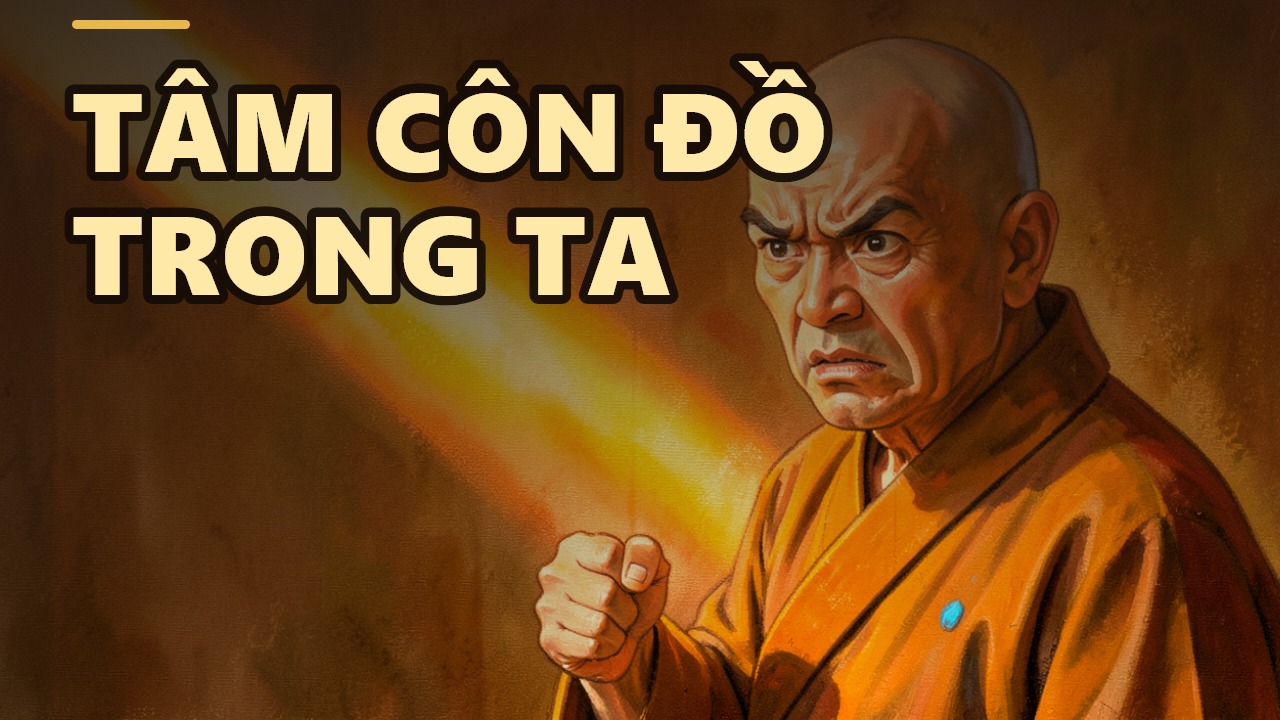
Every person fears pain and death. Understanding this truth prevents us from harming others, and it also helps us recognize that the "underworld mentality" still resides within our own mind whenever we wish to retaliate or punish someone else. Have you ever imagined that within a pure community of practice, there could be monks so unruly that they beat others to claim living quarters? The story in today’s Dharma talk sounds like a crime film, yet it contains a profound lesson on compassion that each of us needs.
### A Verse Amidst the "Underworld" in the Sangha
When the Buddha and the bhikkhus arrived at a new dwelling place, six notorious troublemakers known as the "Group of Six" assaulted younger monks to seize their spots. The situation did not end there; the beaten young monks planned revenge, which could have led to murder. The Buddha did not use harsh rebuke. Instead, he taught with a gentle verse:
"Everyone fears punishment; everyone fears death. Take yourself as evidence; do not kill, nor cause others to kill."
This is not merely a warning against killing. It is an awakening of empathy based on one’s own experience. When we understand the fear of pain and the deep desire to live, we naturally cease wanting to cause suffering to others.
### Why Is "Taking Oneself as Evidence" a Revolution?
Many religions base morality on divine commands. However, the Buddha grounded ethics in human psychology itself. Venerable Thich Chan Quang explains:
"This is where Buddhism differs from some other faiths... Humans must rely on moral principles, taking the Dharma as their refuge..."
This subtle difference sparked an intellectual revolution: no one should be exploited in the name of divinity to wage war. When we see someone urging us to harm others because "the gods command it," we must remain vigilant. Benevolent deities never order killing. Only those with political agendas incite such violence.
### The Nature of Aggression Still Lives Within Us
Venerable Chan Quang skillfully invites listeners to reflect on movies. When we see a hero shooting a villain, does our heart urge us to say, "Just shoot him!"? That impulse is the latent "underworld blood." Since ancient times, humans lived by the law of the jungle: "the strong survive, the weak perish." Despite millions of years of evolution, this aggressive nature has not been fully purified within each of us.
Thus, if we do not observe ourselves, we can easily become evil in our thoughts, even without acting. As the ancients said, "Do not impose on others what you do not want for yourself." Buddhism goes further: love others because you understand that you, too, wish to be loved.
### The Spread of Good and Evil: Our Responsibility
In a community, bad behavior spreads faster than good. One bully can provoke a group into retaliation. Yet, if there is a moral example, the whole neighborhood gradually changes. Venerable Chan Quang emphasizes:
"Will each of us become a source that spreads goodness in this life, or will we become a receptacle for evil that we then pass on to others?"
Therefore, the most important task is to keep our minds steady. Do not let someone else’s bad action turn you into a bad person. We can stop evil, but only through transformation, never through hatred.
### Dealing with Wrongdoers: Transformation, Not Hatred
When we see someone doing wrong, we often feel a desire to punish them. But the Buddha teaches that evil stems from the soul, not the body. Therefore, we should not destroy the body, but transform the spirit. In modern society, prisons should be places for rehabilitation, not detention for revenge. Venerable Chan Quang states:
"Imprisoning people is not to punish past sins, but to reform them into good people... Most prisons in the world lack curricula for rehabilitating inmates."
This is a deeply humane perspective we can apply immediately. When someone errs, consider their opportunity to change. We must not act as judges, but we can help guide them back toward virtue.
The Buddha’s teaching is concise, yet powerful enough to transform the soul if we truly reflect upon it. Ask yourself: Do I still harbor "underworld blood" in my heart? Do I put myself in another’s shoes before deciding how to act? Whenever you wish to retaliate, remember that they, too, fear pain and death just as you do. Offer understanding and kindness to make this life gentler. This is the greatest blessing from merit you can create.
AI-assisted translation from the Vietnamese original.
Read in Vietnamese →