
How Do We Stop a Storm?
A storm is karma, but it is also an opportunity to practice compassion and virtue. Learn to take responsibility for our own faults, to stop blaming others, and to help those in hardship.
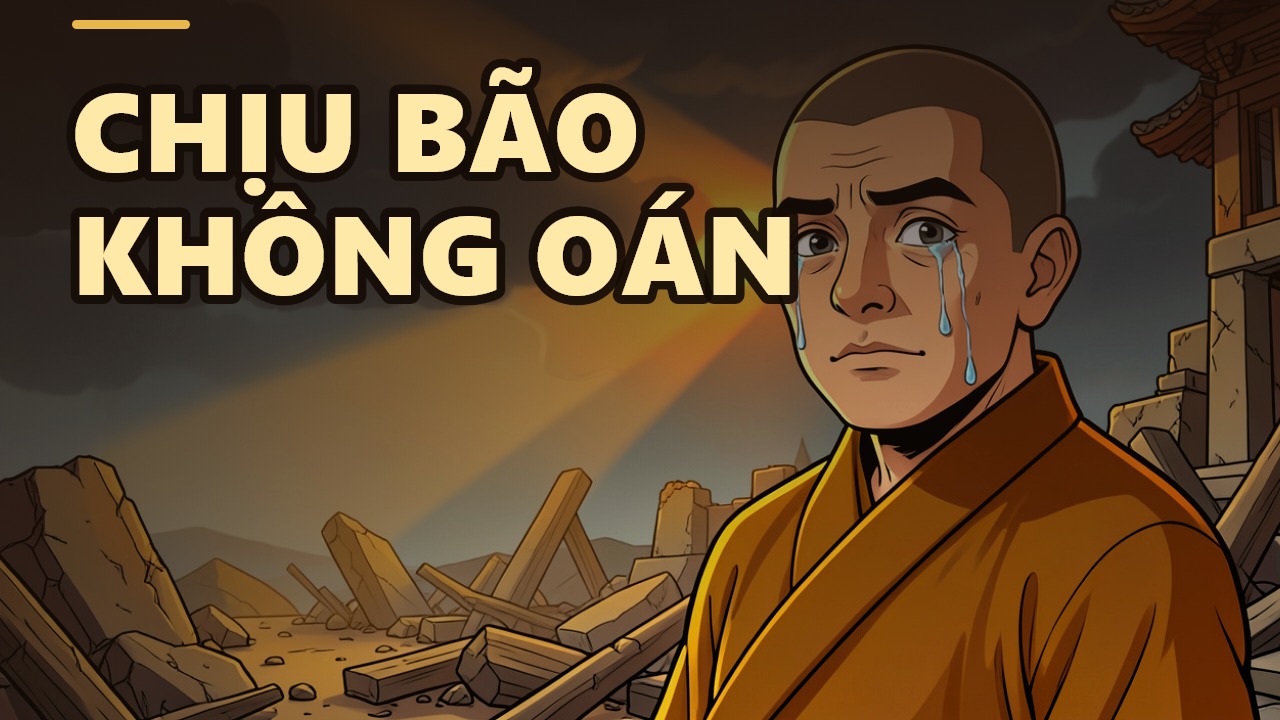
Have you ever wondered, "How do we stop a storm?" The question may sound absurd, yet in a dharma talk given by the Venerable Thích Chân Quang at Đại Giác Pagoda in Quảng Bình, we find a surprising answer — not by fighting against nature, but by looking inward at ourselves.
A Storm Is Karma, but Also a Condition
The Venerable opened with a painful truth: Quảng Bình had to endure two storms in a row, causing Đại Giác Pagoda to collapse completely. Why does this land suffer so many storms? The Venerable explained from both a scientific and a Buddhist perspective: "If we speak in terms of karmic retribution, then truly we have the karma that caused us to be born into this region." The land of Quảng Bình is both a place of natural beauty and noble people — a precious condition — and a center of wind and storms — a shared karma.
"Karma means that every so often a storm blows our house away — that is called karma. But it is also called a condition. Because the land of Quảng Bình is also a land of natural beauty and noble people."
When we understand that a storm is the result of shared karma, we no longer blame heaven or curse the earth. Instead, we have an opportunity to transform karma with a heart of compassion.
The Good Fortune: A Storm Tests the Human Heart
But if we stop there, we can easily fall into the attitude of "everyone bears their own karma." The Venerable emphasized: "Our good fortune is that sentient beings suffer. Our good fortune is that sentient beings created past karma. Now they must go through unfortunate karmic results — why? So that we have the opportunity to test our own virtue." A storm is a difficult problem, but precisely because it is difficult, it gives us a chance to grow.
"In that time of hardship, whoever shows an attitude of protecting, sheltering, supporting, and carrying the burden to help their fellow countrymen nearby — that is virtue rising up at once."
Those inside the storm face a test: their own home is lost, but what about their neighbors? Those outside the storm also face a test: do they stand and watch, or do they act? Each natural disaster is a chance for us to solve the problem of selflessness.
Do Not Blame — Take the Fault Upon Yourself: The Root of Peace
When disaster strikes, the common reaction is to look for someone to blame. But a disciple of the Buddha who believes in cause and effect (karmic law) will take the fault upon themselves first. The Venerable taught:
"But whoever believes in cause and effect (karmic law) can immediately extinguish that mind. When disaster arises, think only that the fault is your own. If you blame no one, then you hold no hatred toward anyone."
This is an extraordinarily powerful psychological weapon. When we accept the fault, we are no longer burned by hatred. We are at peace, steady as a mountain. At the same time, the courage to accept blame is a great virtue that helps us move through suffering (dukkha) with lightness.
Overcoming the Trial with Compassion
So how do we stop a storm? The Venerable answered with a practical story: when we hear that a storm is approaching, we usually pray, "Please let the storm change direction — don't let it come to me!" But if everyone prays like this, everyone is pushing the storm onto someone else. What a Buddhist should pray for is: "May the storm dissolve out at sea, may it not strike anywhere, so that people may be spared from suffering."
"Sound leaves shelter torn leaves. Later I added to this: when the leaf is already torn, then however it is bundled, it becomes a rotten leaf. It means that even though we suffer, there are still those who suffer more than us — and we can still help those who suffer even more than we do."
That is the spirit of Buddhist compassion: not worrying only for ourselves, not pushing disaster onto others, and keeping a heart that wants to help no matter the circumstance. When we have such a heart, the storm may fall upon the fields, but our heart remains free of turmoil.
A Storm Is Also a Test for Science and Society
The Venerable did not forget to speak of human responsibility: science must find affordable storm-resistant housing designs for the poor, and society must have policies of support. A storm is not merely a matter of individual karmic retribution — it is a wake-up call for the entire community. When we look at a storm through "the eye of the Way," we see lessons in humility and in mutual love and support.
Turn the Storm into an Opportunity for Practice
The storm passes, but what it leaves behind is not only ruined houses and broken trees. It leaves behind an opportunity for each of us to practice compassion, courage, and wisdom. Each time disaster comes, let us ask ourselves: "Am I someone inside the storm, or outside it? How am I solving this problem of virtue?"
"So whenever a disaster occurs, if we look through the eye of the Way, we know that this is the past karma of sentient beings. But it is also an opportunity to test the virtue of so many people in the present."
Do not let the storm sweep away your compassion. Use the storm as a stepping stone to advance on the path to enlightenment. Namo Amitabha Buddha.
AI-assisted translation from the Vietnamese original.
Read in Vietnamese →