
Mastering Your Speech: A Mirror Reflecting Your Inner Soul
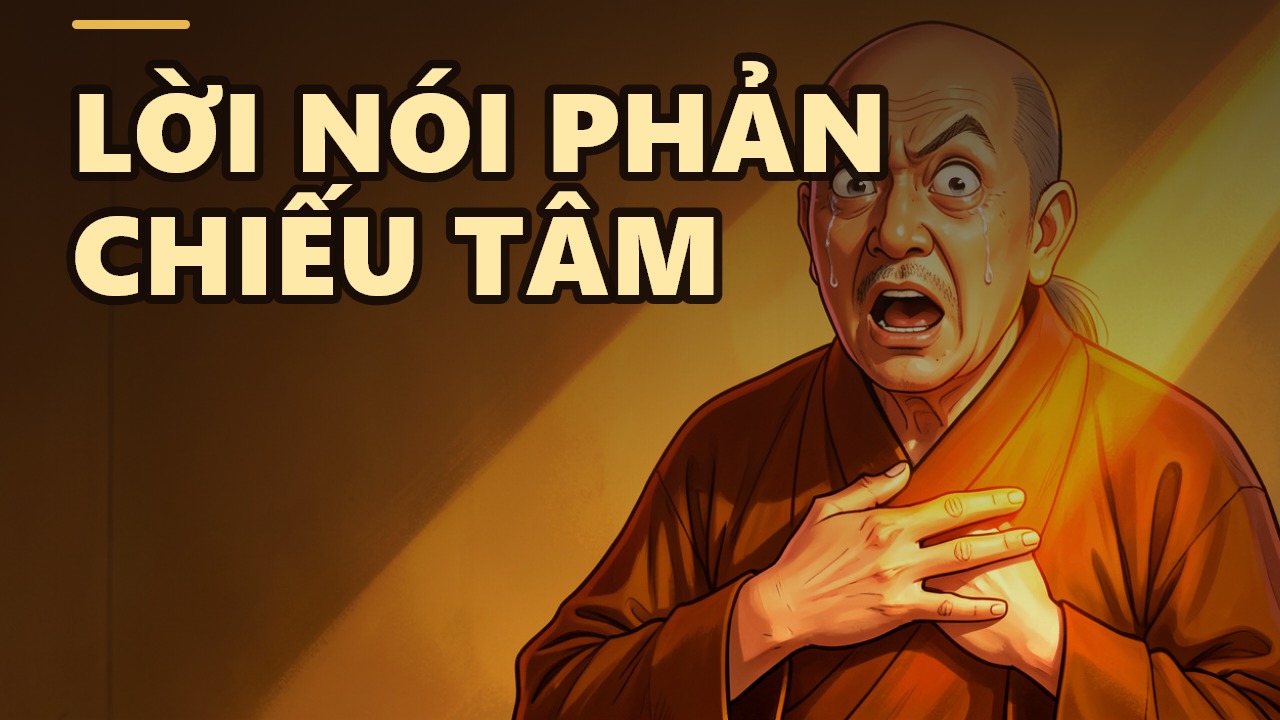
Have you ever blurted something out and immediately regretted it? Or listened to someone speak just a few words and felt you could see their entire being? Speech is more than just sound; it is a mirror reflecting our inner mind. In the talk "Mastering Your Speech," Venerable Thich Chan Quang opens a profound perspective on this wondrous connection.
**Speech – The Mirror of the Inner Mind**
The Venerable begins by explaining that speech has two functions: to express our inner mind and to serve as a means of communication. But the most important thing is that we learn to look back at ourselves, not to criticize others.
Generally, speech has two functions. One is to express the inner mind. Two is as a tool for communication.
When we listen to someone speak, we can infer their viewpoint, morality, character, preferences, level, and wisdom. But more importantly, through their words, we can clearly see our own mind. Sometimes, we speak unintentionally and only then realize how much negativity still resides within us.
**Through Our Words, Do We See a Compassionate Heart or Anger?**
The Venerable shares an example: when seeing a neighbor who errs and is disrespectful to their parents, there are two types of reactions. The first person says: "Such a person should just die, why live and take up space?" The second person says: "How pitiful, they live without understanding the consequences, and their life will be full of suffering later." Through the same situation and our chosen words, we immediately see the moral character of each person.
There, just like that, a single sentence before a situation allows one to assess morality directly.
For those who practice for a long time, the mind becomes sharp. But this sharpness is not for criticism, but for love and empathy. When we see someone sowing bad causes, we feel compassion for them right then, not waiting until they suffer. If we speak harshly out of habit, we recognize that our mind still holds much ill-will and we must make haste to repent.
**Speech Reveals the Secrets of the Heart**
Sometimes, trivial conversations reveal great truths. The Venerable tells about a person who ordained but still couldn't stop talking about "meat sandwiches."
We then know that although this person ordained, they still very much liked eating meat sandwiches in the past, and it seems they still crave them... having not let go of it completely in their mind.
Unintentional speech acts like a pressure valve. It reveals what we thought we had hidden away well. Thanks to this, we can look back at ourselves, realize that delusions and obsessions still linger in the mind, and that we need to transcend them.
**Profound Answers – Seeing the Karma of the Questioner**
When a Buddhist disciple asked: "I have practiced for five years but haven't seen any result," a wise teacher must be able to perceive their individual karma. Venerable Chan Quang points out: if practice does not progress, it could be due to insufficient merit, stinginess, lack of dignified conduct, boasting, or jealousy. Each person has a root ailment, and to know it requires spiritual intuition.
Merit is not yet sufficient. ... strive to create personal merit, cultivate moral virtue, and do many meritorious deeds.
He tells a story about Mr. Nguyen Tho Truong, a lay disciple with sharp insight. He asked why, when looking at elderly people in their seventies and eighties, he still felt superior to them. The Venerable replied:
In a past life, you practiced and became an immortal with a lifespan of two to three hundred years. Therefore, elderly people in their seventies and eighties are still like children to you.
At that moment, the disciple fell silent and his arrogance lessened. The Dharma has a general answer, but to truly help someone, one must base it on karmic law and subtle observation. This is an expression of wisdom.
**Mindfulness in Speech – Halting Bad Karma**
The Venerable teaches a very practical method of practice: before speaking, recognize what you are about to say. For example, when hearing someone praise a talented teacher, jealousy arises in your heart and you want to say, "They must have a personal connection." If you recognize this, you will not speak.
So should I say those words or not? No, you should not. Because by speaking, you are nurturing this karma of jealousy, this jealous mind that has not yet been extinguished.
By holding back, we do not create karma and simultaneously learn that we are still jealous and need to repent. Instead of jealousy, we should rejoice and praise. When others succeed, it is their merit. We can look into karmic law to see their merit and be happy for them. This is the practice of the wise.
**The Voice – The Secret of Merit and Virtue**
It is not just the content, but the tone of voice that also reveals the soul. The Venerable says:
The voice usually reveals two things: merit and virtue. Virtue refers to their character. Merit refers to the karmic causes they have sown.
A resonant, noble voice indicates the person has merit and wealth. A weak, breathless voice often signifies poverty or an early death. A harsh, unpleasant voice belongs to a violent, coarse person. A gentle, soothing voice stems from a compassionate mind, making the listener feel loved. Therefore, by practicing observing our own voice, we can correct our character and from there, recognize our own karma.
Speech and voice are two important channels for us to practice authenticity. Never think one way and speak another. The true practitioner is direct yet amiable, gentle yet straightforward.
**Practicing to Master Speech**
Let's start today. Before speaking, pause for a second. Observe where that sentence is arising from. If it comes from love and wisdom, then speak. If it comes from jealousy, anger, or pride, hold it back. With every word spoken, we are painting our own portrait in the hearts of others. Let that portrait be that of a bodhisattva under the eye of compassion.
AI-assisted translation from the Vietnamese original.
Read in Vietnamese →