
Memory: A Mirror of the Past and a Door to the Future
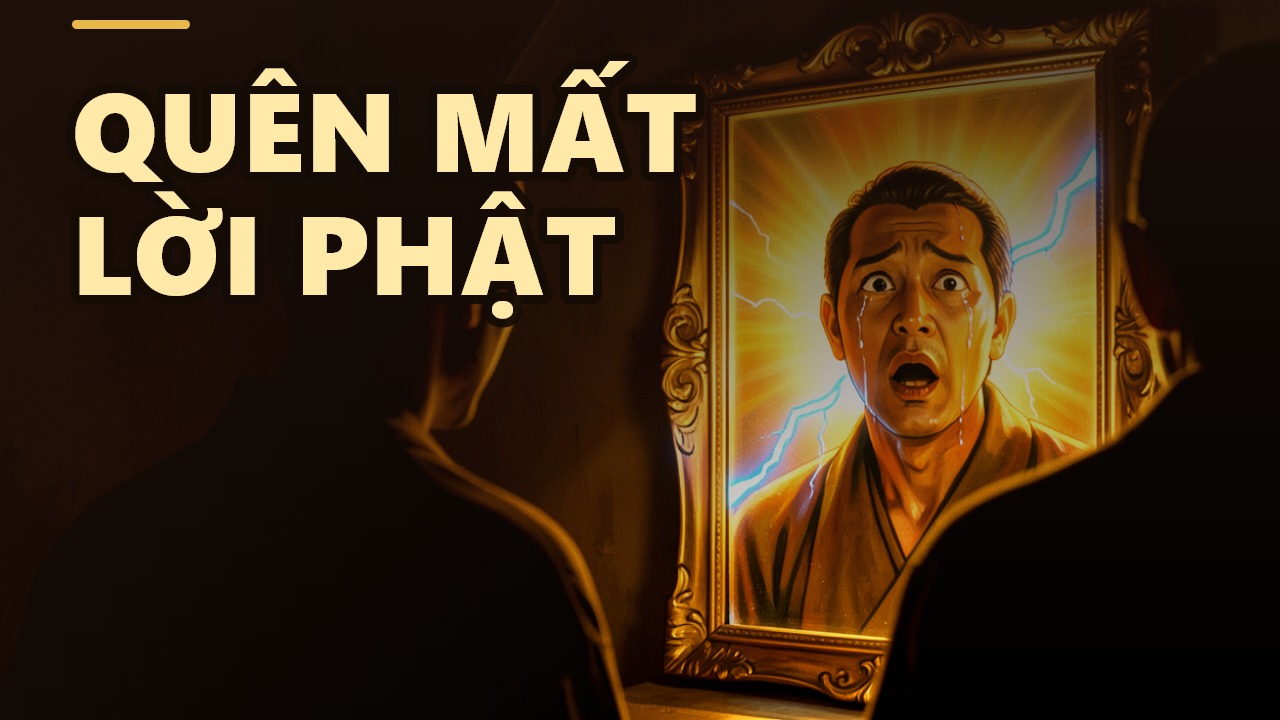
Have you ever forgotten something important? Why is memory the foundation of both daily life and spiritual practice? Thầy Thích Chân Quang helps you transform memory into spiritual strength.
Have you ever been talking with someone and suddenly forgotten what you were about to say? Or walked into a room, stood in the middle of it, and could not remember what you came to get? Those moments make us feel lost, as if we have lost connection with ourselves. Yet few of us realize that memory is not merely about remembering lessons or the way home. Memory is the very foundation that helps us understand who we are, where we are, and where we are going.
Memory – The Foundation of All Activity
In the third part of his lecture on the Structure of the Five Aggregates, Thầy Thích Chân Quang opened with a remarkably simple example: a computer without memory cannot function. Human beings are the same. From recognizing ourselves and meeting familiar people, to earning a living, everything depends on memory. Without memory, we could not call anyone by name, could not do any work, and could not even sit in meditation.
"Without memory, we would have no human activity, no life at all."
Thầy shares that in every single moment, we are using memory without even knowing it. We remember who we are, we remember our breath, we remember the Buddha's teachings. Without remembering, we would drift like madmen in a chaotic world.
Memory Has Two Parts: Storage and Retrieval
Thầy Chân Quang makes it clear that memory is not just about storing information. A good memory means both taking in a great deal and being able to retrieve it instantly. It is like meeting someone, knowing we have met them before, yet taking a long time to recall who they are—that is weak retrieval. Therefore, to have a strong memory, both of these aspects must be perfected.
"Memory consists of two parts. First, remembering is the data we are able to store. Second, it is the ability to retrieve it again immediately."
This explains why some people memorize quickly but forget just as fast, while others remember for a long time but cannot retrieve what they know. Only when both capacities are strong do we truly possess a sharp memory.
Forgetting – A Silent Danger
Thầy Chân Quang calls forgetfulness "a failure of being human," because it can bring about countless consequences. It may be as simple as forgetting to give one's father his medicine, or forgetting one's keys when leaving the house. But more seriously, it is forgetting the Buddha's teachings. When things go against our wishes, if we have forgotten the teaching on patience, we will become angry and lose our peace.
"Forgetting is a truly terrible thing."
Memory in Practice: Do Not Forget the Buddha's Teachings
Thầy offers a very ordinary example: when we are misunderstood or insulted by others, if we remember the Buddha's teaching on patience, we will remain calm. But because we forget, we immediately feel wounded pride and anger. For this reason, the memory that applies the teachings is a matter of survival in practice. If we recite sutras, chant mantras, and listen to dharma talks only to forget them right away, how can we ever transform our mind and heart?
"In order to practice, we must constantly have the memory that applies the teachings."
Memory and Blessings from Merit
What is fascinating is that Thầy Chân Quang emphasizes that memory is not merely a natural ability—it is closely connected to each person's blessings from merit. Those with good memory are usually those with merit. In the scriptures, the Arahants can remember countless lifetimes, recalling clearly everything they have done. This is a spiritual power, but it also shows that memory is a kind of blessing from merit.
"A person with merit will also be a person with good memory. And a person lacking merit will also be a person with poor memory."
When we understand this, we will no longer neglect the training of memory. Each day, as we remember the Buddha's teachings and practice mindfulness, we both cultivate blessings from merit and guide our soul toward the shore of enlightenment.
Memory is a priceless gift. When we learn to cherish and train our memory, we not only grow in understanding but also preserve our compassion. Remember the Buddha's teachings, remember your breath, remember humility, and remember to love those around you. For every memory planted with mindfulness becomes a seed of joy for the future.
AI-assisted translation from the Vietnamese original.
Read in Vietnamese →