
Are the Mahayana Sutras Not Spoken by the Buddha? A Journey from Shock to Deep Faith
From the shock of hearing that "the Mahayana Sutras were not spoken by the Buddha," this article shares a journey of recognizing the true value of Mahayana teachings and the spirit of harmony among Buddhist schools.
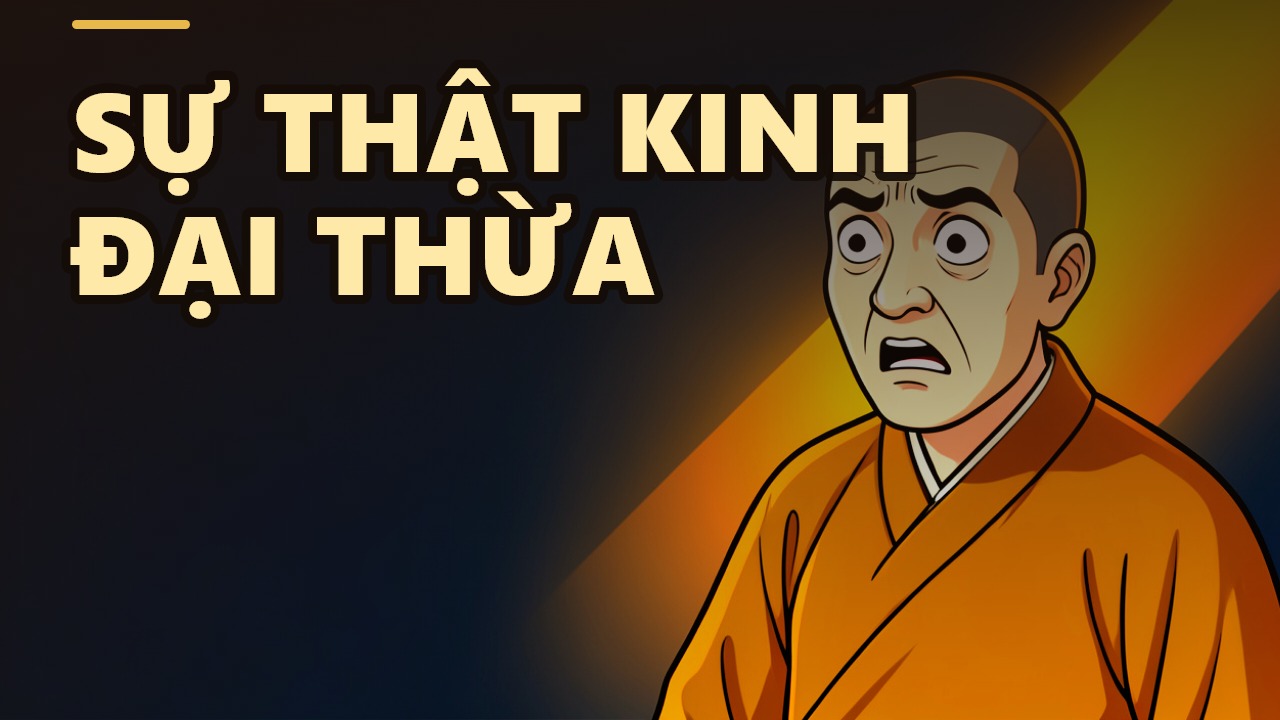
Have you ever wondered why the teachings in the Mahayana Sutras are so vast and magnificent? The numbers regarding worlds, sentient beings, and merit repeat endlessly like the sands of the Ganges River, far exceeding human imagination. Then comes a shocking truth: those sutras were not directly spoken by the Buddha. Does this diminish their value? Let us walk together on a journey to seek the truth through the dharma talk of Venerable Thich Chan Quang.
The Mahayana World: Infinite and Boundless
In the great Mahayana scriptures, we encounter numbers that overwhelm ordinary minds. If one tries to count from one to ten billion, many would go mad. Yet compared to the sands of the Ganges River, ten billion is nothing. Furthermore, the Buddha taught that each grain of sand in the Ganges becomes another Ganges River; only when all these sands are combined do they represent the worlds of the Buddhas. Humans with restless minds cannot possibly conceive of this.
"We must understand that such numbers were stated by practitioners whose minds had attained extreme purity."
Therefore, when entering the Mahayana world, we should not try to think or measure with our ordinary, worldly intellects. If we remain stubborn, we will indeed "go mad," as the teacher jokingly warned. But if we open our hearts, we will feel a new horizon where the soul is elevated.
A Shocking Truth: Were the Mahayana Sutras Not Spoken by the Buddha?
Many generations of Buddhists believed that the Mahayana teachings were spoken by the Buddha. This very faith propelled them along the path of practice. However, as dialogue between different schools expanded, it was discovered that the Mahayana Sutras did not come directly from the historical Buddha. For many, this was a major shock. Venerable Thich Chan Quang once shared that when he heard his own master say this, his eyes widened in disbelief, and his entire life of monasticism seemed to collapse.
"At that time, I was also one of those shocked people, but I was saved just in time to continue my practice."
However, after calming down and studying carefully, the teacher realized that this truth does not diminish the value of the Mahayana at all. It simply changes our perspective: the Mahayana Sutras are products of the profound wisdom and spiritual attainment of holy beings, especially Nagarjuna Bodhisattva, who is regarded as the Second Buddha Shakyamuni.
The Journey for Truth: From Theravada to Mahayana
To understand the connection between the original teachings and the Mahayana, the teacher spent years learning under a highly erudite elder monk. From the fundamental doctrines of the Nikaya and Agamas to treatises like the Madhyamaka Shastra, he built a solid foundation. Precisely because he mastered the Theravada basis, he could see the thread connecting two systems that seemed contradictory.
He also found similarities through the spirit of love and harmony. Once, while attending the funeral of a Theravada teacher, he naturally knelt down to pay respect to the Theravada monks. This action moved them deeply, as it was the first time they had seen a Mahayana teacher bow before Theravada monks. To him, there is no distinction between schools, only spiritual power and virtuous conduct.
"Never abandon one another. Let us walk together forever, following each other in eternal truth."
Harmony Among Schools: The Pride of Vietnamese Buddhism
Vietnamese Buddhism has a proud achievement: the harmony among its various schools, where Theravada and Mahayana nuns and monks sit together, eat together, and attend ceremonies together. This is rare in other countries. The teacher emphasized that we all worship the same Buddha, believe in cause and effect (karmic law), karma, samsara (cycle of rebirth), and trust in the Four Noble Truths and the Noble Eightfold Path. These commonalities must be placed first.
"We worship the same Buddha, believe in cause and effect (karmic law), karma, and samsara (cycle of rebirth), and trust in the Four Noble Truths and the Noble Eightfold Path."
The teacher also called on everyone to preserve this harmony, for it is how we become examples of love for the world.
Why Does the True Dharma Decline? Lessons from Grass and Rice
Many wonder: Why does the Buddha’s great true dharma eventually decline and get replaced by wrong views? The teacher explains that the natural instincts of humans—greed, hatred, and selfishness—do not need to be taught. Compassion, love, and sacrifice, however, must be taught and cultivated. When teaching is interrupted, goodness disappears quickly.
"What are the natural instincts of humans that do not need teaching? Desire, attachment, selfishness, greed, hatred... whereas compassion and love for others must be taught to exist."
Therefore, we must always practice, preserving both the study of the dharma and its application, so we are not swept away by the current of instinct.
Maintaining Reverence for the Buddha to Attain Enlightenment
In an age without the physical presence of the Buddha, it is difficult for us to attain enlightenment as people did in ancient times. But the teacher points out that if we strive to rebuild absolute reverence for the Buddha within our minds, the fruit of awakening can still sprout. Anyone who hears the teaching of non-self (anatta) and feels moved or delighted already possesses the roots for sainthood from many past lives.
"Anyone who comes to the Buddha's teachings (Dharma), hears the doctrine of non-self (anatta), and suddenly feels moved and delighted, already has the potential to become a saint."
Nurture this reverence every day. Kneel before the Buddha altar as if kneeling before the real Buddha, so that your mind may become pure and peaceful.
Venerable Thich Chan Quang’s dharma talk opens up an infinite Mahayana world while stirring our souls about the responsibility to maintain harmony in the sangha and uphold our faith. Walk this path with an open heart, so that each day brings you closer to the fruit of liberation.
AI-assisted translation from the Vietnamese original.
Read in Vietnamese →