
How Difficult It Is to Be Born Human – A Lesson from the Story of the Dragon King
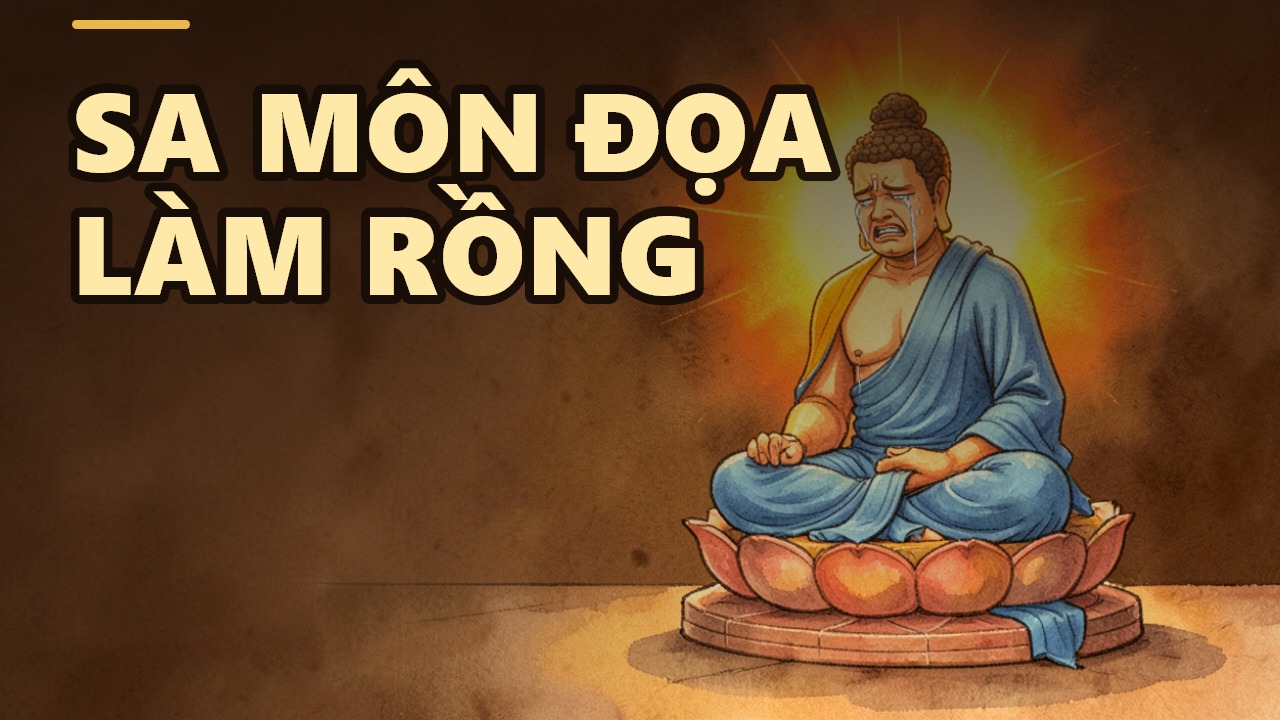
From the story of a monk who fell into rebirth as a dragon, Master Thích Chân Quang teaches the four difficult things from the Dhammapada, reminding us to cherish our human birth and our opportunity to practice and study.
Have you ever wondered why being born as a human is the most precious thing in this life? In his year-end teaching on the Dhammapada, Master Thích Chân Quang told a moving story about a young monk who, simply because he dismissed the small precepts, had to spend nearly one hundred thousand years in the body of a dragon.
The Story of the Dragon King – A Lesson on the Four Difficult Things
During the time of Buddha Kasyapa, there was a young monk who practiced diligently and attained meditative concentration. Yet because he broke the small precepts without ever thinking of repentance, when he passed away he was not reborn in a noble realm. Instead, he fell into rebirth as a Dragon King with immense supernatural power, but he was no longer human.
Only when Buddha Shakyamuni appeared in the world did the Dragon King take human form, come to pay homage to the Buddha, and weep over his mistakes. The Buddha then taught:
"How difficult it is to be born human, how difficult it is to live in joy, how difficult it is to hear the Dharma, and how difficult it is to meet a Buddha."
These four difficult things are four rare opportunities that sentient beings are given. Yet we often fail to recognize them, because we are too busy with daily life, and only feel regret when adversity arrives.
Being Human – Blessings from Merit That Are Not Small
In his teaching, Master Thích Chân Quang emphasized that only a human being can attain the noble fruits of realization. Even a dragon with supernatural powers and wondrous transformations cannot realize the path unless it first takes human form. This is why human birth is so precious.
"That today we are able to sit here, that we have been born as human beings, we must understand that our blessings from merit are not small. If we carelessly do wrong and lose this human body even once, there is no telling what kind of being we will become."
The Master recounted that some creatures, after falling into the animal realm, still have a chance to become human again. But there are others, such as geckos, crickets, and ants, for whom there is no way back once they have fallen. These are beings that have lost all their roots of goodness and are left with nothing but the instinct to survive.
Non-Human Beings and the Truth about Dragons
The Master devoted a long portion of the talk to explaining dragons, a kind of non-human being that truly exists. Through many historical stories and legends, such as dragons flying across the sky of Thăng Long when King Lý Thái Tổ moved the capital, or the tale of one of Chu Văn An's students who was in truth a water serpent spirit, we can see that dragons possess great power, can soar through the air, and can take human form.
The Master also connected this with science: when an object is charged with an enormous amount of energy, it can overcome the force of gravity. He pointed to qigong masters who can run across the surface of water, or to flying saucers that radiate a glowing halo. A dragon, too, is a form of life charged with immense energy, and that is why it can fly freely and appear and vanish at will.
Do Not Lose This Precious Human Body
Sometimes we live wastefully, look down on the small precepts, and tell ourselves it is nothing. Yet it is precisely these small mistakes that lead to great karmic results. The Master told the story of the dragon who had once been a student of Chu Văn An: wishing to save the people during a drought, he defied the mandate of heaven and had to die. This shows how strict the law of cause and effect (karmic law) truly is.
To be born human is an opportunity to practice, but it is also an opportunity to create karma. If we use this human body to do unwholesome things and to indulge greed, hatred and delusion, our blessings from merit will slowly run dry. But if we know how to use it to hear the Dharma and to walk the path of practice, then this human life will truly have been worthwhile.
Practicing Today
The lesson Master Thích Chân Quang leaves with us is this: never look down on small things. Live with awareness, keep the precepts, do good deeds, and create good conditions so that we do not lose this precious human body.
Take time to hear the Dharma, to understand its truth, and to put it into practice. Each day is an opportunity to nourish the roots of goodness. Do not wait until the human body is lost to feel regret, for by then it will be far too late.
AI-assisted translation from the Vietnamese original.
Read in Vietnamese →