
When death arrives, you leave this world alone – A message from the Dhammapada
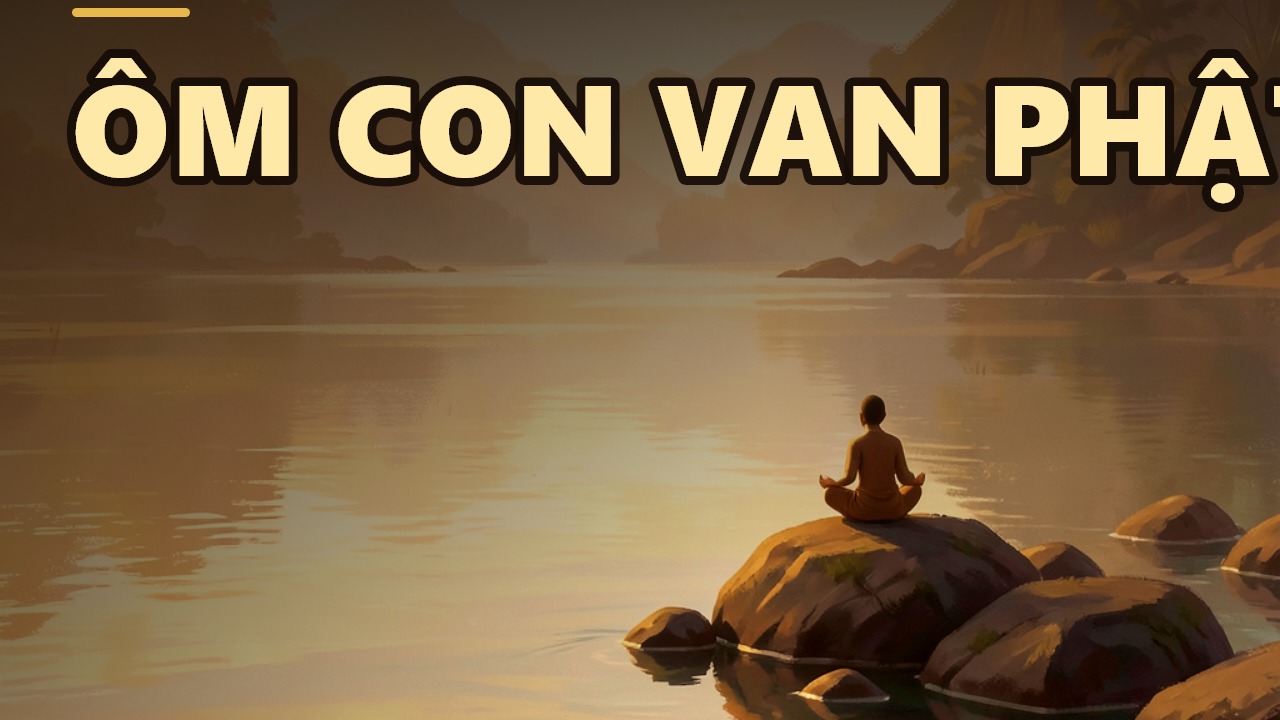
This is a dharma talk by Thầy Thích Chân Quang about the tragic stories in the Dhammapada, teaching us to live with awareness of death and to practice letting go of attachment in order to find the joy of liberation.
There was once a mother who carried the lifeless body of her child to the Buddha, begging him to bring her son back to life. The Buddha told her to find a single mustard seed from a household where no one had ever died. She wandered from house to house throughout the village, but every home had lost someone. Suddenly, she awakened to the truth: death is a law that no one can escape. This is the story of Kisagotami in the Dhammapada, which Thầy Thích Chân Quang explains in this dharma talk.
The flood of death sweeps away every attachment
Thầy Chân Quang recounts: One whose mind is consumed by love for children and livestock will have them all taken by death, like a flood that washes everything away.
We spend our whole lives loving our family, our children, our possessions, but in the final moment, everything is swept away like a flood. Thầy says: "If we do not part from one another in life, then in death we must surely lose each other." Therefore, while living in this world, we must clearly understand the fleeting nature of all things, so that we do not suffer when loss comes.
The barrier between the living and the dead – an invisible sorrow
Thầy tells the story of a Vietnamese Buddhist woman who married an American man, and who remembered being killed on a road in a previous life. Her spirit ran home to bring the news, but no one could hear her voice. She wept and wailed, yet her family continued eating their meal, laughing and talking as usual. Thầy Chân Quang observes: Everyone who dies returns to see their loved ones again, but they all suffer in exactly the same way – whatever they say, their loved ones cannot hear.
This is the barrier between the living and the dead – the living cannot see or hear, while the dead stand right there as if invisible. That suffering is even more profound than the pain of those left behind.
We leave this world alone
Patacara's story is even more tragic: her husband died from a snakebite, her child was carried off by a tiger and swept away by the water, and her parents died when their house collapsed. She went mad, running naked into the monastery. The Buddha spoke this verse to her: When death arrives, we leave this world alone; no father, mother, child, or anyone else can shield us. Understanding this deeply, the wise devote themselves to keeping the precepts and striving diligently on the path to the tranquil peace of nirvana.
Thầy explains: "In death, we are utterly alone. We must leave everything behind. We carry nothing with us except our own karma of wrongdoing and merit." For this reason, those who understand the Dharma devote themselves to creating merit, without clinging to anything impermanent.
Meditative concentration – facing impermanence
Why does a disciple of the Buddha not fear death? Because each day, in sitting meditation, they contemplate the impermanence (anicca) of the body. Thầy teaches: A disciple of the Buddha, when sitting in meditation each day, contemplates this body as impermanent. This body will grow old, will fall ill, will die. The body will decay, and even the bones will crumble into dust and scatter.
Because of this, "A true disciple of the Buddha does not fear death, but only fears pain. At the moment of death, there is some pain." But that is the karma to be repaid, and meditative concentration prepares the mind and heart to face it.
Letting go of small joys to find the greater joy
When the Buddha saved the kingdom of Vesali from drought and epidemic, the monks praised his miraculous powers. But the Buddha did not accept this praise. He said: A Buddha does not use supernatural powers to create glory for himself. Rather, this is cause and effect (karmic law).
He then told of a past life – a father who made offerings and lovingly cared for the stupa of his son, who had become a Private Buddha. Because of that wholesome fruit, the glory now shone forth brilliantly. This is the meaning of the verse: Letting go of a small pleasure, one gains a greater joy. The wise abandon small pleasures in order to seek the boundless joy.
We, too, should let go of fleeting pleasures and petty attachments, in order to return to the great joy of meditative concentration and liberation.
Living with mindfulness each day
Thầy Chân Quang reminds us: Understanding this deeply, the wise devote themselves to keeping the precepts and striving diligently on the path to the tranquil peace of nirvana.
Let us set aside time each morning to sit in meditation and contemplate impermanence. Do not let death arrive unexpectedly, leaving us with regret. Live as though death were near, so that we may cherish what we have, and practice letting go of what must one day be lost.
AI-assisted translation from the Vietnamese original.
Read in Vietnamese →