
When Cultural Boundaries Dissolve, You Become a 'Rare Creature' to Be Preserved
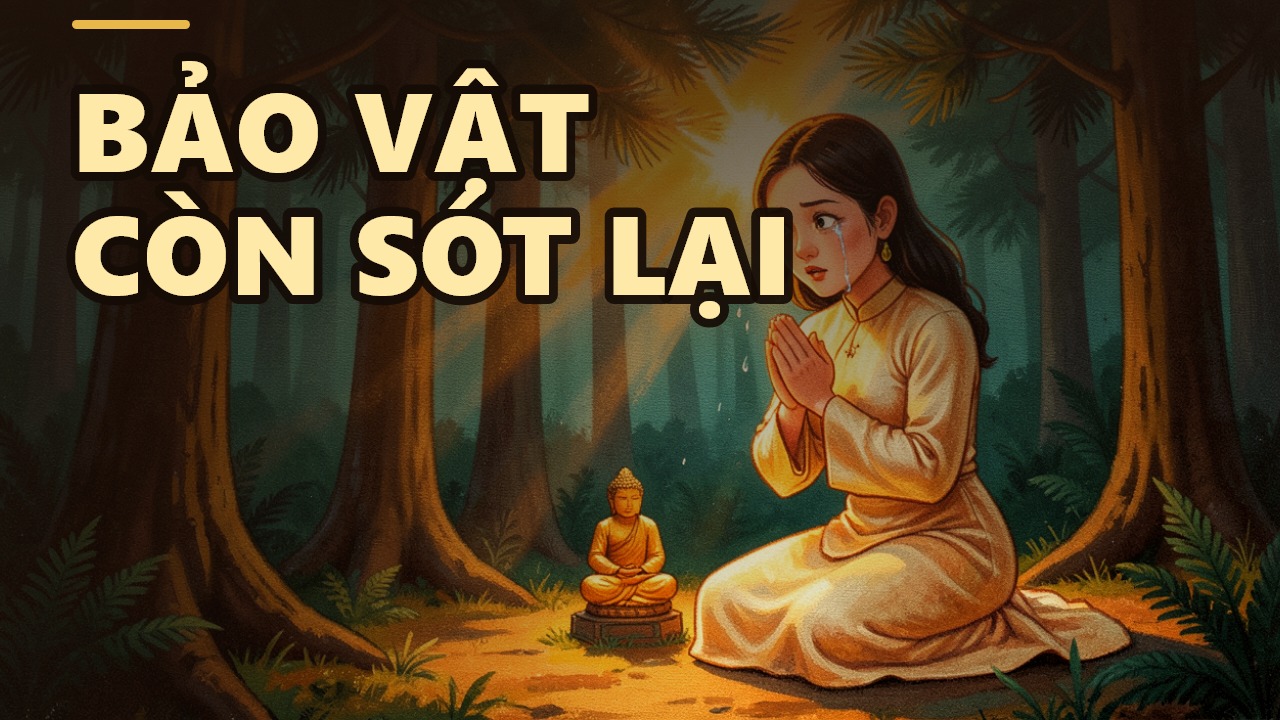
**Summary:** In an era of globalization, cultural boundaries are dissolving. Venerable Thích Chân Quang invites you to become a 'rare creature' preserving the spiritual beauty of our national heritage, and to learn to diminish the ego to live in peace.
Have you ever wondered, amidst the age of digital technology and the omnipotent internet, what makes a summer retreat in the highland town of Bảo Lộc leave such an unforgettable mark on the hearts of hundreds of young people? It is the moment you kneel before the Buddha, listen to the temple bell resounding through the pine forests, and realize the sacredness of your cultural and spiritual roots. Venerable Thích Chân Quang opened the retreat with a deeply concerned observation about the loss of cultural boundaries.
**Cultural Boundaries Are Fading**
The world is becoming flat. Geographical borders remain, yet cultural borders are being eroded day by day. As the internet connects everything, every nation and region is easily influenced by foreign values. Venerable Thích Chân Quang observes:
*In this current age, the cultural boundaries between nations seem to be breaking down.*
And what is the consequence? He warns:
*Whatever culture is most appealing to people becomes dominant.*
Sometimes, negative values are more attractive. In films and on social media, the easygoing, permissive lifestyle of the West spreads, causing many young people to lose their sense of moderation. The traditionally strong East Asian family is now beginning to fracture because of these values.
**East Asian Culture: A Remaining Treasure**
Yet amidst these changes, there are still precious values that the world must admire. These are the loyalty, self-restraint, and filial piety of East Asian people. Venerable Chân Quang shares:
*Often in East Asia, people live together until death. Even after death, there remains loyalty and love.*
He tells a story about a female Buddhist follower who married an American man. When she brought her husband to meet him, the Venerable told the husband that he was very fortunate to marry a Vietnamese woman, for she was moral, pure, and faithful. The American husband replied: "That is what I love about this country, Vietnam." The very values that our ancestors have preserved for generations, values that make Westerners admire us, are gradually fading away.
**The Lesson of Obedience: Diminishing the Ego**
In this context, he teaches us a lesson that seems simple yet is profoundly deep: learning to obey, learning to accept, and diminishing the self. East Asian parents love their children but are also strict. For the Vietnamese, the mother's rod is a sacred thing:
*Among you, anyone who has been spanked by their parents on the bottom has been given a great blessing.*
When one feels pain but is not permitted to anger, the ego shrinks. The person who naturally becomes smaller no longer feels envy or harbors hatred and delusion. He adds further:
*Our people, when in pain but not allowed to be angry, the ego itself disappears completely.*
In America, a mother once shared that her son had to go through much suffering and guilt before he learned the lesson of "A-B-C" — obedience — at the age of thirty-five. But in Vietnam, we learn this from early childhood, and thus have an entire lifetime ahead to live well and live in serenity.
**A Small Ego: The Key to Happiness**
When the ego is diminished, we live without jealousy. He teaches two golden rules:
*In this life, there is constant competition and comparison — from exam scores, job positions, to the land left by one's parents. A practitioner must maintain the following mindset:*
*If someone surpasses me, I am happy for them; if someone is lesser than me, I feel compassion for them.*
This is the attitude contrary to the world's way. It is no accident that he calls this the teaching of non-self — the most precious element of Buddhism. It was by extinguishing the self that the Buddha attained enlightenment. As proof, he recounts the story of the Elder Abbot — an aged man yet completely unyielding and unattached. The Elder Abbot was always ready to supplement and improve, never considering the path he once walked as the absolute truth. This is the model of a person with a small ego, an open and humble spirit.
**The Mission of the 'Rare Creature'**
To preserve these values, today's youth must recognize that they are special individuals. Venerable Chân Quang spoke very vividly:
*I call you all rare creatures, like those entered into the Red Book, on the verge of extinction.*
To be connected to a summer retreat under the roof of a beloved temple is to be given a wondrous seed. From that point, each person must etch the mark of Buddhism in their heart, to cherish for a lifetime, resisting the invasion of cultures that break humanity's beauty. You are one of those rare creatures. Live so that your ego diminishes, and your love grows, just as his message reminds: 'We must rejoice when seeing others succeed — as if we ourselves achieved it.'
You were present at this retreat; you have already planted that wondrous seed. In a bustling world, preserving national culture is not just a responsibility but a happiness. Let your heart resonate, let your ego become smaller, and you will see how peaceful this life can be. With one step into a temple, feeling the echo of the bell and the shade of the pagoda, you become someone preserving a priceless heritage — the heritage of benevolence, of morality, of East Asian culture. And you will never walk alone, for the Buddha, the Teacher, the venerable Sangha, and kindred spirits are always with you.
AI-assisted translation from the Vietnamese original.
Read in Vietnamese →