
When Art Becomes the Way: A Buddhist Perspective on Beauty
This article explores the perspective of the Buddha's teachings (Dharma) on art: from method, to art, to the Way, and how art can help human beings move toward enlightenment.
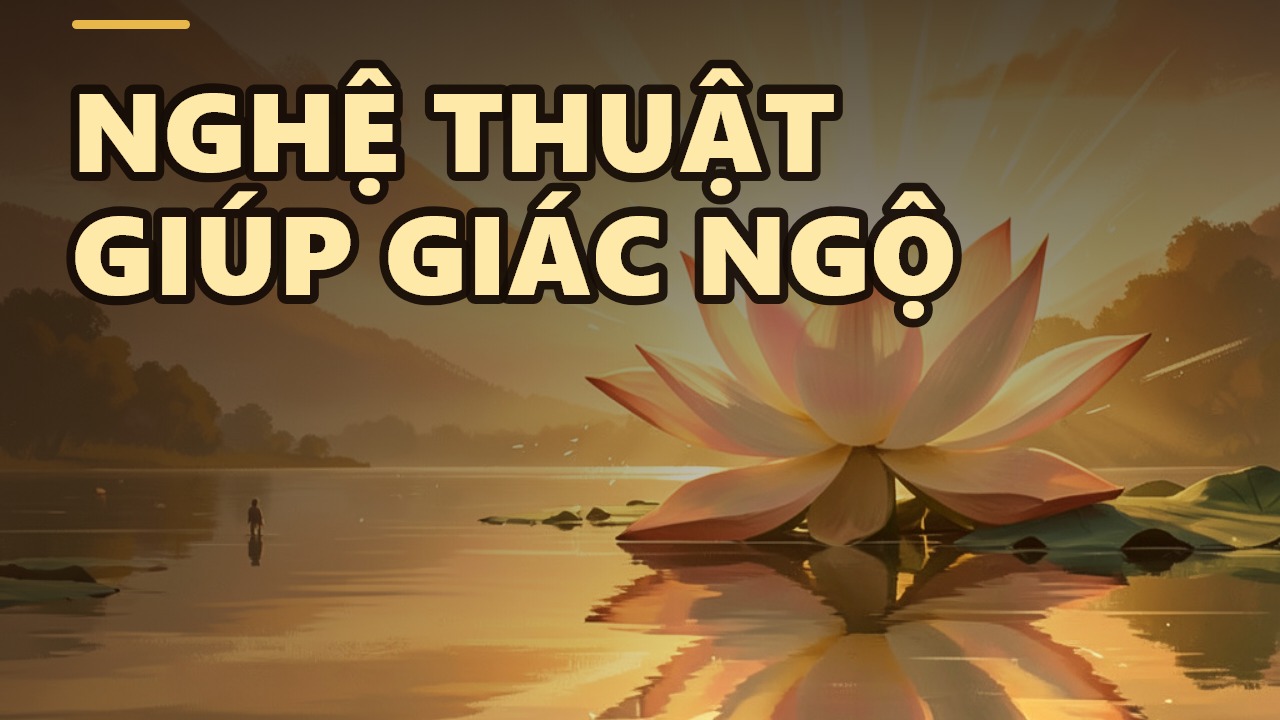
Have you ever wondered why an ordinary meal is simply a way to fill the stomach, while certain dishes make people sit down and savor them as though they were works of art? And when does art rise above mere beauty to become a way of life, a path of practice?
Art Begins with Method
In the view of the Buddha's teachings (Dharma), everything we do in life needs a method. Cooking requires a recipe, speaking requires a way of expressing oneself, and making furniture requires technique. But when a method is elevated with skillfulness, refinement, and the aim of delighting those who behold it, it becomes art. Master Thích Chân Quang explains:
"Art is method, but when it is elevated, when it reaches a higher level, when it brings greater delight to those who appreciate it, then it has become art."
We see this in the example of cooking. An ordinary pot of rice is simply method, but when a dish is prepared deliciously and presented beautifully, it becomes the art of cooking. In the same way, sewing clothes began merely as a way to cover the body, yet over time, fashion has become a refined art. Or consider public speaking: speaking with correct grammar is method, but when words become captivating and rich with emotion, they become the art of speech.
When Art Is Elevated into the Way
If art is beauty created by skillfulness, then the Way is when that art is steeped in philosophy and profound meaning. Master Thích Chân Quang shares:
"The most important battle in a human life is not conquering others, but conquering oneself."
The Japanese elevated the art of flower arrangement into kadō, the way of flowers; the drinking of tea into chadō, the way of tea; and even swordsmanship into kendō, the way of the sword. In kendō, the meditation master does not fight in order to defeat his opponent, but to subdue his own ego and his spirit of competition. For this reason, a meal can become a lesson in philosophy, and a vase of flowers can symbolize the harmony of the Sangha and lay Buddhists. When art carries such teachings within it, it quietly becomes the Way.
Why Do Human Beings Have Art?
Art does not come from animals; only human beings possess it. According to Master Thích Chân Quang, this arises from two causes. First, human beings are intelligent and can recognize what is good and beautiful in life. Through wisdom, people always seek to make everything more beautiful and more skillful, from the way they dress to the way they build their homes. Second, art arises when people have blessings from merit and leisure time. In ancient times, when people had to toil relentlessly for their next meal, they had no time to compose poetry or to dance. But once they had stored enough food and enjoyed abundant harvests, people could finally gather around the fire, lifting their voices in song and moving in dance.
"Art appears when people begin to have abundance."
This is why art is a spiritual need that stands above our basic human needs. The price of art is therefore higher than that of food, and this fits perfectly with the law of the market.
The Development of Art: From Speech to Music
Art develops ceaselessly in human life. Beginning with spoken words, people created literature and poetry, and at a higher level, song. Music was a long step forward, for composing a beautiful piece of music requires great talent and a rich heart. From music, people developed dance, a union of music and visual beauty. And from primitive drawings made for communication, human beings gradually built the art of painting with countless colors and materials.
Among all forms of art, music holds a special allure. In religions, music is regarded as present even in the heavenly realms. Buddhist scriptures tell of Sakka, the king of the gods, who had celestial musicians perform music as a way of making offerings.
Music in the Buddha's Teachings (Dharma): The Story of the Divine Musician
There is a fascinating story in Buddhist scriptures about music. Once, Sakka, the king of the gods, wished to visit the Buddha while the Lord was absorbed in meditative concentration in a cave. He asked a divine musician named Pañcaśikha to awaken the Buddha with the sound of his lute. This celestial being played a love song praising his beloved, but one verse said: "I love you as the Arhats love meditative concentration." Hearing this, the Buddha smiled and asked where the music came from. The musician honestly confessed that he had composed it to win the heart of a maiden, and that thanks to that very verse, she was moved. Because the lyrics carried the spirit of the Buddha's teachings (Dharma), the music brought about something good and wholesome.
Through this story, we see that music is not merely emotion. When it is infused with moral values and philosophy, it can nourish the human heart and draw people closer to goodness and inner peace.
Conclusion
Art is not a luxury that disturbs our inner stillness. On the contrary, it can be a wonderful path of practice if we know how to elevate it from method into art, and from art into the Way. Let us look back at the things we do each day: our meals, our songs, the way we dress, or even the way we speak. If we nurture them with skillfulness, wisdom, and a touch of philosophy, our lives will become a symphony of beauty and enlightenment.
AI-assisted translation from the Vietnamese original.
Read in Vietnamese →