
Qigong and the Mind: The Inner Power That Made the Buddha a Superhuman Being
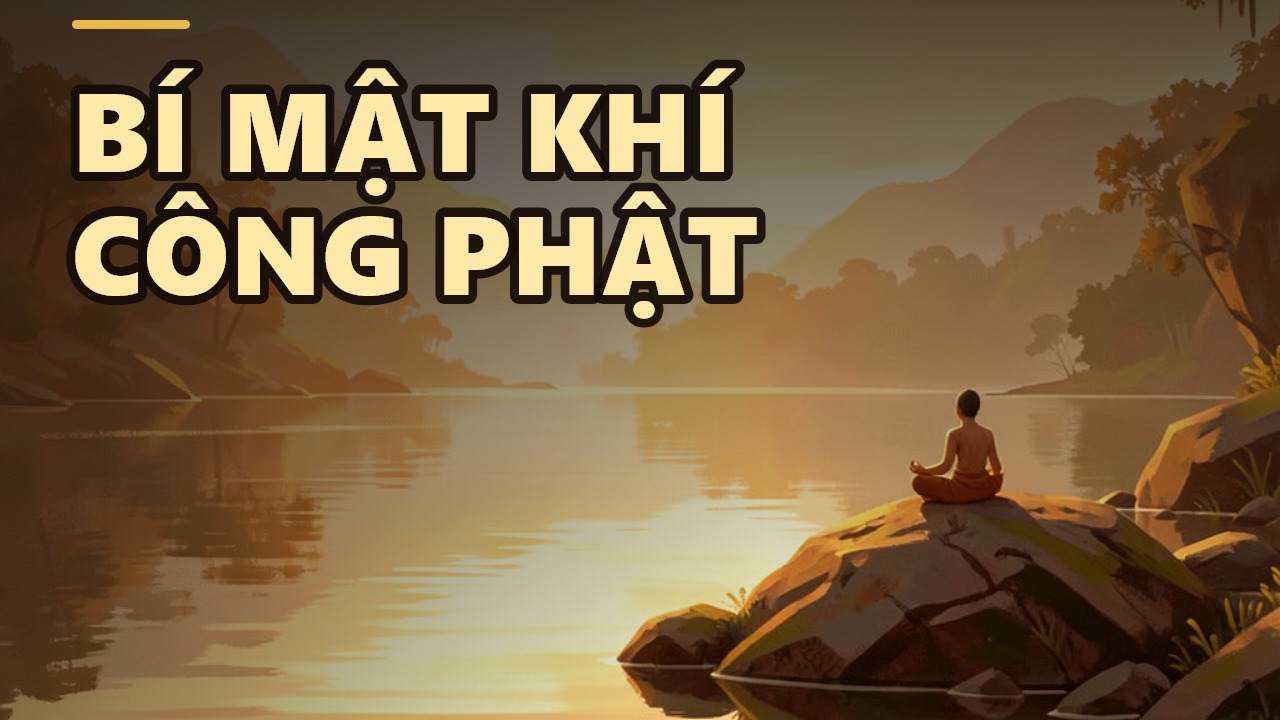
Do you believe that ancient people possessed extraordinary strength? Venerable Thich Chan Quang reveals the practice of qigong combined with mental cultivation, which serves as the foundation for deepening meditative concentration and opening the door to liberation.
Have you ever wondered why the Buddha—a prince who lived in luxury—was able to attain supreme enlightenment? Is it possible that our ancestors truly possessed supernatural powers beyond our modern imagination? In his final dharma talk on meditation, Venerable Thich Chan Quang disclosed a secret hidden within the ancestral treasury of spiritual practice: the union of qigong and mind cultivation.
**Qigong and the Mind: A Practice for Body and Spirit**
When we hear the term qigong, most of us immediately think of muscle exercises or breathing techniques. However, for our ancestors, qigong was not merely a physical technique. Venerable Thich Chan Quang explains, “Qigong is like the body, while mind cultivation is for the heart. It is a perfect harmony, a rhythmic coordination of both body and mind.”
Before Buddhism arrived, ancient Vietnamese people practiced this discipline with the goal of becoming immortals. They believed humans could transcend their ordinary status to become divine beings. Remarkably, if one simply elevates the intention toward liberation, this very path leads directly to the shore of enlightenment.
**The Golden Principle: Strong Inner Power Enables Deep Meditation**
Many assume that practicing meditation only requires sitting still and controlling the mind. Yet, Venerable Thich Chan Quang affirms an unchanging principle: “Only those with strong inner power can advance deeply into meditation. This is a rule that cannot be wrong.”
Consider this: when the body is weak and tired, the mind becomes restless, making it difficult to sit still. Conversely, a person who is healthy and full of energy easily achieves stability. This is why the Buddha, while still a prince, received rigorous training in martial arts. Historical records state that he was “extremely skilled in combat, possessing unparalleled strength.” Some researchers dismiss this as embellishment. But those who understand deep spiritual practice recognize it as a truth, a necessary foundation.
**The Buddha: A True Superhuman Being**
Within the palace, King Suddhodana summoned the finest martial masters in the land to teach the prince. The Buddha did not just live comfortably; he underwent harsh physical training, achieving extraordinary vital energy. Venerable Thich Chan Quang states, “The Buddha possessed unparalleled strength, which was a mandatory condition for his spiritual practice to reach perfection. This is essential. Only those within the profession know that this aspect is not an addition by later storytellers, but a genuine fact.”
This offers an interesting perspective: physical strength served not only for combat but also as the bedrock for the spiritual journey.
**A Reversed Perspective: Ancestors May Have Been More Spiritually Advanced**
We often pride ourselves on being more civilized than our ancestors. However, Venerable Thich Chan Quang teaches that this thinking may be flawed, much like our past belief that the sun revolved around the earth. Ancient people lacked telephones and airplanes, yet in terms of spirituality and ethics, they may have far surpassed us. He warns, “Be careful. Ten thousand years ago, there were times when humans were more advanced spiritually than we are now. In matters of the spirit, holiness, morality, and character, people today do not compare.”
Evidence lies in discoveries such as acupuncture points and meridian systems, which modern medicine has yet to fully explain. Our ancestors did not dissect bodies to find these points, yet they knew them precisely. This is the fruit of a subtle spiritual civilization.
**Eastern Strength Through Qigong and Mind Cultivation**
The glorious victories of the Vietnamese nation, such as Tran Hung Dao’s tactic of using short weapons to defeat long ones against the Mongol Yuan army, or the traditional Binh Dinh martial arts where one fighter could withstand twenty—all relied on the foundation of qigong. Venerable Thich Chan Quang recounts, “People of East Asia have smaller physiques... yet our ancestors achieved extraordinary feats.”
He also mentions the Emei sect in China, home to many warrior-taoists capable of remote healing, such as Zhang Xin. These abilities were not sorcery, but the result of combining physical cultivation with mental practice.
**The Path of Liberation for Buddhists**
Ancient practitioners used qigong and mind cultivation to become immortals. Buddhist disciples use that same foundation to go further. Venerable Thich Chan Quang says, “As for us, because we understand the Dharma, we use that health to enter meditative concentration and move toward non-self (anatta). That is the only slight difference.”
That small difference is everything. Without the goal of non-self (anatta), you might become a superhuman being but remain trapped in samsara (cycle of rebirth). With right view, you will know how to utilize inner power to deepen meditative concentration and ultimately attain liberation.
Qigong and mind cultivation are not foreign martial arts. They are a precious heritage from our ancestors, a key that unlocks both health and wisdom. Regardless of your spiritual goals, begin training your body today. Each breath and each movement is a step closer to peace and enlightenment.
AI-assisted translation from the Vietnamese original.
Read in Vietnamese →