
When You Practice the Dharma, Who Is Silently Protecting You?
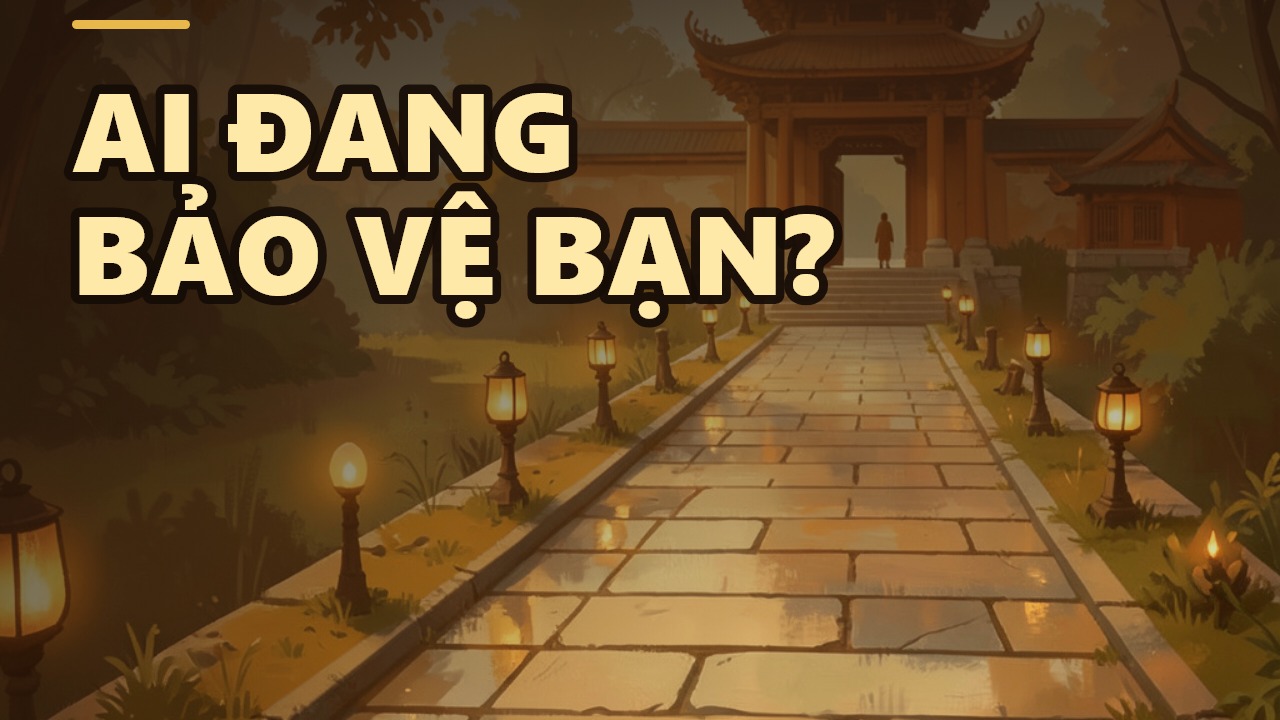
The invisible world always supports sincere practitioners. At the same time, we need firmness to protect the Buddha's teachings. Have you ever wondered who is watching over you when you sit quietly in meditation, beyond those physically present beside you? In a dharma talk on the Dharaṇi Chapter of the Lotus Sutra, Venerable Thich Chan Quang shared a story that left a lasting impression. A Buddhist devotee with a fighting spirit often stood up for the weak but sometimes attacked others excessively. One night, he dreamed of a monk offering advice. The next morning, he received a letter from Master Chan Quang containing the exact same message as his dream. This reveals an unseen connection between the visible and invisible worlds.
The Invisible World: Silent Companions
When we sincerely commit to spiritual practice, we are not alone on the path. Master Chan Quang offers a perspective: surrounding us are many beings from the invisible realm—devas, bodhisattvas, and even spirits—who observe and feel our presence. They do not see with physical eyes, but they perceive the mind/heart. If we practice truthfully, they draw near to support us; if we become arrogant, they gradually distance themselves.
Our ordinary eyes cannot see this reality. Human relationships can be superficial and prone to misunderstanding. Often, we perform good deeds without our neighbors knowing, or they may misinterpret our intentions. However, in the invisible world, there is no such confusion.
This explains why we sometimes experience unexpected luck. We wish for a recording of a dharma talk, and it appears naturally; we desire something, and it comes to pass. This is not mere chance, but the protection offered by these unseen beings. Yet, if arrogance arises and we attribute success solely to our own talent, mistakes begin to follow. At that moment, the supportive beings silently depart, leaving us to face the consequences of our own karma.
The Necessity of Firmness in Protecting the Dharma
The Dharaṇi Chapter contains five mantras from five bodhisattvas, including one from Rakshasa beings, who appear fierce. Master Chan Quang explains that firmness is sometimes necessary. Buddhism is a path of compassion, but it does not mean being gentle at all times. Just as Avalokiteshvara Bodhisattva manifests as the Fierce Guardian to subdue evil, we too must balance kindness with strength.
We often think Buddhism is only about gentleness, but pure gentleness alone cannot accomplish everything.
In daily life, there are moments when we must adopt a resolute attitude to protect the true Dharma. For example, if someone vandalizes a temple, gentle words may have no effect, and a firm stance is required. This is not violence, but wisdom-backed determination. The teacher emphasizes that we must balance compassion with the ability to stand firm against evil.
No Thought Is Truly Yours Alone
A special point in the teaching is the warning about the nature of thoughts. We usually believe every thought in our head belongs to us, but external forces may influence them. Frustrated or lonely spirits can infiltrate our minds, causing us to argue or harbor resentment without understanding why. Therefore, the doctrine of non-self (anatta) is not just philosophy, but a practical principle.
Buddhist devotees must remember the teaching of non-self (anatta). Nothing truly belongs to us. This body is not ours. These thoughts are not ours.
When a thought arises, we must be cautious and examine whether it aligns with the Dharma. Do not trust it immediately. Without control, we may create karma based on thoughts that are not truly ours, leading to future suffering (dukkha). This vigilance is the key to avoiding being led astray.
Cause and Effect (Karmic Law) and Intermediate Conditions
Master Chan Quang also highlights a profound principle: moving from cause to effect is not immediate; it requires many intermediate conditions (dependent origination). A person becomes wealthy due to the cause of generosity in past lives, but to manifest wealth, they need talent and opportunity. They often credit their success to their own abilities, unaware that talent and opportunity are intermediate conditions created by the seed of generosity. The support from the invisible world flows within this chain of cause and effect (karmic law).
From the moment we begin practicing, the result is encountering more fortunate circumstances, though we may not recognize the intermediate conditions involved.
This understanding fosters humility. Do not boast of your skills or underestimate merit. The more we practice, the smaller we feel, and the more grateful we become for the blessings from merit granted by Buddhas, Bodhisattvas, and all sentient beings.
Live according to the Dharma and practice sincerely. Never think you are alone. The entire invisible world walks forward with you. Keep your mind clear and do not let foreign thoughts lead you astray. Remember that gentleness and firmness always walk hand in hand on the Bodhisattva path.
AI-assisted translation from the Vietnamese original.
Read in Vietnamese →