
When You Endure Injustice: The Patience of a Practitioner
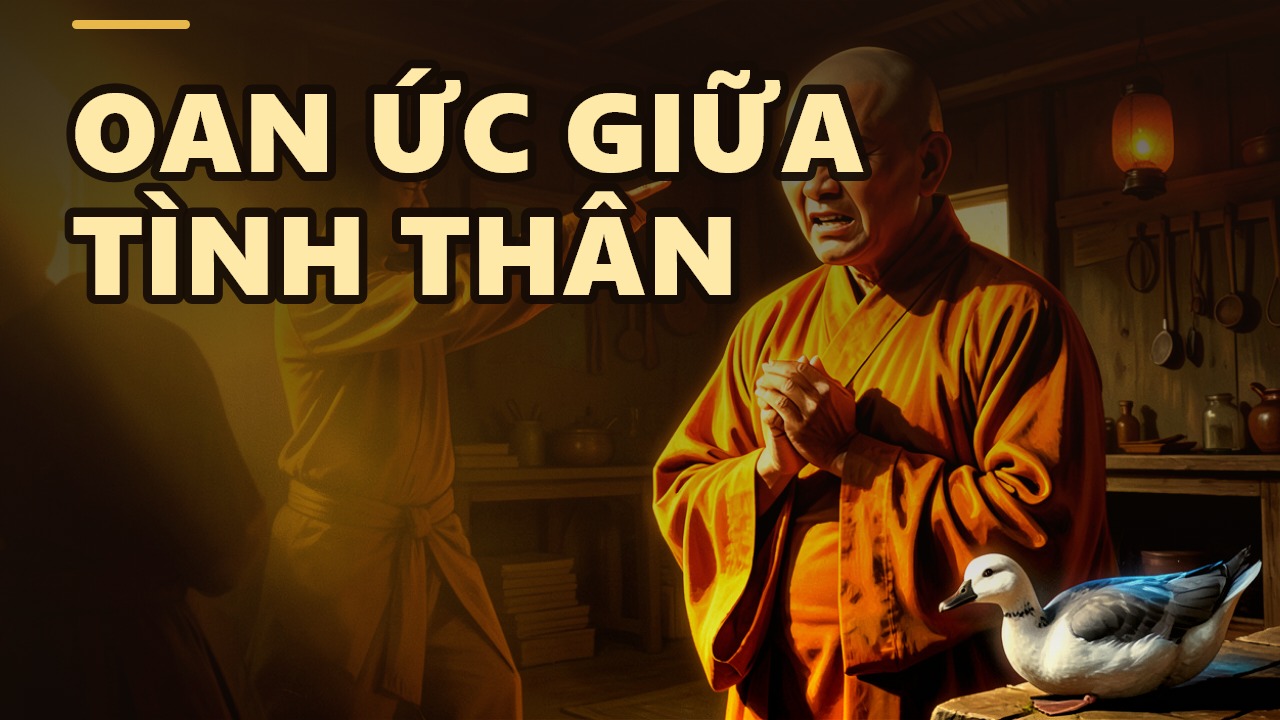
**SUMMARY:** A lesson from the story of a monk who endured blame to protect a goose, alongside teachings on the impermanence of affection and the virtue of tolerance.
Have you ever been so misunderstood that it felt impossible to clear your name? That feeling is like an arrow piercing the heart, leaving a quiet wound. A dharma talk by Master Thích Chân Quang, drawn from the story of a monk and a goose in the Dhammapada, offers a profound perspective on patience and compassion.
**The Story: From Lasting Bond to Unjust Sorrow**
The story tells of a monk who went on alms rounds to a goldsmith's household for twelve years. The elderly couple treated him like a son, preparing food for him each day. Their bond was so deep that it was easy to mistake it for something permanent. But one day, a precious gem from the royal court was sent to the household for a setting. While cooking, the craftsman's hand, stained with fish blood, accidentally touched the gem. The pet goose, seeing the glint, swallowed it whole. When the owners discovered the gem missing, suspicion fell entirely on the monk—the only person present. Interrogated, beaten, and even stripped of his robe, the monk remained silent, not uttering a word. Finally, in a fit of rage, the master kicked the goose to death. Only then did the monk speak a few words. It turned out the goose had swallowed the gem. Not wanting the owners to kill the goose to retrieve it, the monk had chosen to bear false blame, endure beatings, and suffer humiliation without a word. He endured it all to protect the life of an innocent being.
**Worldly Affections Are as Fragile as the Wind**
The story offers more than this event. Through it, Master Chân Quang emphasizes a lesson on the impermanence of human affection. The love in ordinary life is easily changeable, fading like a passing breeze. When we love someone or are loved, we should not hastily assume it will last forever. "Earthly affections are never eternal."
The Master teaches that if we rely on affection to demand, to make claims, or to feel jealous, then the good conditions will soon fade. The more one boasts about a lasting bond, the more easily it may crumble. "Whatever we rely on, whatever we boast about in worldly affection, is already preparing for its own reversal."
Understanding this, we can live more serenely, not too troubled when affections change, for that is the way of the world.
**The Beauty of a Noble Mind: The Perfection of Patience**
The most praiseworthy quality in the monk was his extraordinary forbearance. In a single morning, he witnessed the worst: familial trust turning into suspicion, hatred, and contempt, followed by brutal beatings. Yet, his heart was solely concerned with protecting the goose's life. "The monk was truly great, his morality truly great; to protect the life of the goose, he would rather bear false blame."
The Master also notes that the monk had not yet attained enlightenment, as he was still attached to the bonds of gratitude. Yet, this patience is the foundation of a true practitioner. In this world, there are injustices people must endure to shield what is good. We can tolerate physical pain, but it is hard to bear contempt. The monk endured both—out of compassion.
**Do Not Hastily Condemn Without Knowing the Truth**
The story also teaches us to be very careful in our judgments. Master Chân Quang gives many examples from life: silent soldiers, parents misunderstood by their children, or a student taking the blame for a friend so the friend could continue school. All carry a lifelong burden of injustice. Therefore, when we hear something bad about someone, we should not readily believe it. "What we hear and see may not be the truth. Let us be tolerant of others' faults, for perhaps they are suffering an injustice."
Let us open our hearts and let clear understanding guide our way.
**Choose the Path of Tolerance**
The lesson from the goose's story is not only for practitioners but for everyone walking the path with the Buddha's teachings. When you face injustice, think of that monk from the past, and your heart may feel lighter. When you see someone misunderstood, remember they might be silently protecting someone or something noble. Be tolerant with others, for we ourselves need tolerance. And as the Master teaches, "In this world, there are still many injustices, heavier than those we have ever known." Therefore, let each of us resolve to live virtuously and with patience, to become a beneficial presence in the world.
Please hold this story as a treasure. Then, when faced with hardship, we will not shrink away. When we must choose between preserving our reputation or helping another, we will choose the way of the monk—to bear injustice alone, so that another life may be safe. This is the noble way of following the Buddha.
AI-assisted translation from the Vietnamese original.
Read in Vietnamese →