
The Essential Mantra of Meditation Practice: Don't Practice on the Tip of the Tree – The Foundation the Buddha Taught
If you want a peaceful mind/heart, you must begin by cultivating merit, harmonizing the body, and knowing how to breathe correctly – this is the foundation the Buddha taught, one that many people often overlook.
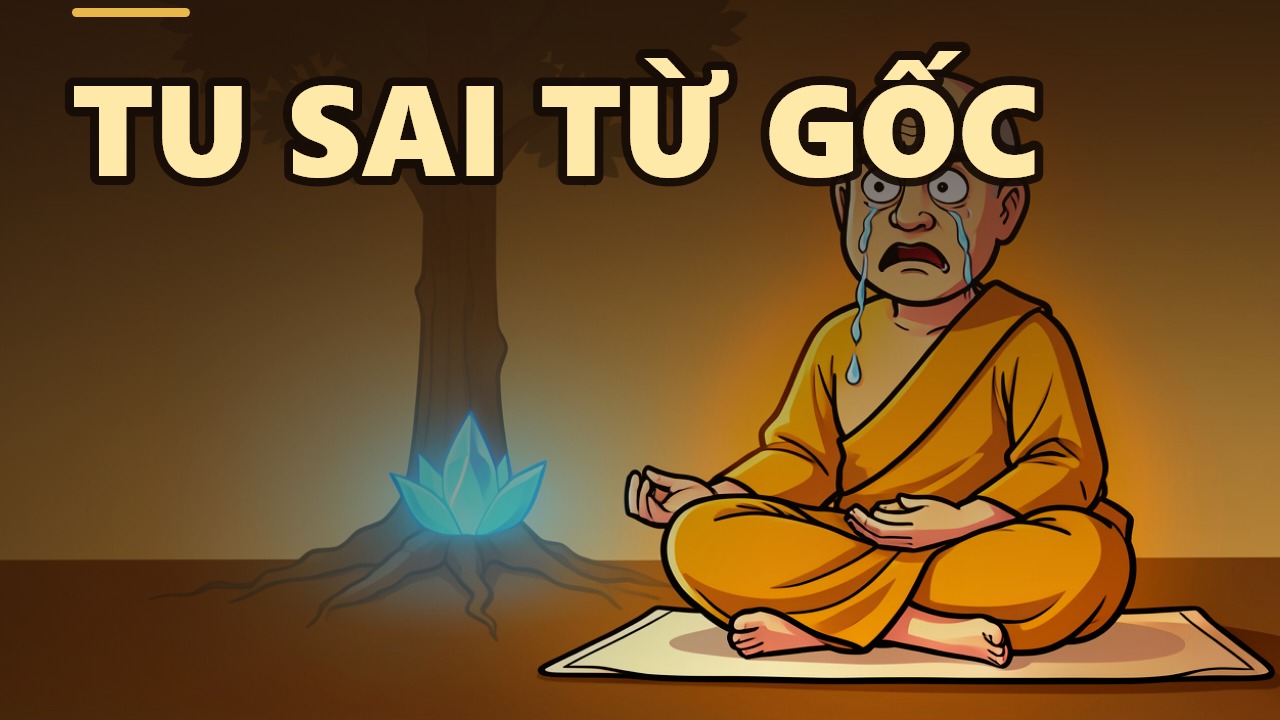
After just five minutes of sitting in meditation, you suddenly remember work matters, family matters, matters of friends… Then you grow frustrated: "Why can't my mind be still?" Perhaps you have been practicing incorrectly from the very foundation. Master Thich Chan Quang, in a meditation retreat, warned that those who skip the foundation and concern themselves only with searching for the mind and lofty philosophy are like someone practicing on the tip of a tree with no roots. They will fall at any moment.
What Is Meditation? Do Not Seek It on the Tip of the Tree
The essential mantra of meditation practice composed by Master Thich Chan Quang begins with a very simple definition: meditation is the taming of the mind/heart. But to tame the mind/heart, we need a foundation. The teacher said: "Meditation is the taming of the mind/heart. It is as simple as that, but to tame the mind/heart one must harmonize the breath, and to harmonize the breath one must harmonize the body together with boundless merit."
According to him, many people speak only about the mind/heart, about true nature, about lofty philosophy, while neglecting merit and the body. That is a mistake. He warned: "Anyone who sits in meditation caring only about taming the mind/heart, speaking about the mind/heart, about true nature, about lofty philosophy – we know they are at the tip of a tree that has no roots. No one knows when it will fall."
So what is this foundation? It is living a holy life to create merit, and harmonizing the body before entering into deeper levels of meditative concentration.
Cultivating Merit: The Foundation of All Practice
On the Buddha's path, merit does not come from laziness. The teacher emphasized: "No one who is lazy can ever have merit. So when people come to the Buddha's teachings (Dharma) and understand the Buddhist path as a kind of comfortable ease, we must recognize right away that they have gone wrong from the very foundation."
A practitioner of the Buddha's way must work hard, sacrifice, and practice patience. When we live gently, live with integrity, help others, and create merit, then meditation practice has something to rest upon. Just as building a house requires a foundation, merit is the foundation of the edifice of meditative concentration.
Sitting Quietly Yet Wandering Thoughts Never Cease? That Is Karma
Everyone who begins to sit in meditation encounters the same situation: wandering thoughts crowd in relentlessly, pulling us away from the very act of sitting. The teacher said this is karma, and in this matter no one is more gifted than anyone else. "No one is more gifted than anyone else. Here there is no talk of heroes, no talk of who is skilled or clumsy, rich or poor – not at all. Whether one succeeds depends solely on merit and nothing else."
When wandering thoughts arise, if we have merit, a quiet inner thought will remind us to return to the present moment. The teacher explained that this thought arises from merit. Therefore, living with integrity and creating merit throughout our lives helps us maintain mindfulness in meditation. This is why the Buddha taught that before practicing meditation, one must "in the first step plant merit very deeply."
The Breath: Knowing Without Controlling – The Key to the Middle Way
Only after the body is firmly settled do we begin to contemplate the breath. But nearly everyone falls into one of two errors: either forgetting the breath because of wandering thoughts, or deliberately controlling the breath to make it long, deep, and light. The teacher affirmed: "Forgetting the breath is forgetting to practice. To forget the breath means one is practicing wandering thoughts instead. The mind/heart sinks into dull obscurity."
What about breathing deliberately? The teacher said this goes completely against the words of the Buddha. "Do not try to control it according to your own will – simply know. Know the in-breath, know the out-breath, and know it clearly."
Normally, when we pay no attention, the breath becomes light and gentle on its own. When we try to control it, the breath becomes heavy. So what is the Middle Way? It is knowing without controlling. The teacher said: "Knowing without controlling, without interfering – that is precisely the Middle Way, that is the very essence of the Buddha's teachings (Dharma). The most profound essential teaching of the Dharma lies right here."
When we know the whole body clearly and keep the body soft and motionless, we will see the breath coming in and going out naturally. At that moment, we need only to know – nothing more.
Contemplating Impermanence (Anicca) to the Very End to Let Go of Attachment
Not only must we sit in the correct posture, we must also nurture our understanding of impermanence (anicca). The Buddha taught that we must contemplate deeply, to the very end: this body will grow old, fall ill, die, decay, its bones crumbling to dust. The teacher recalled when he first read the sutras: "The Buddha requires us to contemplate impermanence (anicca) to that degree. The Buddha does not allow us to contemplate impermanence merely by saying, 'Well, this body will die someday.' If we only say that sentence, we are not yet a disciple of the Buddha."
It is precisely by contemplating this deeply that we realize this body is not worth clinging to, and from there we lessen our sense of self. When others insult or scold us, our anger diminishes, because we know this body is only temporary, and sooner or later it will dissolve.
Begin Today
Practicing meditation requires no haste and no search for anything lofty. It only requires living with integrity, cultivating merit, keeping the body soft and motionless, and knowing the breath clearly without controlling it. That is the path the Buddha laid out. Begin from this very moment, from this very body and mind/heart as they are now.
AI-assisted translation from the Vietnamese original.
Read in Vietnamese →