
Can a Beggar Also Be a Person of Wisdom? Decoding the Title "Khất Sĩ" from the Dhammapada
Listening to a lecture on the Dhammapada, Master Thích Chân Quang helps us understand that a khất sĩ is not merely a beggar, but a person of wisdom with cultivated virtue. This article distinguishes the true from the false in spiritual life and offers a lesson on cause and effect (karmic law).
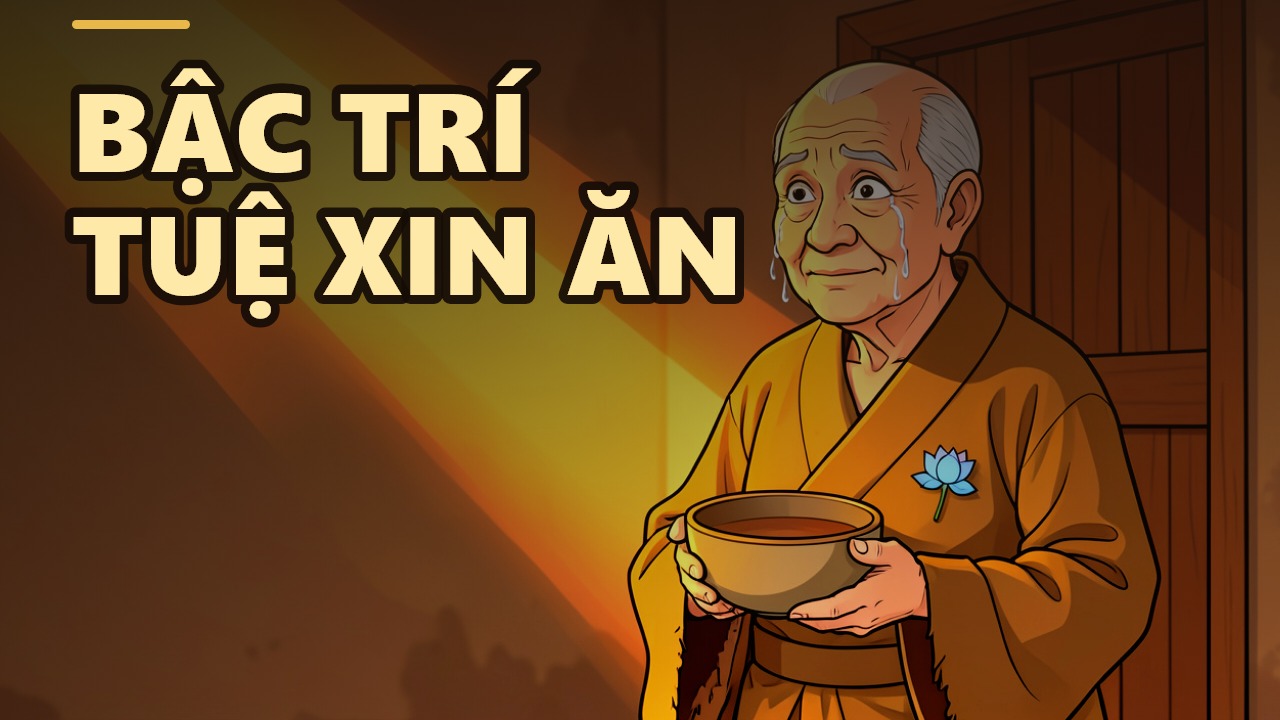
There was once a Brahmin who left his family and went forth to live as a wandering ascetic. He also carried an alms bowl and begged for food, just like the Buddha's disciples. When he met the Buddha, he confidently declared: "I also beg for food, so I too deserve to be called a khất sĩ." But the Buddha rebuked him: not everyone who begs for food is a bhikkhu. Only one who has the right path in their mind/heart, keeps the precepts, practices with wakefulness, and has realized the noble path is worthy of the name khất sĩ. From this, verse sixty-five of the Dhammapada was born, teaching us a profound lesson about truth and falsehood in the spiritual life.
Is everyone who begs for food a khất sĩ?
We easily confuse appearance with substance. Anyone who wears the saffron robe, shaves their head, and carries an alms bowl may seem like a monastic. But the Buddha taught:
"Not everyone who goes begging for food is a bhikkhu, a khất sĩ. Only those who have the right path in their mind/heart, who keep the precepts, who practice with wakefulness, and who have realized the noble path may be called a khất sĩ, a bhikkhu."
Therefore, do not hastily call someone a monk just because they wear the saffron robe and have a shaved head. Only a person we clearly know to have the true and right path in their mind/heart is worthy of reverence.
The word "sĩ" is what gives value to the beggar
In ancient times, "khất sĩ" referred to one who begged for food, yet carried the word "sĩ" — meaning an educated person of integrity. The word "sĩ" conveys nobility: doctor, scholar, singer, musician, poet, monastic — all imply learning and character. Master Thích Chân Quang emphasized:
"Anything with the word 'sĩ' has value... anything with the word 'sĩ' carries the meaning of being educated, learned, and possessing integrity. What matters most is having that integrity — that is what makes the word 'sĩ' meaningful."
A khất sĩ is one who begs for food but possesses wisdom and integrity, unlike an ordinary beggar. They do not beg in a demeaning way, but remain silent, dignified, and mindful. When going on alms rounds, they gently pause before a doorway, and if the homeowner does not notice, they quietly move on. Whether given to or not, they do not knock, and they do not cling.
The character of a true khất sĩ
A true khất sĩ lives by the true Dharma and needs little. They can go without food for days and remain serene. They never take more than they need, always leaving a portion of rice for those in hardship. Such virtue inspires our admiration; looking at them, we come to believe that the Buddha's teachings (Dharma) are real in this world. The Master said:
"A true bhikkhu has given us a great deal, and so remains in the higher position — this is not contrary to cause and effect (karmic law)."
When we make offerings to a true monastic, we do not lose our blessings from merit. For that monastic gives us the Dharma in return — a gift worth a hundred times more than food and clothing. They give us faith, direction, and wakefulness. Thus, the receiver remains in the higher position, but that is the noble cause and effect (karmic law) of making offerings.
Avoid looking down on others to protect your blessings from merit
In the lecture, the Master told a story from the comic book "The Snowy Mountain Peak": a woman who in a past life was a princess had a bad habit of lying in a hammock with her feet pointing east, where passersby could see them. Such behavior was a form of disrespecting others, so in this life she was born into an ordinary family. The Master warned:
"Anyone who is careless and rests their feet on the table, or lies in a hammock with their feet turned toward others — be very careful."
Small actions, like pointing your feet at others or showing contempt, may seem like nothing, yet they can burn away all your blessings from merit. The wise are careful in every little thing, never look down on anyone, and always keep a heart of affection and respect.
Silence is not necessarily wisdom
Some people are silent out of wisdom, knowing when to speak. Others are silent out of foolishness, having nothing to say. Followers of other paths saw the bhikkhus receive offerings and then speak words of blessing, and criticized them for not keeping silence like the hermits. But the Buddha taught: "Silence does not make a fool a sage." The wise person is one who chooses what is wholesome, abandons what is unwholesome, and understands this life and the next. Therefore, do not judge one another by outward silence, but look to wisdom and wakefulness.
Let us learn from the virtuous conduct of the true khất sĩ: live simply, stay wakeful, never look down on anyone, and always give. In any era, if we hold the true Dharma in our mind/heart, we too are people of wisdom worthy of the name "khất sĩ."
AI-assisted translation from the Vietnamese original.
Read in Vietnamese →