
The Breath: A Wondrous Gateway for the Mind and Health
Discover the two golden principles of conscious breathing – the key that opens the door to awakening, inner strength, and the miraculous.
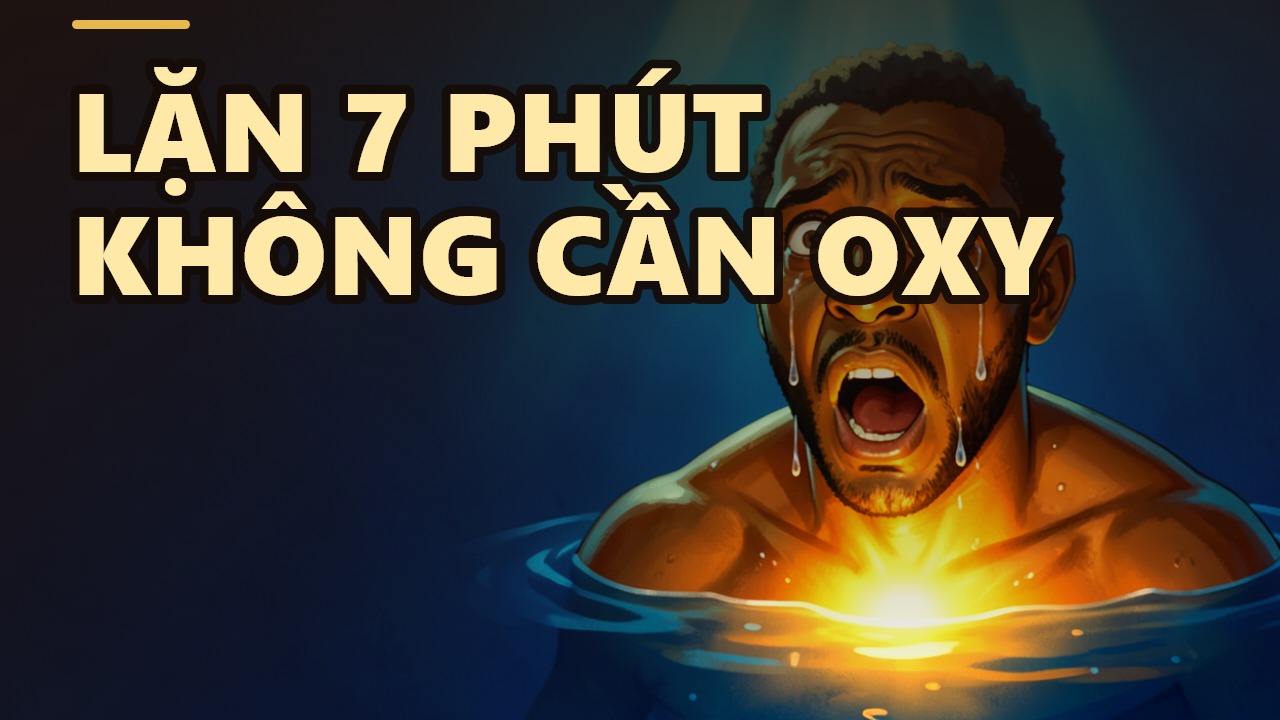
Have you ever tried holding your breath for a minute? The dizziness, the overwhelm, the lack of oxygen to the brain can make you faint almost instantly. Yet one African man was able to dive to the depths of the sea for seven minutes on a single breath – no oxygen tank, no protective equipment. His secret lay in the way he breathed. And this is the very gateway that the Buddha pointed out to us more than two thousand five hundred years ago.
The breath is not merely life itself
Science explains breathing simply as the process of taking in oxygen and releasing carbon dioxide. But if that were all, why did every ancient tradition of practice – from Egypt, India, and China to Buddhism – regard the breath as a gateway to the extraordinary? Venerable Thich Chan Quang emphasizes:
Whoever dwells with the breath dwells in the abode of purity, in the abode of Brahma, in the abode of the Tathagata.
The breath does not only keep us alive; it opens the path to stillness, inner strength, and wisdom.
The hunter and the secret of the breath
In his dharma talk, Venerable Thich Chan Quang tells of an African fisherman who made his living by spearing fish beneath the sea. He could dive for seven minutes without an oxygen tank. When asked for his secret, he replied that on his boat, he would breathe until his mind became completely still, and only then would he dive down. This was not merely physical training – it was the union of breath and the settled abiding of the mind.
Conscious breathing allows us to master the mind and transcend the limits of the body. When the mind is still, the body reaches a state of maximum energy conservation, opening possibilities we could never ordinarily imagine.
The Buddha and the path of the breath
Eleven years after his enlightenment, the Buddha once entered a three-month retreat in the cold forest of Isa Nanala. When he emerged, the first teaching he gave his disciples was about the breath. He affirmed that the breath is the dwelling place of the pure ones, of the Brahma realms, and of the Tathagata himself. Such is the great honor given to this simple yet profound practice.
Today, when we sit in meditation and follow the breath, we are walking the very path the Buddha laid out long ago. No particular school is needed – only the ability to listen to the breath in the right way.
Two principles of conscious breathing
Venerable Thich Chan Quang distilled two essential principles. The first is that conscious breathing makes the mind more awake, focused, and less scattered by wandering thoughts. This has been recognized by science and medicine. When you deliberately breathe deeply, the brain is activated, the mind settles, and you move beyond stress and psychological shock.
The second principle is more profound: when we breathe consciously, a stream of subtle energy – often called spiritual energy or true vital energy – also flows into the body. This stream of energy is not limited by lung capacity; it spreads everywhere, awakening the latent energy within every cell. This is something practitioners of yoga and internal martial arts have all experienced, even though science has yet to explain it.
Going around to take a shortcut
Many people, when they wish to eliminate wandering thoughts, try to watch for them and chase them away – but the more they chase, the more they persist. Venerable Thich Chan Quang suggests another path: use the breath as the object of contemplation. Let the mind rest on the breath instead of confronting the wandering thoughts directly. As our ancestors used to say:
Going around for a moment is faster than taking a shortcut for a year.
At first this sounds roundabout, but in truth it is the quickest way to gather the mind. When we pay attention to the breath coming in and going out, the wandering thoughts settle on their own, like the surface of a lake lying calm after the wind has passed.
Practicing to experience the miracle
The breath has always been with us, from the moment we were born to our final moment of life. Yet how many of us truly pay attention to it? Today's dharma talk is an invitation: return to the breath, begin with conscious breathing. Sit down, close your eyes, and breathe in and out gently, with attention. Do not force the breath – simply observe. The mind will gradually grow still, energy will become abundant, and life will feel more peaceful.
This is the gift the Buddha left for us – simple, yet profoundly wondrous. Begin practicing today, and let the breath become a companion that leads you back to the pure nature of your own heart.
AI-assisted translation from the Vietnamese original.
Read in Vietnamese →