
Repentance: The Noble Sorrow That Awakens the Soul
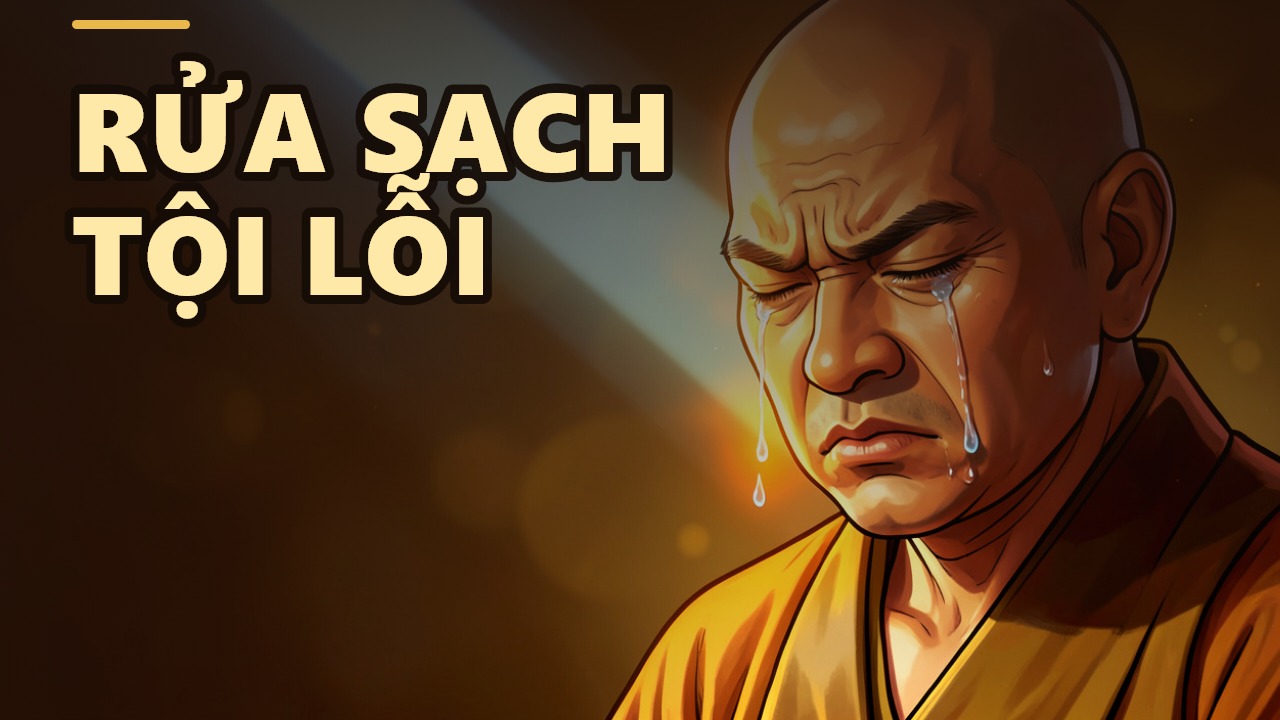
Repentance is not a sign of weakness, but rather a sacred sorrow that helps us recognize our mistakes and cleanse our transgressions. It serves as the foundation of morality and creates wholesome causes for the future.
Have you ever woken up in the middle of the night, feeling restless and uncomfortable because of some wrong action from your past? If you have not, please raise your hand honestly—but be careful. According to Venerable Thich Chan Quang, there are only two types of people who do not know repentance: those holy beings who have already attained liberation, or those extremely evil individuals who are unaware of merit and demerit. Most of us experience repentance; we simply fail to recognize it sometimes, or it is obscured by various reasons.
### What Is Repentance?
Repentance is a special kind of sorrow. It arises when we realize that we have committed an error regarding moral conduct. Venerable Chan Quang defines it thus:
"Repentance is the sorrow felt when one recognizes that they have done something morally wrong."
This sadness stems from clearly seeing one's faults and violations of cause and effect (karmic law). According to the teacher, those with good roots are often sensitive to even small errors, whereas those who are profoundly cruel never know repentance because they lack awareness of merit and demerit.
### Three Different Types of Regret
Venerable Chan Quang distinguishes three types of regretful minds so that we do not confuse them. First is moral repentance—the sorrow caused by doing something wrong. Second is regret over a lost opportunity, such as missing out on a lottery prize or failing to pick up dropped money. Third is regret over not being able to commit an unwholesome act, such as wanting to harm someone but failing to do so. This third type is a malicious mind and carries no moral value. The teacher emphasizes:
"These three minds are slightly different... The repentance that has a moral nature is the case we discuss today: it is the sorrow, the restlessness, and the distress felt because one knows they have made a mistake."
### Repentance Is a Sign of Morality
Why is repentance considered a sign of morality? Because it shows that we have recognized our errors and possess the wisdom to see the wrong within ourselves. Venerable Chan Quang recalls an important principle:
"The foundation of wisdom is knowing one's own faults and recognizing one's own mistakes."
A person who repents must first be honest with themselves, without hiding or making excuses. At that moment, the sorrow of repentance becomes a vivid sign of the ability to distinguish between good and evil within the mind/heart.
### Repentance Creates Wholesome Causes for the Future
After repenting, we often think, "If only I had not done that." The teacher explains that this very thought creates wholesome causes for the future:
"The cause of regretting a past action transforms into the future. One will not commit that fault again."
For example, a person who lied to their parents as a child to get money may later learn the Dharma, feel deep repentance, and wish they had not acted that way. This heartfelt wish becomes the motivation for them to become a filial child in a future life.
### Is Repentance an Unwholesome Mind State?
Some viewpoints suggest that repentance is an unwholesome mind state, based on a story from the time of the Buddha. Venerable Chan Quang refutes this view, arguing that it is a misunderstanding. He recounts the story of a bhikkhu who accidentally broke the precept of celibacy, fathered a child with his former wife, and fell seriously ill due to overwhelming guilt. The Buddha visited him, offered guidance, and helped him let go of his burden, leading him to attain enlightenment. The teacher concludes:
"The sorrow of repentance is an incredibly noble sorrow... If one feels sad about their mistake, it is a sadness that brightens the mind/heart and washes away old sins, which is truly beneficial."
Repentance is not a binding chain if we use it for transformation. It is a sentiment everyone possesses, but when placed correctly, it guides us step by step toward liberation.
### Practicing Repentance in Daily Life
Each time we learn a new moral lesson, we should not fear looking back at our past. This is an opportunity to see our errors and generate sincere repentance. The teacher shares that he himself has spent his entire life in repentance, viewing it as a sign of spiritual maturity:
"Every day, as I practice, I discover something new, and I feel repentant... A whole lifetime of practice is a whole lifetime of repentance."
Let the sorrow of repentance become a spiritual flower. It helps us cleanse old sins, cultivate wholesome dharmas, and advance on the path to nirvana. If you are currently feeling remorse about something, consider it a precious gift from your soul—cherish it and use it to become better each day.
AI-assisted translation from the Vietnamese original.
Read in Vietnamese →