
The Lotus – Rising from the Mud toward Enlightenment
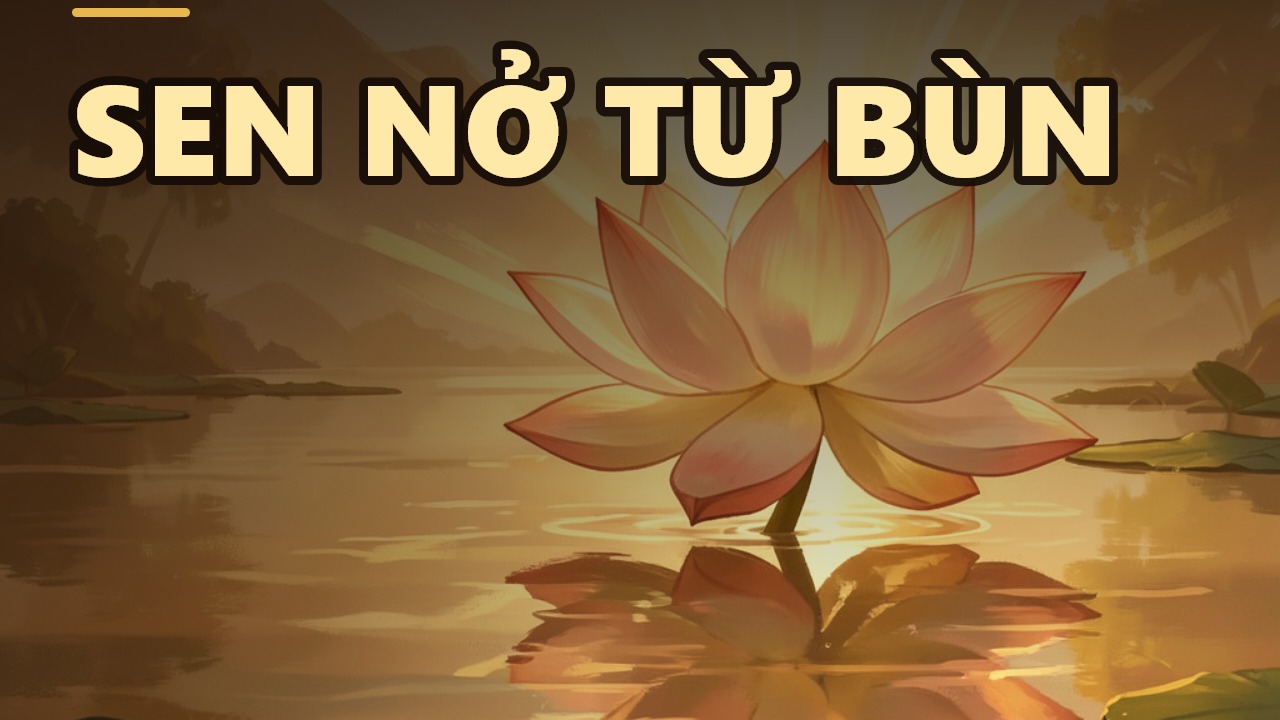
From a dark, muddy pond, lotus blossoms rise, spreading their pure fragrance. For generations, Vietnamese people have used this image to speak of a transcendent beauty. Yet few realize that it is precisely because of the dirty mud that the lotus becomes a symbol of enlightenment. In Buddhism, the lotus lives in the mud but remains unstained, representing the liberated mind of a practitioner. Have you ever wondered why this flower is so deeply connected to spiritual cultivation?
**The Lotus – A Complete Symbol of the Buddha's Path**
In Buddhism, the lotus appears everywhere: upon the thrones of Buddhas, in Zen anecdotes, and in temple decorations. This is no coincidence. Venerable Thích Chân Quang has taught:
“The lotus rises from the filthy mud yet spreads its pure fragrance, symbolizing the soul of a person seeking liberation. Though living in a defiled world, it remains untouched by worldly dust, and on the contrary, it elevates the very world we live in.”
This explains why, when the Buddha received a lotus from Brahma, he simply held it up without speaking a word. Only the Venerable Mahākāśyapa smiled—a smile of silent understanding. The lotus became the language of the mind, transcending all words.
**The Buddha's Teachings Arise from the Worldly Mire**
The lotus does not grow on clean soil or sandy ground, but only in the mud. The more foul the mud, the more the lotus thrives. Venerable Chân Quang uses this image to remind us of the origin of the Buddha's teachings (Dharma):
“The Dharma is in the world; enlightenment is not separate from the world. This means the Dharma is right here in this world; one cannot seek enlightenment apart from the world. If you leave the world to seek enlightenment, it is like seeking the horn of a rabbit—a thing that can never be found.”
It is from the suffering, the mistakes, and the mundane aspects of life that people seek the path. Every teaching must illuminate real life, not float as idle words on high. A Dharma teacher must remember this. And so must we all—let us not flee from the mud, but learn to transform it.
**Using the Materials of Suffering and Mistakes for Practice**
Everyone has made mistakes; everyone has stumbled. But a person who has the path, thanks to the Dharma, can turn those very errors into motivation for practice. Venerable Chân Quang gives the example of greed:
“A person with the lotus root, for instance, initially may have a mind of strong greed, greedy for money... But when they encounter the Dharma, they awaken... From that greed, they suddenly transform it into a desire for the well-being of others. It is the same greed, but it has not been lost.”
This is the art of transformation: instead of being selfish, we wish for others’ happiness and peace. As for adversities—like being scolded or living in poverty—we use them as environments to cultivate patience and generosity. When others speak ill of us behind our backs, we practice keeping a calm mind, even feeling compassion for them as they create negative karma. When poor, we learn to live simply, still setting aside a small portion to help others. The greatest merit lies in the heart, not in the amount of money.
The Venerable tells a story of a person who had to go to prison but, knowing how to practice, treated it as a solitary retreat. He kept his mind from following the bad influences, and even managed to encourage others to practice. It is within such a scene of suffering that great effort creates immense merit.
**The Lotus and Our Duties in Life**
People often think that seeking liberation means abandoning all duties to live freely. But Venerable Chân Quang warns: this is a mistake.
“A person who wants to live free, to practice without any duties or responsibilities to anyone, just to have a comfortable, unattached mind—that person is not a lotus. That person is merely a drifting water hyacinth on the river.”
The lotus has its roots firmly in the mud. A practitioner must also fulfill their duties to parents, spouse, children, relatives, homeland, and the Dharma. When we care for others with an altruistic heart, we ourselves gain peace and happiness. This is the law of cause and effect (karmic law). But we must avoid two extremes: one is caring for no one, the other is caring for people in a way that encourages them in worldly indulgence. The Middle Way is to care for others in accordance with the Dharma: helping their lives become more stable and morally upright.
**Stumbling Is Not the End**
Everyone stumbles on life’s path. A person who does not practice stumbles and lies there. A person who practices stumbles, then gets up and continues. The Venerable tells a story about a drug addict who, determined to quit, locked himself in a meditation room, prostrating and repenting, fasting to forget the craving. That is a lotus rising up. But he also teaches that one should not experiment with drugs, for some who try cannot quit, and even the parent of an addict may be driven to end their own life. Therefore, with any mistake, one must resolve to fight. With a jealous mind, we practice rejoicing in others' success. When we conquer our own mind, we are like a lotus stem reaching upward.
**Learning from the Lotus**
Each of us carries within us layers of mud: greed, hatred, delusion, mistakes, and suffering. Let us not fear or flee from them. Remember, the lotus does not need clean soil; it needs only mud to grow. The Dharma shows us the way to transform, from the lowest conditions into liberation. Let us resolve to face and cultivate ourselves within daily life, fulfill our duties, and rise after every fall. In this way, you will be a true lotus, upon which the Buddha sits, and whose fragrance spreads to all places.
AI-assisted translation from the Vietnamese original.
Read in Vietnamese →