
Resolving Conflict: From Friction to Harmony
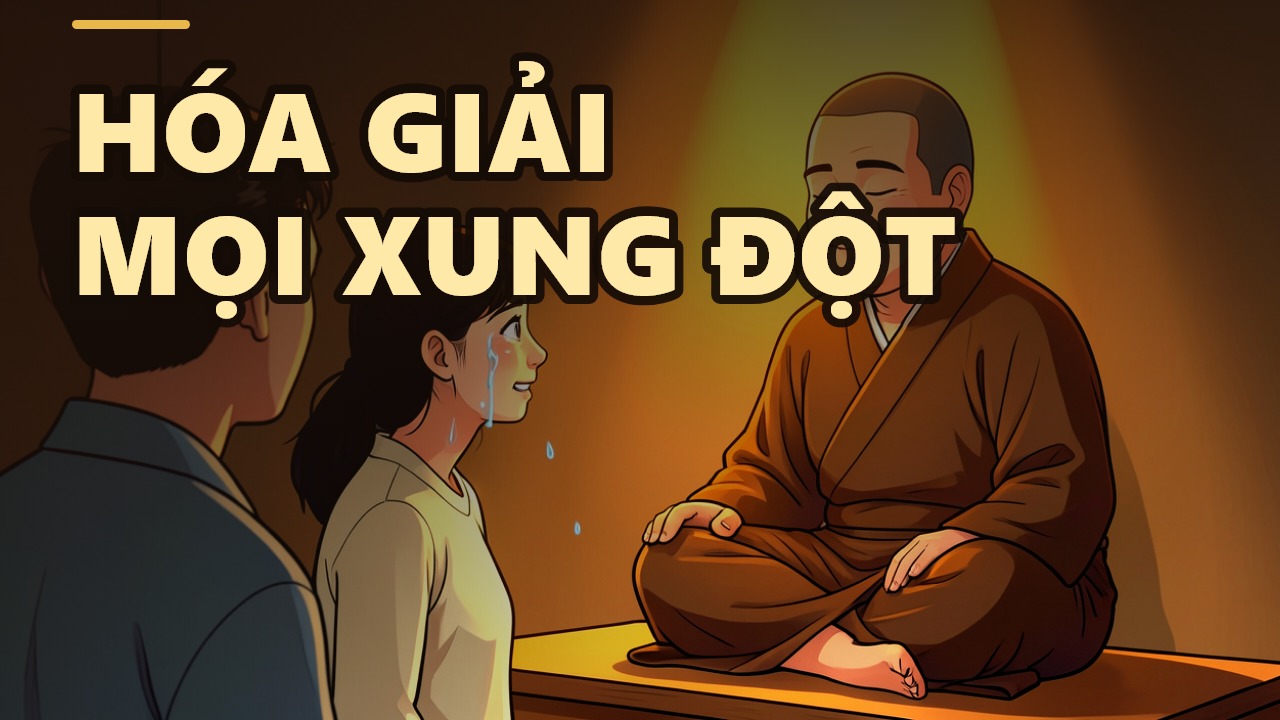
**Summary:** This dharma talk by Master Thích Chân Quang helps us identify the root of friction—a mind of criticism and competition—and offers practical methods for resolution, guiding us toward a peaceful and happy life.
Have you ever felt irritated just because of a person you share a room with? Or within a family, spouses may disagree on how to raise children, and from such small disagreements, they gradually drift apart, no longer speaking to each other. Conflicts like these steal the joy from our lives. So how can we resolve them? In the dharma talk on "Resolving Conflict," Master Thích Chân Quang points directly to the root of the problem and offers a path of practice to lead us out of such painful friction.
**What is the Nature of Friction?**
Friction is conflict, disharmony, unhappiness, rivalry, and quarreling. From a small rented room to a family, a community, or even the whole world, these conflicts destroy happiness. According to Master Thích Chân Quang, the essence of friction begins with a mind of discontent.
"It first starts with either oneself being discontent with someone, or someone being discontent with oneself... criticism, disparagement, and negative assumptions are the beginning of conflict and friction."
When we criticize others, they react, perhaps even criticizing us back. When others compete with us, we must defend our interests, starting a battle. That is friction.
**Stopping Within the Mind – The First Step to Resolution**
To resolve conflict, we must first stop the minds of criticism and competition within ourselves. We often focus on the faults of others and become vexed. However, there is a difference between a practitioner with deep cultivation and a beginner: a deeply practiced person sees others' faults but does not generate aversion.
"If you see someone's fault and feel hatred, you can tell right away this person is still a beginner."
Master Chân Quang also reminds us that when we see someone's fault, we might misunderstand or wrongly interpret it. If the person is not at fault but we assign blame to them, our own offense becomes heavier. Therefore, we must calmly look back at our own mind. Do not let the minds of criticism, blame, and competition control us. We need to practice to recognize and stop them.
**When Others are Aggressive – Patience and Settling Karma**
There are situations where we can meet the other person, explain gently, and help them understand. If they have a conscience, they will listen and apologize. But there are also those who intentionally misunderstand and refuse to listen. In such cases, we should see this as an opportunity to cultivate patience and to settle karmic debts.
"All difficult circumstances are opportunities for our practice. If every hardship is an opportunity, then we should accept that adverse situation to practice."
When we are truly patient, without anger or retaliation, the karmic connection between us and that person is severed, possibly ending forever across many lifetimes. The Master says that if people have lived together and once loved each other, but a moment arises where ill will cannot be reconciled, it is a sign that the conditions have ended. We should then truly let go, to have peace for our spiritual path and for life.
**Conflict Within the Family – Finding Common Ground in Dharma**
A very common example: spouses disagree on raising children. The husband believes that loving a child too much leads to spoilage, while the wife thinks love is necessary for the child to listen. Both believe they are right, and from a small disagreement, affection erodes. According to the Master, both are wrong because they are comparing themselves to each other instead of taking Dharma as the common standard.
"Take Dharma as the common standard. Do not compare yourselves to each other."
Dharma teaches us to love our children, but excessive love makes them dependent; being strict is correct, but too much strictness damages the relationship. Therefore, both should look to Dharma, each adjusting themselves, and then they will draw closer together.
**In a Monastic Community – Avoid Cliques, Maintain Equality**
The Master points out that in a spiritual community, the most taboo is forming private cliques. When entering a temple, if we see factions here and there, we immediately know the community's practice is not good. Conversely, a well-practiced community is one without factions, where everyone treats each other equally.
"Do not let groups or factions form. That creates great vexation."
The Master also shares from his own experience: if he were to love one attendant disciple more than his other disciples, he would be a poor practitioner. A true practitioner must love all equally. Therefore, when coming to the temple, we should maintain an equal mind, not create separate groups, so that the community remains peaceful and harmonious.
**The Karmic Consequence of Friction – Loneliness**
If one constantly engages in friction and harbors ill will towards others, one will naturally encounter the karmic consequence of loneliness, either in this life or future ones. The Master recounts the story of a fellow practitioner who was very wealthy but always lamented that he could not keep anyone, as everyone left him. That was the karmic result from a past life of despising, dismissing, and criticizing others.
"Engaging in friction and harboring ill will naturally leads to the karmic consequence of loneliness."
Therefore, cherish the community and love everyone while we still can. Do not let loneliness become a future regret. Whenever we feel annoyed by crowds, we should transform our mind into joy, seeing it as an opportunity to plant good seeds with everyone.
Through the Master's dharma talk, we see that resolving conflict is not just an external matter, but a profound internal task. Let each of us begin from within: practice letting go of the minds of criticism and competition, cultivate patience, and live equally with everyone. Only when each person changes can the world become peaceful and joyful. May we all practice diligently to bring peace to ourselves and to the world.
AI-assisted translation from the Vietnamese original.
Read in Vietnamese →