
Understanding the Five Aggregates: The Key to Unlocking the Mind
Explore the Five Aggregates—the Buddhist structure of body and mind—to understand why we think, feel, and act. Apply this understanding to live with mindfulness and help others.
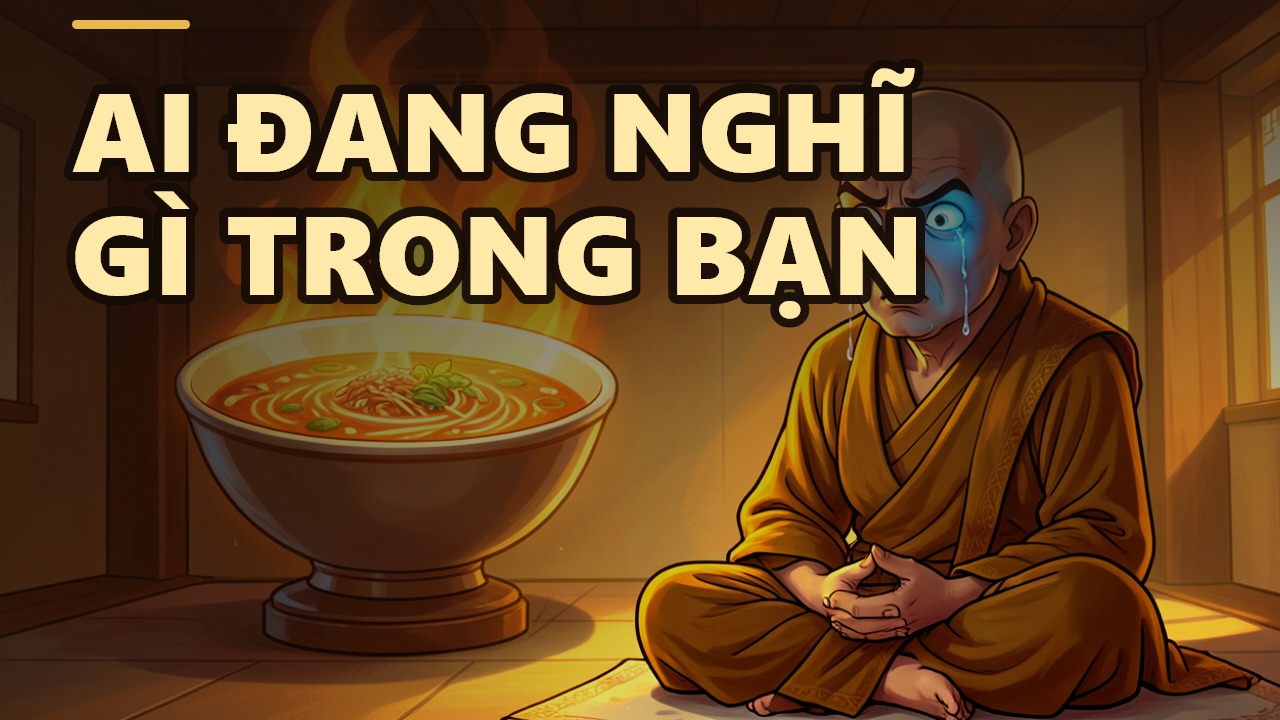
Have you ever sat in meditation, trying to focus on your breath, contemplating the impermanence of the body, when suddenly an image of a bowl of traditional pho beef noodle soup appears? You wonder, “Wait, I wasn’t even thinking about that!” Yet it emerges, inviting and promising... Venerable Thích Chân Quang used this very example in his lecture on the Structure of the Five Aggregates to awaken us to an inner world far more complex than we imagine.
The Five Aggregates: A Complete Picture of a Human Being
According to Venerable Chân Quang, the Five Aggregates (or five skandhas) form the psycho-physical structure of all sentient beings: Form, Feeling, Perception, Mental Formations, and Consciousness. From this structure, countless mental activities arise. He emphasizes, “From this structure of the five skandhas, countless psychological activities appear and arise.” This is the foundation of an extremely profound and insightful system of Buddhist psychology.
Form Aggregate: The Unity of Body and Mind
Form refers to the physical body, the material substance of each realm of existence. In this world, our body composed of the four great elements consists of cells, tissues, and bones. The Venerable points out an intriguing idea: each cell has its own “little soul,” and they gather together to form the thoughts in our brain.
“Each tiny cell contains a little soul within it. They combine to form the thought within our entire brain.”
Therefore, physical health directly influences the mind. He tells the story of a starving prisoner who, despite being an intellectual before, fights for every grain of rice because that psychology comes from each cell struggling to survive. Maintaining a healthy body also nurtures clarity and mental resilience.
Feeling Aggregate: Intertwined Sensations
Feeling refers to sensations and emotions: pleasant, unpleasant, joy, sorrow. We often experience multiple feelings simultaneously. For instance, while sitting to listen to the Dharma, we may feel pleasant because we love the teachings, but also feel unpleasant due to heat or sitting for a long time. The Venerable explains: because that pleasant feeling overshadows the unpleasant ones, we remain at ease. Understanding the Feeling Aggregate helps us recognize and adjust our emotional states.
Perception and Mental Formations Aggregates: The Hidden Kings Within
This is the deepest part of the teaching. He compares the Perception Aggregate to a computer screen, and the Mental Formations Aggregate to the internal chip and software. The Perception Aggregate only displays a very small fraction of what the Mental Formations Aggregate is actively processing.
“The Perception Aggregate is the faculty that presents our thoughts. The Mental Formations Aggregate is the actual thinking faculty.”
“The Mental Formations Aggregate is a seething, complex, and intensely packed activity within.”
So, when the image of pho appears, it is actually the Mental Formations Aggregate that has been secretly “missing and craving” beef pho long before. It even “makes a promise” that after the meditation course, it will eat two bowls as revenge. This explains why, after the retreat, your bike automatically rides to Ly Quoc Su Street without a conscious thought. The Venerable also reminds us of the patriarchs’ words: “In a single instant, we have a million thoughts.” The Mental Formations Aggregates of a virtuous person secretly dwell on good thoughts, and they act immediately when the situation arises. Conversely, the Mental Formations Aggregates of an unwholesome person also operate in a negative direction.
Buddhist Psychology: A Source of Joy for All
After understanding the Five Aggregates, we hold the key to Buddhist psychology. Venerable Chân Quang compares: although Western psychology has developed greatly, it often does not solve problems at their root; whereas Buddhist psychology reaches the ultimate source, encompassing both karmic law and cause and effect. Learning and practicing the Five Aggregates helps us become “sharp psychologists,” able to counsel and help those around us. This is also how we contribute to the world through the most noble field—spiritual healing.
Conclusion: Begin by Understanding Yourself
Venerable Chân Quang teaches: understanding the Five Aggregates is not for mere knowledge, but for practice and application in daily life. Each person attending a meditation retreat is a brick rebuilding the strength of meditation for Buddhism in the North. But first, begin by observing your own mind. When we clearly recognize form, feeling, perception, mental formations, and consciousness, we will no longer be swept away by bowls of pho or unconscious thoughts. We become free, serene, and filled with inner strength. This is meditation—the path of returning to the true mind.
AI-assisted translation from the Vietnamese original.
Read in Vietnamese →