
Understanding Yourself and the World: Three Truths for Sustainable Business Success
In this dharma talk, Venerable Thich Chan Quang reveals three essential aspects of self-understanding—merit, wisdom, and ethics—to achieve lasting success in business. He guides us to avoid the trap of greed, hatred and delusion, helping us maintain a peaceful mind amidst life’s inevitable ups and downs.
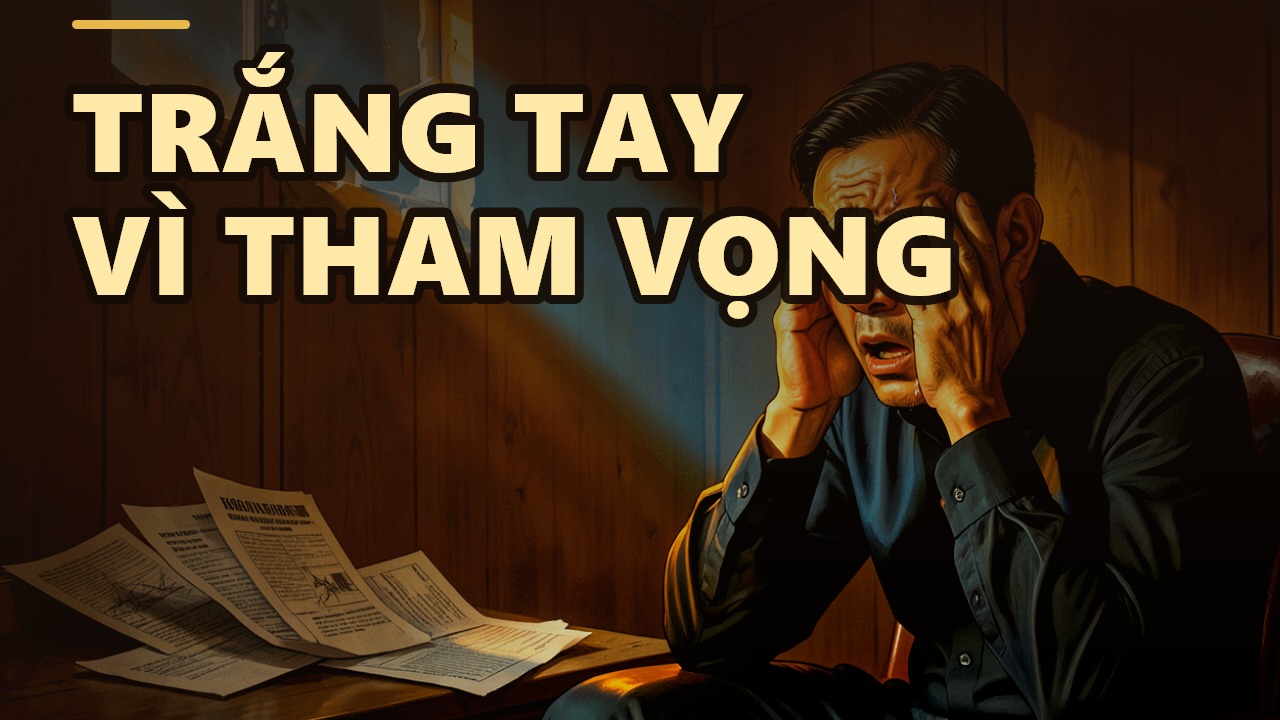
Consider a man who earned two billion dong every month yet still complained that it was not enough. Driven by ambition, he entered a new field aiming for three billion per day. The result was devastating: his health failed, his assets were mortgaged away, and he ended up with nothing. Why did this happen?
He said, "I earned about two billion each month, but I felt it was too little to live on. As a result, now my body is sick, and all my possessions are ruined." This story prompts Venerable Chan Quang to ask a profound question. In life, we face many inner urges. Some are mere ambition, while others are true intuition. They look very similar. How can we distinguish them and stay on the right path?
Three Aspects of Self-Understanding
According to Venerable Chan Quang, to succeed in business without failing, we must deeply understand three dimensions of ourselves: merit, which includes luck and wealth accumulated from past lives; wisdom, which is our capacity for management and decision-making; and ethics, which encompasses kindness and integrity.
He teaches, "Work only as far as your merit allows, so you do not fall into pitfalls or fail. Second, work only as far as your wisdom reaches. And third, act only within the bounds of your ethics." When we clearly understand these three truths, we know when to stop. We will not borrow money to buy a fourth house if we can only manage three. We will not invest beyond our merit, take on more than our wisdom can handle, or associate with people beyond our ethical capacity. This is the secret to living in alignment with our true potential.
Ambition or Intuition? Do Not Confuse Them
Venerable Chan Quang shares the story of a poor boy who had strong intuition from childhood. He predicted, "When I grow up, I will sell cars," and indeed, he became successful. In contrast, another person desired to earn three billion daily and went bankrupt. These two motivations may appear identical, but one is ambition, and the other is intuition.
The teacher explains, "When a thought arises to do something, accompanied by excitement and joy, it is often false. However, if a desire arises without any agitation, where the heart remains calm and does not even crave the outcome, yet everything becomes clear, that is true intuition." This guidance is highly practical. If the urge to expand business comes with eager excitement, be cautious, for it may be greed disguised as vision. But if the desire arrives in tranquility, without grasping, and clarity emerges naturally, trust that intuition. To discern this difference, we must practice meditative concentration to purify the mind, removing feelings of inferiority and the tendency to compete.
Assess Your Wisdom to Avoid Overreach
Venerable Chan Quang warns that many believe wealth alone allows them to expand investments and hire managers. Yet, if wisdom is insufficient, subordinates may deplete resources, causing the enterprise to collapse slowly. He gives an example: a manager who handles three hundred workers well may become overwhelmed and cause fractures when adding just one hundred more.
He states, "When our scope of activity exceeds our managerial capacity, we have gone beyond our wisdom." To assess ourselves accurately, we need humility and objectivity. Do not assume that ten successes guarantee eternal victory. Each person has a limited number of fortunate opportunities. Expand gradually, and stop when you sense your management limits. Do not let ambition cloud your wisdom.
Wealth with Kindness: Ethics Creates Merit
In society, the poor are often gentle, while the rich tend to be arrogant. However, if one possesses great wealth without sufficient ethics, that money becomes a tool for harm. Venerable Chan Quang notes that a wealthy person who remains kind is like a being from the heavenly realms, not merely human.
He says, "If one has much money but no ethics, there is only one thing to do: commit evil acts. People are usually gentle only when they are poor. A rich person who is truly kind belongs to the celestial realm, not the human one." Therefore, when we achieve success, we must remain humble and treat everyone with kindness. This is the ethics of a great soul. By knowing contentment, living moderately, and avoiding greed, we ensure that merit is preserved and continues to grow.
Living According to Conditions, Accepting Ups and Downs
Life always involves fluctuations. During downturns, we should live with acceptance, peace, and dignity, free from shame. During upswings, we should live with humility and cultivate ethics further. Venerable Chan Quang emphasizes, "Acceptance is the attitude of a practitioner with depth, ensuring the mind remains undisturbed. Remember, when you accept a difficult situation, suffering ceases."
Learn to dare to accept the truth. When facing failure, say calmly, "My business is performing poorly right now," without hiding or pretending. You will feel relief. When succeeding, do not become proud; instead, maintain humility and continue making offerings and doing good deeds. Thus, every rise and fall becomes a stepping stone on the spiritual path.
Begin with the smallest steps: sit in meditation daily, patiently purify your mind, and honestly reflect on yourself. Only when we truly understand ourselves can we engage in business successfully while remaining at peace, experiencing complete happiness.
AI-assisted translation from the Vietnamese original.
Read in Vietnamese →