
The Practice of Samantabhadra: Bowing in Reverence to All Buddhas – Something Simple That Not Everyone Understands
Discover the first of the ten practices of Samantabhadra: bowing in reverence to all Buddhas. Why is this the key practice? Listen to the profound teachings of Venerable Thích Chân Quang.
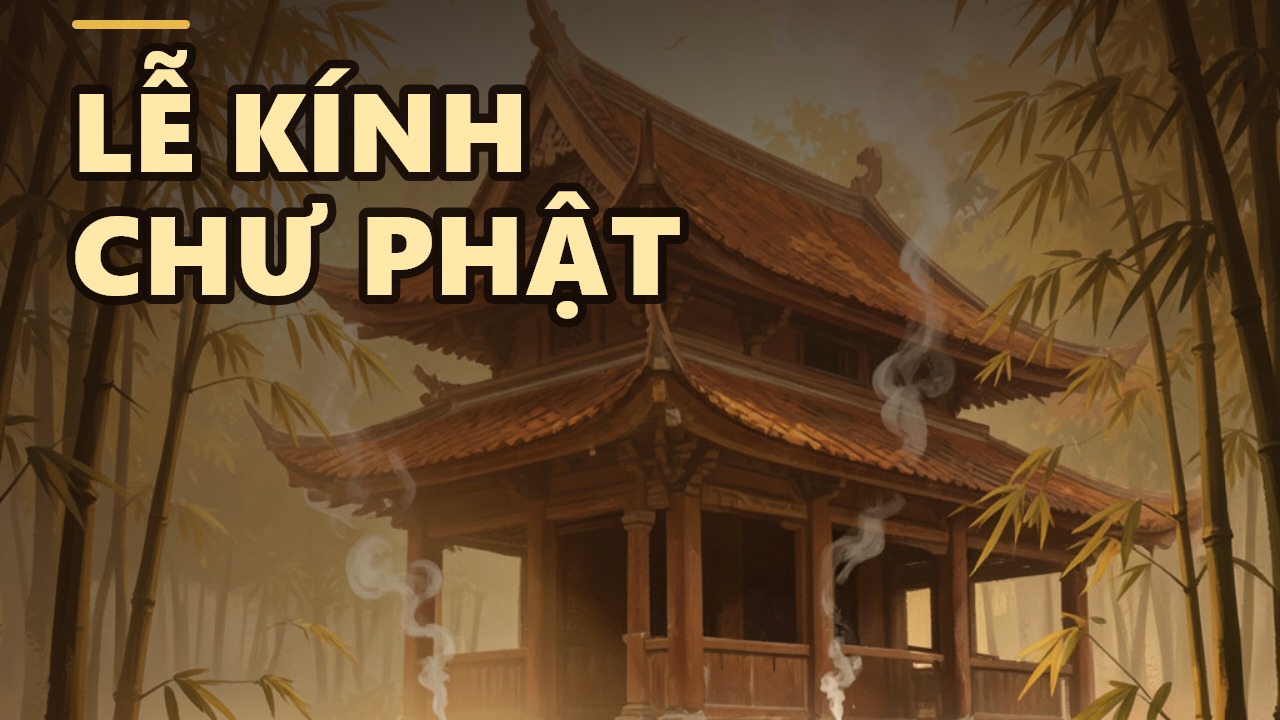
There was once a couple who came to see the teacher, tearfully telling him about their seventeen-year-old son: he had become increasingly stubborn, would not listen, and preferred spending time with friends rather than staying home with his parents. They had raised him strictly from a young age, yet now he was cold and distant. The teacher listened quietly, then said something that stunned them: "That child does not have enough inner strength to hold respect for his parents. Because the feeling of respect requires a very great strength to arise." If even respect for one's parents requires such strength, then reverence toward the Buddha, the highest of saints, is an even greater practice. Today, let us explore the meaning of the first of the ten practices of Samantabhadra: first, bowing in reverence to all Buddhas.
The Practice of Reverence to the Buddha: The Key to All Merit
In the Avatamsaka Sutra, bodhisattva Samantabhadra taught ten great practices, the first of which is bowing in reverence to all Buddhas. This is not an empty ritual, but the foundation of all bodhisattva practices. Venerable Thích Chân Quang emphasized:
"The most fundamental, most important thing, the key to accomplishing the bodhisattva practice, is bowing in reverence to all Buddhas."
Without this practice, the spiritual life is like building a castle on sand; however beautiful, it can collapse at any moment:
"If we practice without the practice of revering the Buddha, we have no foundation, and it will all collapse."
The Profound Cause and Effect (Karmic Law) of Reverence
According to cause and effect (karmic law), whomever we revere, we will become. Revere a teacher and you will become a teacher; revere the Buddha and you will become a Buddha. It may sound lofty, but in truth, each time we bow to the Buddha, we plant a seed of sainthood in our heart. When reverence rises up, saintly qualities gradually emerge. The teacher explained:
"When we revere a saint, later we will become a saint. When we revere the Buddha, later we will become the Buddha."
This also explains why, hearing the same dharma talk, some people change and others do not. Those who change are those with reverence in their hearts; those who do not change listen like water pouring over taro leaves. The teacher concluded:
"People hear the same teachings, but one person achieves good qualities and the other does not, simply because one reveres the saint and the other does not."
Inner Strength and the Feeling of Reverence
Reverence does not arise on its own; it requires a sufficiently strong inner life. Consider the story of Nguyễn Biểu, who went as an envoy and bravely ate a human eye before the enemy. Some people are shaken and moved by it, while others remain indifferent. This shows that each person's inner strength is different. When reading the story of the saint Gandhi, some people weep while others listen blankly. The teacher said:
"The feeling of respect requires a very great strength to arise."
In this age when we cannot meet the Buddha directly, having only images, scriptures, and the teacher's words, maintaining absolute reverence is all the more precious:
"Live and die for reverence of the Buddha. Die for reverence of the Buddha. Apart from that, everything in this world is meaningless."
Revering One Buddha Is Revering All Buddhas
Bodhisattva Samantabhadra taught that the number of Buddha lands is as countless as dust motes. Within each speck of dust is a world, and in each world there is a Buddha. To accomplish the practice of reverence, the bodhisattva travels to every Buddha land to bow. This concept is immense, but the Mahayana opens a profound way to practice: bowing to one Buddha while understanding it as bowing to infinite Buddhas. The teacher emphasized:
"Bowing to one Buddha while understanding it as bowing to infinite Buddhas, our merit naturally becomes infinite."
This is not imagination, but a penetrating insight into the true nature of the universe. When our heart opens wide, a single bow is no longer just one bow, but a bow extending throughout the entire dharma realm.
Practicing Reverence in Daily Life
The practice of reverence is not merely bowing before a statue of the Buddha. It is our attitude toward people, toward life, and especially toward enlightened teachers. When we are respectful toward a teacher, we receive the teachings completely. Therefore, in every moment, let us offer up reverence to the saints and sages. That is the only way for our heart to grow, for an ordinary person to become a bodhisattva.
Perhaps we do not yet have the strength to bow as bodhisattva Samantabhadra did, but each bow is a step along that path. Let us begin today, with one truly reverent bow. That is the very key that opens infinite merit.
AI-assisted translation from the Vietnamese original.
Read in Vietnamese →