
The Practice of Gentleness and Compliance: Why Is 'Obedience' the Greatest Strength of a Practitioner?
A dharma talk by Venerable Thích Chân Quang opens a profound perspective on the practice of gentleness and compliance — the willingness to obey — as a foundation that helps practitioners break through attachment to self, grow in merit, and find joyful peace right within the life of practice.
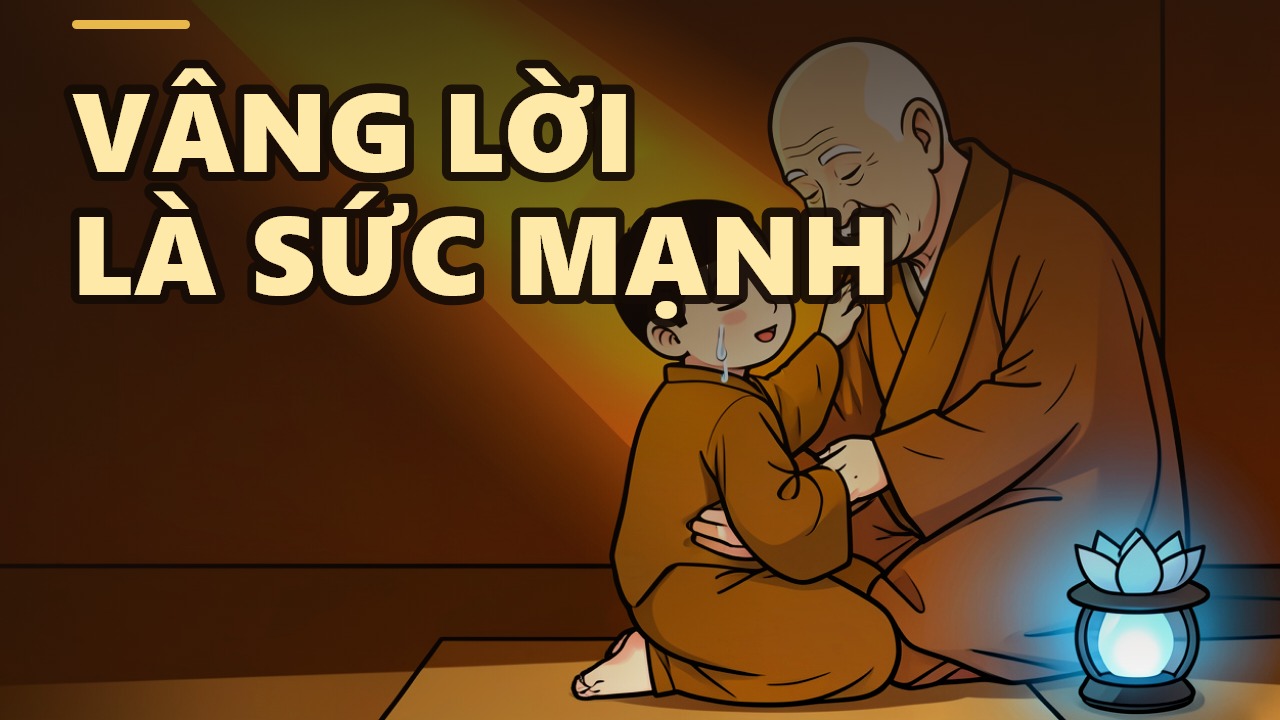
Have you ever been in the middle of your own task when someone asked you for something else, and a small wave of irritation rose up inside you? For a monastic, that feeling is even more distinct — because it is the moment of having to abandon one's own intention, to bend the self in order to follow another's word. Yet according to the teachings of Venerable Thích Chân Quang, this seemingly difficult thing is one of the most fundamental practices of a monastic, and it opens a joy that, without practicing it, we would never come to know.
What Is Gentleness and Compliance? More Than Just Obedience
It sounds simple: "compliance" means obedience — nhu is softness, thuận is going along with. But doing it is not easy at all. Venerable Chân Quang makes it clear: to obey another, we must first let go of our own intention, our own plans, our own viewpoints. This strikes directly at each person's sense of self.
"To be able to obey others, we must give up our own intentions, our own plans, our own viewpoints. This is not as easy as it looks — it is truly not easy."
For example, you are preparing to take a shower, arranging your things, when a senior monastic calls you to do something else. A feeling of annoyance rises up — that is precisely the "self" resisting. A monastic who has mastered this practice will set aside their own task, go do what another asks, and even find joy in it. Why? Because the practice of gentleness and compliance is a way of training in non-self (anatta) right within daily life.
Where Does the Strength Lie? In the Truth of the Teachings, Not in the Organization
In organizations such as the military or other religions, obedience is secured through discipline and punishment. Buddhism, however, has no such measures. Venerable Chân Quang admits this is a "great vulnerability" of Buddhism. But it is also what makes it special: the strength of Buddhism lies not in its organization, but in the truth of its teachings.
"The strength of the Buddha's teachings does not lie in the organization, but in the truth of the teachings."
Precisely because there is no punishment, a monastic must be self-aware and voluntarily obedient. If not, the Buddha's teachings would weaken. Therefore, every monastic must personally fill the space of discipline with the practice of self-aware obedience.
Self-Awareness Is the Foundation of Morality
Whatever belongs to morality must carry self-awareness. Discipline is compulsion, while morality is willingness. In Buddhism, obedience is not born of fear of punishment, but of understanding and heartfelt aspiration.
"Whatever belongs to morality must carry self-awareness. Without self-awareness, it cannot be called morality."
For example, when our teacher advises us "do not get angry," if we have the habit of obedience, we will remember the teacher's words and gradually correct our quick temper. If not, we only half-listen and then forget. It is precisely the practice of gentleness and compliance that helps us preserve and carry out the teacher's instructions, thereby opening countless wholesome accomplishments.
The Joy of Gentleness and Compliance
Someone may ask: why does compliance bring joy? Venerable Chân Quang explains: when we obey wholeheartedly, we no longer feel resentment, and the mind becomes peaceful. That is already a part of non-self (anatta) — and non-self is the pinnacle of the Buddha's teachings.
"When we are gentle and compliant, we already have a part of non-self. And so we also gain a part of that joy of peace."
This joy is invisible from the outside, but those who practice it feel it deeply. It differs from worldly pleasure — which comes only when we are praised, is easily shaken, and depends on external conditions. The joy of compliance is a joy that arises from within, unshaken and independent.
The Foundation for All Practices
The practice of gentleness and compliance not only breaks attachment to self, but also opens the way for every other wholesome accomplishment. A new monastic who has not learned obedience will find it difficult to practice anything the teacher later instructs. Venerable Chân Quang shares from his own experience: in the past there were times he was "stubborn," but those who master this practice are respected by their fellow monastics.
"The practice of gentleness and compliance is vital for a monastic, especially in the early years of monastic life. If we cannot carry out the practice of gentle obedience, we will not be able to carry out any other practice."
When we obey our teacher, we also obey the Buddha and obey the true Dharma. From there, merit grows and blessings from merit deepen. Conversely, if we resist, we diminish our own blessings from merit, which may lead to losing them and losing heart in practice.
Begin Today
Venerable Chân Quang's teaching is not dry dogma, but an invitation to practice. Gentleness and compliance requires no degree or extraordinary wisdom — only a heartfelt aspiration: "Whatever the teacher instructs, I will gladly follow." A monastic entering the path must thoroughly practice this. And each of us, wherever we are, can begin by learning to obey with self-awareness — obeying our parents, our teachers, the precepts — gradually letting go of the self and finding joyful peace within that very letting go. Happiness is not something far away; it is a gentle smile when we know how to obey and follow the words of the wise. Practice it, and experience it for yourself.
AI-assisted translation from the Vietnamese original.
Read in Vietnamese →