
The Lay Practitioner's Vows: Three Responsibilities That Uphold Life
Thầy Thích Chân Quang teaches about the vows of a lay Buddhist: responsibility toward family, society, and the Three Jewels. A profound and practical dharma talk that helps us reflect on how we live the spiritual life amid life's many demands.
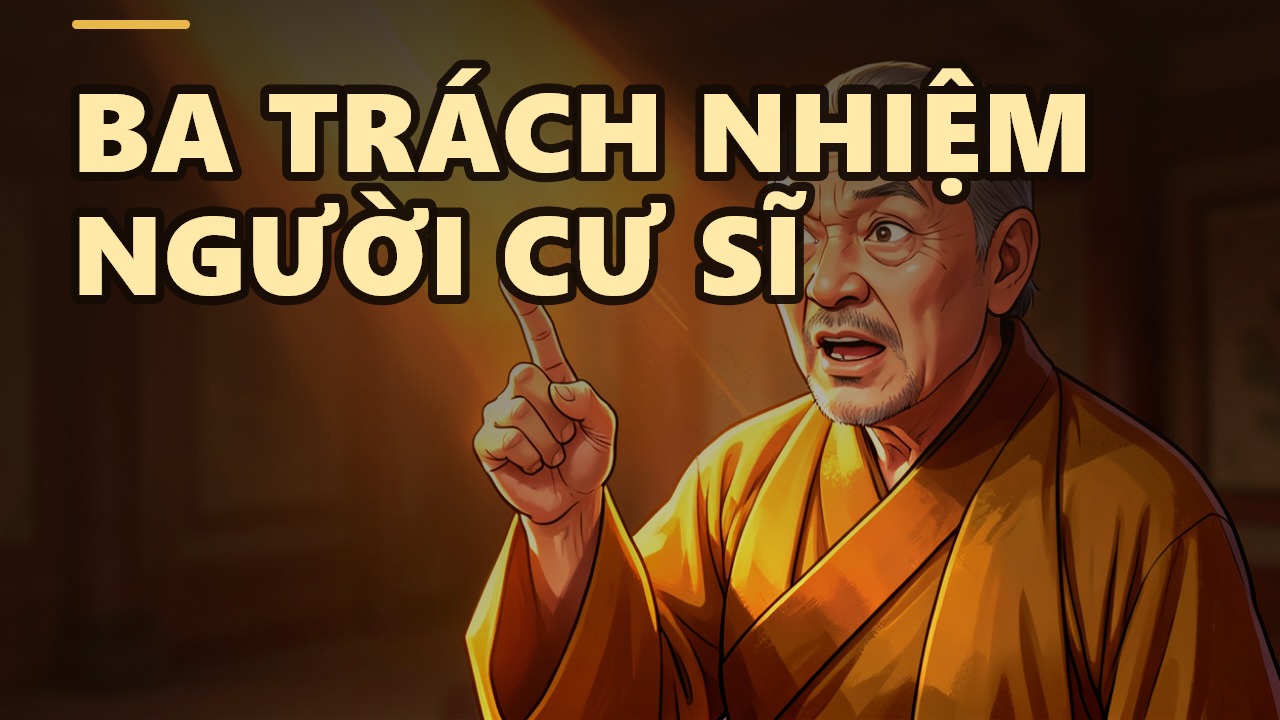
Every time you step into a temple, what do you expect? A quiet space for meditative concentration, or a place to enjoy good food and clean restrooms? It may sound mundane, but according to Thầy Thích Chân Quang, for lay Buddhists to come to the temple and practice, the temple must first be a place where people feel even more at ease than at home.
The Temple: Where the Happiness of Practice Begins
Thầy recounts: "On a cold, windy, rainy afternoon like this, we are welcoming a joyful occasion..." But then he asks: "What does it mean to be the abbot of a temple?" It is not merely about keeping the temple, but about creating an environment favorable for lay Buddhists to practice. It begins with the smallest things: good food, clean restrooms, comfortable seating.
"A temple must first have good food. If you don't worry about being hungry at the temple, you can stay longer."
Thầy emphasizes that a temple should make lay Buddhists feel "more comfortable than at home" — at home there may be quarrels, but at the temple there is only love.
The Three Responsibilities of a Lay Practitioner
Once lay Buddhists have grown fond of the temple, Thầy continues his teaching: a lay practitioner must have responsibility toward three environments: family, society, and the Three Jewels. These are the vows of a layperson.
Family: building a loving home and raising children in the right way.
Society: fulfilling one's duties as a citizen, keeping things clean, paying taxes, and helping the poor.
The Three Jewels: sowing blessings from merit through making offerings and revering the Buddha's teachings (Dharma).
Family: A Lesson in Becoming a Saint
Thầy speaks plainly: "To build a happy family, both husband and wife must attain the noble fruit of stream-entry." It may sound jarring, but Thầy explains that once one has attained a noble fruit, a person has less hatred and delusion, less concern with winning and losing, and greater mastery over instinctive impulses.
Thầy criticizes the instinctive way of loving children: "Children go astray only because their parents love and indulge them too much. So if you want your children to become good, you must discipline them strictly — even when you love them, you must restrain your heart."
And to those who are not yet married, Thầy jokes: when receiving a marriage proposal, one should ask, "Have you attained stream-entry yet?" — But the deeper meaning is that to have happiness, each person must practice and transform body and mind.
Society: The Burden on Each Person's Shoulders
Thầy affirms: "On the shoulders of each of us rests our entire country." Therefore, whether monastic or lay, each person carries responsibility. Thầy recalls the sight of trash before the temple porch that no one picked up: "When you see a piece of trash fallen on the road, you must understand it as a stain upon yourself, and pick it up right away without delay."
"Lacking awareness, lacking responsibility toward one's own country."
Sowing Blessings in the Three Jewels: The Heart of the Vows
Finally, a lay practitioner must have wholehearted devotion to the Three Jewels. Thầy says: "Bring the Buddha's teachings (Dharma) into your home, and your family will blossom with happiness." This does not mean bringing a Buddha statue home, but bringing compassion, cause and effect (karmic law), and spiritual practice into everyday life.
Conclusion: Vows Amid Everyday Life
So the vows of a lay practitioner are not something distant. They are living fully for one's family, being of benefit to society, and showing devotion to the Three Jewels. Let us begin today, beginning with the smallest things: sweeping the trash before our door, restraining our hearts even in love, and walking into the temple with a mind at ease.
AI-assisted translation from the Vietnamese original.
Read in Vietnamese →