
The Virtue of Truthfulness: Do Not Let a Single Lie Destroy a Lifetime of Practice
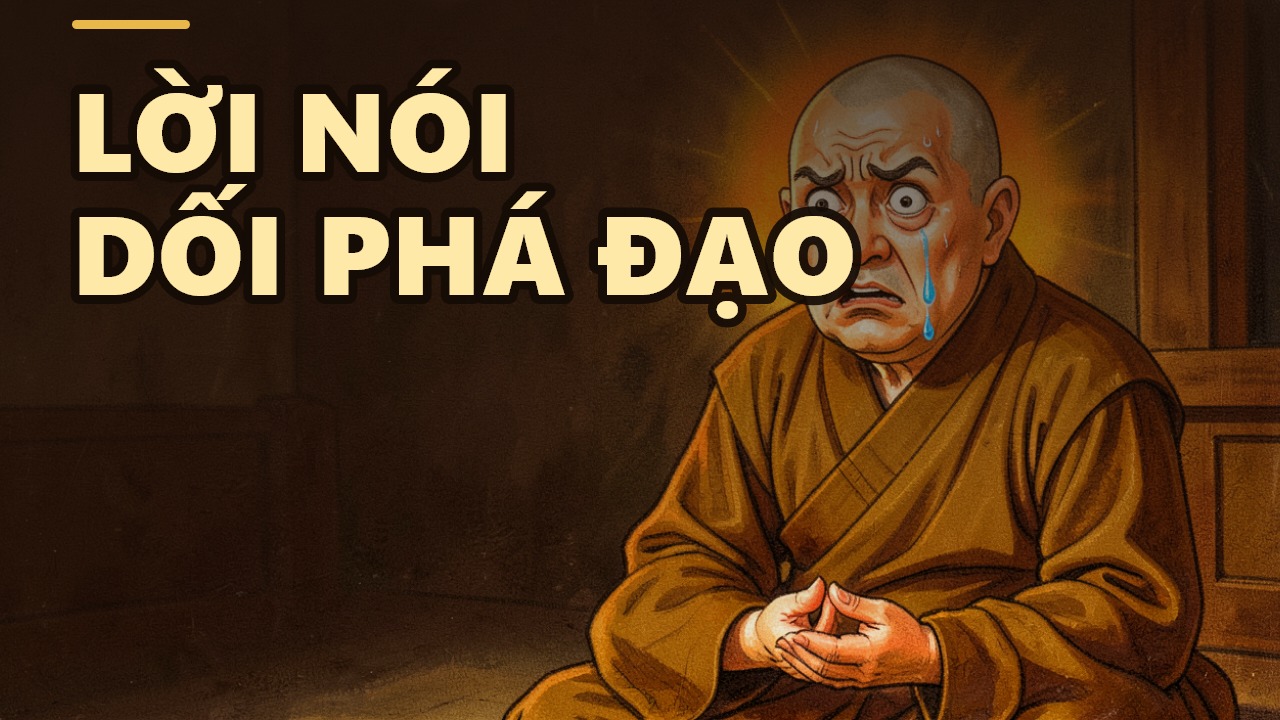
**Summary:** A single lie does not just erode trust; it can shatter the entire path of cultivation. Let us learn from the virtue of truthfulness to find peace of mind and a steadfast spiritual path.
Have you ever told a lie just to conceal a small mistake? And then that very lie kept you awake at night, forcing you to remember your story for the next time? Venerable Thích Chân Quang once taught: The virtue of truthfulness is not merely a good character trait; it is the very foundation for a peaceful mind and a solid spiritual path.
Why is lying such a serious moral injury?
In everyday life, everyone has told a lie at least once. But within the Buddha's teachings, lying is an unwholesome state of mind that damages one's morality. Thầy Chân Quang explains: In terms of morality, the mind that delights in lying is an unwholesome mind that makes practice difficult, preventing one from attaining meditative concentration.
Beyond that, lying forces us to "fabricate, imagine, and stir up thoughts," and these actions plant the seeds of delusion, obstructing the path to realizing meditative concentration.
The gravest precept violation: claiming to have attained realization
In Buddhist precepts, lying has two degrees. The first is ordinary lying; the second is great false speech—claiming to have realized the path when one truly has not. He emphasizes: If one has not truly realized the path but claims to have, people will come to rely on and learn from that person... one will misinterpret the truth and bring confusion to learners. The consequences are unimaginable.
This is an extremely grave offense because it sows wrong views, leading countless people astray. He tells the story of the old fox spirit from the time of Baizhang: because he misunderstood and answered that "an enlightened person is no longer bound by cause and effect (karmic law)," he was reborn as a fox for five hundred lifetimes. A single incorrect answer can bring such terrifying consequences. Today, there are also those who proclaim themselves messengers or enlightened ones, establishing sects and attracting followers, ultimately causing immense suffering. High learning does not help a person discern right from wrong if they lack right view.
A truthful person dares to look directly at their faults
A truthful person does not seek to defend themselves. Thầy Chân Quang shares: A truthful person is one who dares to look straight at the truth. They are objective, seeking the truth, so they dare to acknowledge their own mistakes.
Conversely, a person who often lies tends to blame others: blaming the rice, the water, the firewood—much like a certain monk who, while cooking a three-layer pot of rice, always insisted his "skill level was exceptionally high." This very act of concealment prevents the mind from becoming clear and settled.
Lying for self-benefit or to harm others
He points out two common reasons for lying: one is for personal benefit, the other is to harm others.
Worldly people lie to deceive and profit; those on the spiritual path lie to cover their mistakes, to gain advantage, or to belittle others. He tells the story of a bhikkhunī who, when asked about the number of people in the assembly, answered thirty-five when there were actually only thirty-two. That instance of lying caused her disciples to trust her less, and afterwards, whenever she ascended the teaching seat, they would hesitate, wondering: "I don't know if what she says is true or false." A single act of unreliability makes all else suspect—once credibility is lost, nothing is easily believed.
Truth possesses extraordinary power
Abraham Lincoln once said: "You can fool all the people some of the time, and some of the people all the time, but you cannot fool all the people all the time."
Truth always holds power. George Washington, the first president of the United States, lived his entire life without lying—a fact that astounds many. The great ones accomplished great deeds because they maintained their integrity and lived truthfully.
Truthfulness helps the mind attain concentration
Thầy Chân Quang emphasizes the positive aspect of the virtue of truthfulness: A person who lives a life of truthfulness contributes to making their mind capable of attaining meditative concentration. Conversely, if one frequently lies, that unwholesome mind also prevents one from achieving concentration.
A truthful person need not remember every word they have spoken, nor do they need to fabricate anything, so their mind remains light and at peace. A liar, however, must remember their stories to avoid contradictions—which is mentally exhausting. Therefore, the virtue of truthfulness is one of the vital nourishments for meditative concentration.
A life of truthfulness is a life of lightness. Let us begin from today: speak only what is true, dare to acknowledge mistakes, and live authentically. It is this very truthfulness that will help you stand firm in right view, allowing your mind to find peace and your spiritual path to become enduring.
AI-assisted translation from the Vietnamese original.
Read in Vietnamese →