
The Two Branches of Human Civilization: Where Are We Heading?
A dharma talk by Venerable Thich Chan Quang explores how technological progress may lead humanity either to self-destruction or to a heavenly existence. Earth stands at a critical crossroads.
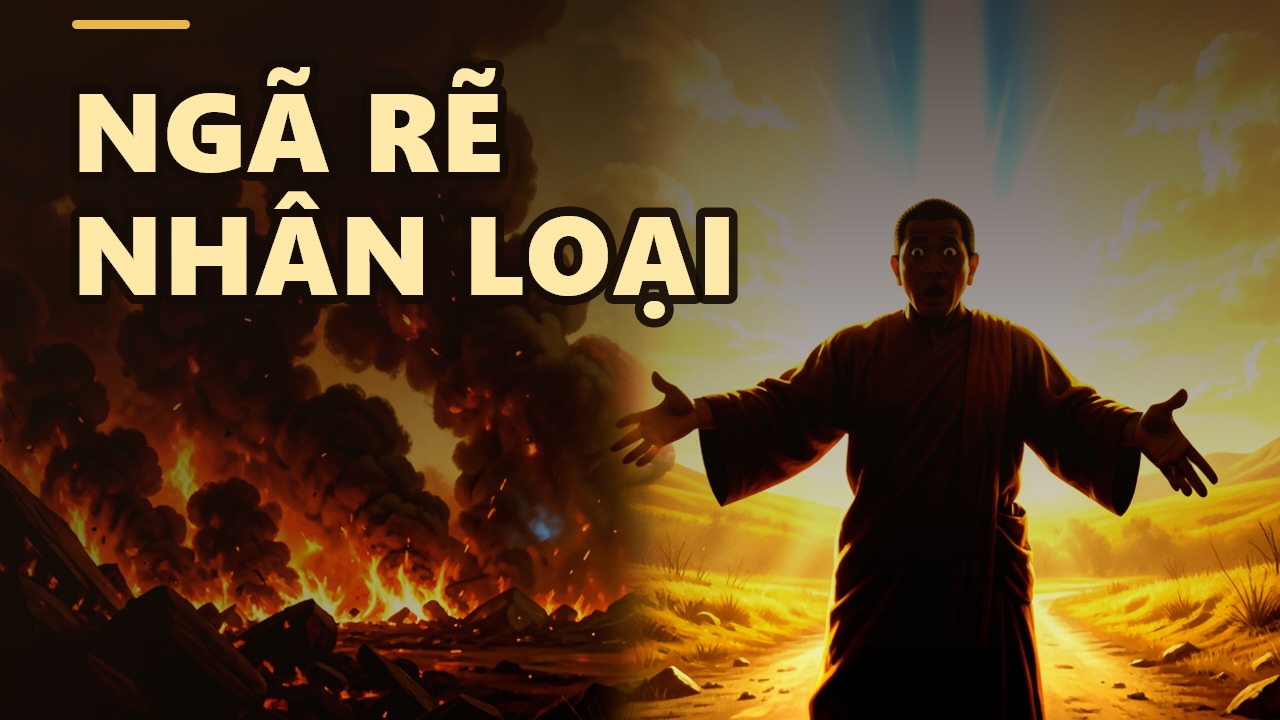
Have you ever wondered if we are alone in this vast universe? Flying saucers have been reported everywhere, yet science still shakes its head. Why is that? It is because our current level of understanding is insufficient. This narrow perspective can cause us to misjudge the nature of our own civilization.
When Earth’s civilization is limited by a narrow view
Across the world, numerous sightings of flying objects have been recorded. Even Vietnam has witnessed such phenomena. However, scientists do not acknowledge them simply because they cannot prove them. They argue that light takes seven years to reach the nearest planet, so no object could possibly exceed the speed of light to arrive here. But is this truly correct? Venerable Thich Chan Quang reminds us:
“Using one’s own level of understanding to judge others’ levels is an act of arrogance and narrow-mindedness.”
In the past, people also claimed that humans could not withstand speeds of thirty kilometers per hour, then three hundred kilometers per hour, nor even the speed of sound. Yet today, supersonic aircraft carry passengers beyond all those limits. Even the scholar Einstein was surprised in his later years to find that truths he struggled with had been spoken by the Buddha long ago. Let us open our hearts. Do not let Earth’s civilization become the sole basis for judging the rest of the world.
Two branches: Destruction or paradise?
When a civilization develops to a high level, it will branch into one of two paths.
The first path leads to the civilization destroying life on its own planet.
The second path allows it to rise above, avoiding a dead end, and transforming the planet into a paradise.
Venerable Thich Chan Quang has clearly stated:
“The first outcome is that the civilization itself destroys the life on that planet. The second is that if it does not fall into a dead end and turn back to destroy itself, that civilization transforms the planet into a paradise.”
Our Earth is currently standing at this crossroads. Technology has advanced rapidly from bows and shovels to internal combustion engines, and now to computing. Each step has increased labor productivity by hundreds, thousands, or millions of times. But what is frightening is our entry into the era of artificial intelligence.
When machines create instead of humans
Previously, machines only replaced physical strength or performed calculations for us. Now, they also create for us and even set goals for themselves. Venerable Thich Chan Quang offers a very relatable example:
“Today, we call it artificial intelligence. Artificial intelligence is no longer just machines calculating for us; it is machines creating for us. Furthermore, machines are finding objectives for themselves.”
You only need to input a few sentences describing a yellow bird, and within minutes, the machine draws a bird as beautiful as reality, perhaps more beautiful than what an artist could paint in a whole day. One day, machines might generate films, dharma talks, or even assign tasks to themselves. Will humans still maintain their role as masters?
Lessons for Earth
What compels us to reflect is the power of choice held by each individual. As technology advances, humans may use it to serve the ego, causing greed, hatred and delusion to grow. But if we direct our mind/heart toward practice, cultivating compassion and wisdom, technology becomes a vehicle to bring Earth to paradise.
“Our Earth is standing at a crossroads, unsure which outcome lies ahead.”
Today, let each of us begin by recognizing ourselves. When we open our hearts, we no longer fear other civilizations but see our responsibility to help this planet avoid the dead end. Live with mindfulness, as citizens of the universe, not just of Earth.
AI-assisted translation from the Vietnamese original.
Read in Vietnamese →