
Caring for Your Health Is Also a Moral Duty: Why Is This the Responsibility of Every One of Us?
Your health does not belong to you alone. When you are healthy, you spare yourself suffering and also give something back to the world. Caring for your health is a matter of ethics, an act of selflessness.
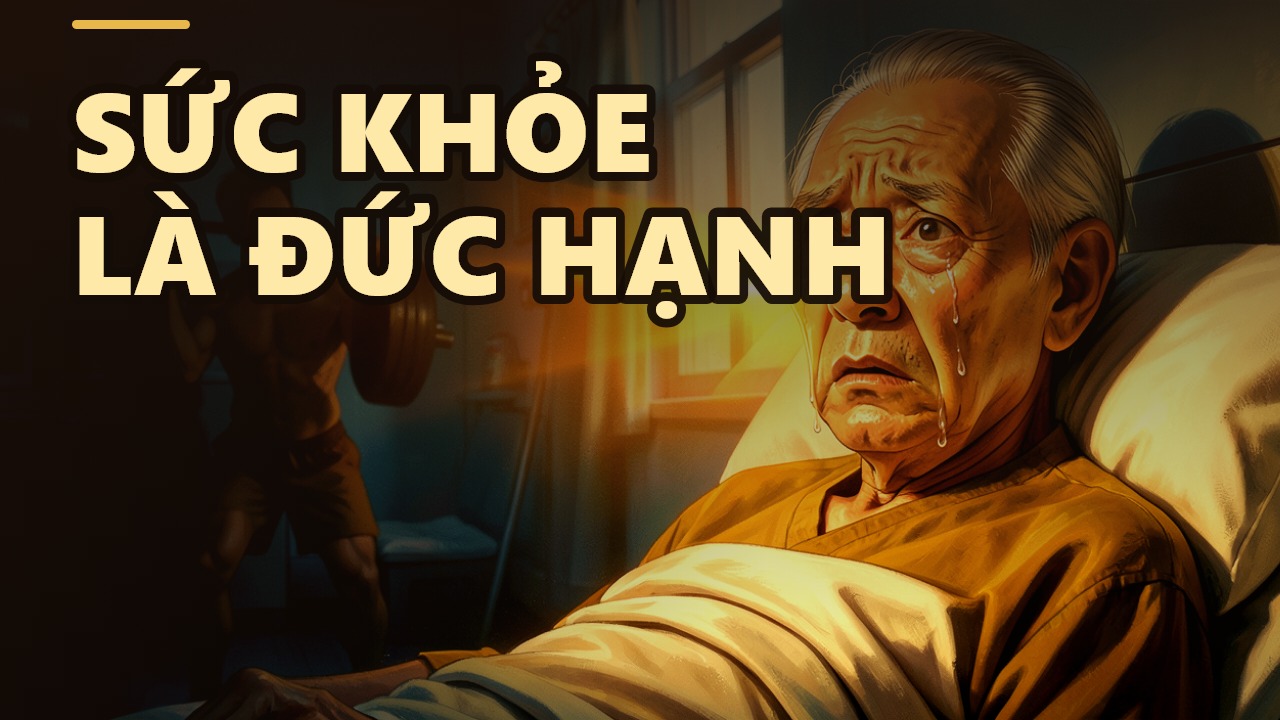
Have you ever wondered why some people own trillions of dong yet lie ill in a hospital bed, while others live in poverty but remain strong, healthy, and smiling amid life? Teacher Thích Chân Quang tells the story of a corporate tycoon with twenty trillion dong in assets who now lies in a hospital with cancer. His whole family is cloaked in gloom, and death is drawing near. His money cannot bring him a single moment of joy. In contrast, a poor person who owns nothing, yet is healthy enough to work, to travel, and to lift heavy things, feels truly happy. So what, then, is real wealth?
Health: The Priceless Treasure the Buddha Taught About
In the sutras, the Buddha once said, "Freedom from illness is the greatest gain" — to be free of disease is the greatest benefit in this world. No matter how much wealth, beauty, or power a person possesses, without health everything becomes meaningless. Teacher Chân Quang tells the story of the chairman of the Nam Cường group, a man with twenty trillion dong in assets who is now suffering from stomach cancer. He lies in a hospital, and his entire family is wrapped in a heavy, sorrowful air as death approaches. Did that fortune bring him joy? Perhaps not. On the other side, a person who is poor and eats simple meals, yet is strong and healthy enough to work, to go places, and to do what they love — that person is truly happy. This is the Buddha's profound teaching: health is the most precious treasure of all.
The Ethics of Caring for Your Health
When you fall ill, you do not suffer alone. Your loved ones must care for you, worry for you, and bear the cost. Your pain spreads to others. This is why the Teacher says that caring for our health is not only for ourselves, but for everyone around us. This places health squarely within the realm of ethics, because in staying healthy we live the spirit of "causing no suffering to ourselves, and no suffering to others."
"Why should we care for our health? Do not cause yourself suffering, and do not cause others to suffer. Therefore, caring for our health is no longer for ourselves alone, but for all the people around us." — Teacher Thích Chân Quang
This is a broadened view of morality. In the past, we often thought of health as a private matter. But in truth, it is a debt we owe to our community. A healthy person can contribute, help, and carry burdens. Someone weak becomes a weight upon others. So keeping our bodies strong is itself a way of loving the people around us.
Health: The Foundation of Life's Two Great Purposes
When we appear in this world, we carry two great responsibilities. The first is to practice spiritually toward liberation. The second is to offer the world what is good and beautiful. But to practice, we need a body full of vitality in order to sit in meditation without moving, to chant sutras, and to bow before the Buddha. To contribute, we need productivity and the strength to work. Health is therefore the very foundation of these two purposes. Without it, our beautiful dreams simply dissolve.
A person in good health also carries credibility when advising others. The Teacher said, "When someone tall and strong speaks, people listen more easily." Caring for our health also increases our capacity to spread the Dharma and to help sentient beings.
Cause and Effect (Karmic Law): What Harms and What Nurtures Health
In this dharma talk, the Teacher posed questions to help listeners recognize the cause and effect (karmic law) that shapes their health. These are the actions that damage health:
Killing — taking the lives of living beings Destroying the environment — cutting down forests, polluting rivers Using your health for wrongdoing — gambling, drinking, taking drugs Being idle — never putting your health toward anything positive Ignoring the sick — turning away, pretending not to see
In contrast, to strengthen our health we should:
Donate blood — a wholesome act that brings good fortune Care for and help the sick — even with a single word of concern Practice and create merit — use your health to do good deeds
These actions nourish not only the body but also generate positive energy, bringing people happiness and peace.
The Lesson of Selflessness
In this way, caring for our health is no longer a private affair. It is a moral act, because it helps us "cause no suffering to ourselves and no suffering to others," and it creates the conditions for us to give. With health, we can sit in meditation, chant sutras, and help those around us. Let us exercise, eat in moderation, stay far from wrongdoing, and create wholesome karma so that we may enjoy good health. Your health is the joy of everyone who loves you.
Today, begin one good habit for your health. It is the first step on the moral path of selflessness.
AI-assisted translation from the Vietnamese original.
Read in Vietnamese →