
Ethics, Concentration, Wisdom: The Backbone of the Path – The Secret Behind the 'Bliss' of Monastic Life
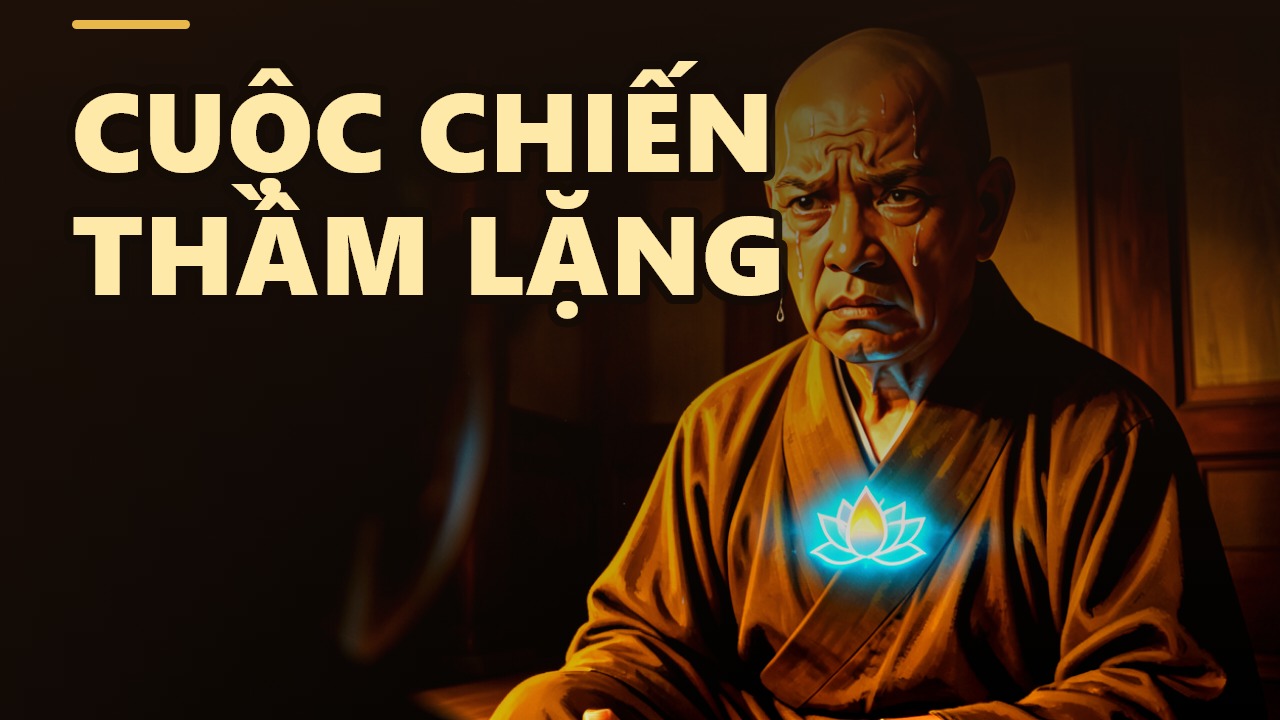
Many people look at monks and nuns and think their lives are serene and peaceful. But few realize that behind the monastic robe lies a constant battle with one's own natural instincts.
"Try being a monk if you think it's blissful" – this humorous remark by Venerable Thích Chân Quang during a dharma talk at the end of the rainy season retreat revealed a profound truth: spiritual practice is extremely arduous, as it rests upon a single axis. Whoever can grasp this axis, hold onto it, and honor it, is a true practitioner.
"Whatever monks learn, say, or practice, there is always a central axis. Whoever can grasp that axis, hold that axis, and honor that axis is a true practitioner."
This axis is Ethics, Concentration, and Wisdom. When monks chant, the first incense stick is offered as "incense of ethics, concentration, and wisdom" – as a reminder to oneself. All practice, all learning, and all Dharma activities revolve around these three sacred principles.
**Ethics – The Battle with Natural Instincts**
Within the Three Learnings for transcending the mundane, Ethics is fundamental, yet also the most difficult. Observing ethical precepts is not merely about not violating external forms; it requires battling the most natural things within one's own heart.
Venerable Chân Quang pointed out: when hungry, one wants to eat; when thirsty, one wants to drink; upon seeing a beautiful person, one wants to look; when scolded, one wants to get angry. Society may consider these natural, but for a practitioner, they become the very barriers of monastic discipline.
"The battle to observe ethics, the battle with one's hidden instincts, is incredibly arduous."
Imagine: a monk of thirty years might still feel sorrow when insulted. A Bhikkhu might think "a dropped golden wallet is a gift from the Buddha to build a temple" – but that is greed. Therefore, truly embodying precepts is not achieved overnight.
**True Embodiment of Precepts is a Peaceful Mind**
Venerable Chân Quang emphasized: "Embodying precepts" is different from "receiving precepts." Receiving precepts is only an external form, while embodying precepts occurs when the mind is already purified and undisturbed.
"When you truly embody precepts, you embody them in your mind, in your heart – that is called embodying precepts. The mind is serene."
For example, when entering a glass room and seeing a young woman standing there, if the heart remains "cold as ice," that is called embodying precepts. Or like the old woman picking through trash who found a wallet, returned it without a single thought of greed – such a person is more worthy of being a Bhikkhu than even long-time monks whose hearts are still attached.
**Ethics, Concentration, Wisdom: A Mutual Spiral**
Ethics gives rise to Concentration, Concentration gives rise to Wisdom, but Wisdom also gives rise to Ethics, and Concentration also gives rise to Wisdom. The three form a triangle of mutual support. It is through Concentration that we see greed arise the moment it starts; through Wisdom that we distinguish between "needing money" and "being greedy for money" – needing money for Dharma activities is a necessity, while being greedy for even one coin violates precepts.
The Venerable told a story of a monk who wanted to pursue a doctoral degree and sought funding. Venerable Chân Quang asked him to write a report addressing the three aspects of ethics, concentration, and wisdom. Because academic degrees are secondary; the true ability to guide beings lies in ethics, concentration, and wisdom.
**A Warning: Pride is the Silent Precept-Breaker**
Even more dangerous is that after observing precepts, practitioners easily develop pride. Seeing oneself as purer than others, looking down on them. This mindset can last a lifetime, unnoticed by anyone, yet it is enough to cause loss of precepts in future lives.
"A Bhikkhu whose mind is purified, whose ethics are pure, who has embodied the precept body, must not be arrogant, must not consider himself superior."
**The Priceless Reward: Serenity and Confidence**
Yet this arduous journey also holds a priceless reward. When a Bhikkhu strives in practice, repents, and attains purity, they receive an intangible compensation: a serene mind, free from regret and fear.
Venerable Chân Quang recalled his youth, attending a large conference among many dignitaries. His mind trembled with tension. He had to contemplate loving-kindness towards all beings for half an hour before the trembling subsided. Only then did he deeply understand the sutra describing the Buddha entering an assembly of millions of celestial beings with a mind still calm and at ease.
"The strength of ethics lies here: a serene mind. That is the priceless thing."
This is a compensation that no money or fame can buy. A true practitioner, even without attaining sainthood, but living purely, at ease, and observing ethical discipline, already becomes a source of inspiration and a refuge for countless others.
Live like a practitioner: begin by observing precepts within the mind, enduring natural instincts, cultivating concentration and wisdom daily. Do not seek perfection outside, but seek serenity within. This is the path of wisdom and peace.
AI-assisted translation from the Vietnamese original.
Read in Vietnamese →