
What Is Wealth For? The Heart of a Businessperson According to Master Thích Chân Quang
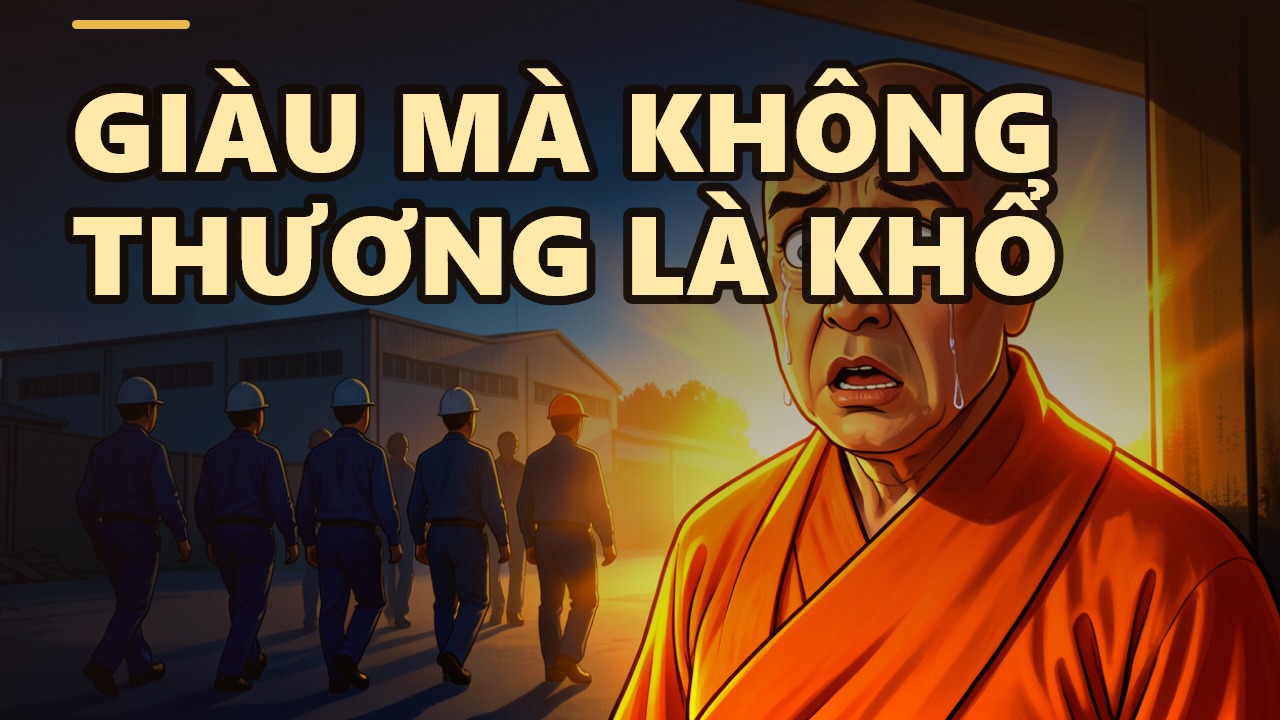
Amidst the rush of people leaving work, does anyone notice the weary faces of the laborers emerging from the industrial park? For Master Thích Chân Quang, these are the most admirable people he sees on his way to give teachings. Why is that? And how does this relate to business owners?
**The Laborer – The Embodiment of an Entire World**
The Master often travels to give teachings. When his car glides past an industrial park and he sees the stream of workers ending their shift, he cannot contain his emotion. He says he cherishes the laborers for two reasons. First, they are the ones who physically toil to create the products. No matter how talented or intelligent the owner is, without the hands of the workers cutting each piece of fabric, sewing each stitch, or gluing each part, the product would never come into being.
This world is not the life of one person, or one national leader, or one boss. This world is the life of seven billion people. If an alien were to land on Earth, they would judge whether this world is happy or suffering based on the majority. One wealthy boss, whether happy or suffering, is just one person. But the workers are thousands upon thousands. If they live in warmth and sufficiency, then this world is happy; if they are impoverished, then this world suffers. Therefore, the laborers are the very meaning of this life.
**What Is the Purpose of a Wealthy Owner?**
The Master once asked a businessperson: What are you wealthy for? You still eat three meals a day. What is the purpose of having so much money in the bank? You cannot take it with you when you die. This question might seem like a jest, but it is a profound reminder about the true meaning of wealth.
The Master teaches: The morality of an owner is to love their employees like their own flesh and blood. An owner who views their employees as slaves will suffer from a sense of pride. Conversely, an owner who cares for the laborers like family will experience happiness a hundredfold greater.
Love your employees. Your contribution is immense. When you provide for that many people, ensuring they have food, clothing, and stable lives, you are living a life of profound meaning. Countless people pass through life having only provided for themselves, and then they die, their lives having lacked significance.
**Karma and Conditions – Why Do We Work Together?**
In the Buddha's teachings (Dharma), nothing is coincidental. The workers who come to labor for a particular owner do not do so by chance. Each person carries karmic debts from past lives. The Master gives an example: long ago, in a village, there was a man who was not very wealthy but had a bit more rice than others. He saw his neighbors having to climb down a ditch every time they crossed it, which was very dangerous during rainy floods. So he felled wood and built a bridge for everyone to cross. Everyone who used that bridge incurred a debt to him. This debt can be repaid in many ways, and the most meaningful way is to meet him again in this life, to genuinely wish to work with him, to build a business together.
The Buddha's teachings say: everything arises from causes and conditions from past lives. Why don't we go work at a different company? We naturally find ourselves in this particular business because we share a karmic connection from a previous life.
**Workers: Do Not Think Only of the Wage**
The laborers and employees also need to practice morality. This means when working, please do not think only of the working hours or just the salary. The happiness of life is not for oneself alone, but for all the people one can serve. It is the same for the owner: what is wealth for? And for the worker: our happiness is not found in the wage we receive, but in what we can contribute to this life.
The Master teaches: Our mind must transcend the salary and the eight-hour clock. Our thinking must nearly align with that of the owner for our merit to increase. If we only think of a monthly wage of a few million and an eight-hour day, then for lifetimes and lifetimes we will remain hired laborers, and our merit will not grow.
The amount of merit we have determines our wealth or poverty. If we had merit in past lives, we are rich in this life; with little merit, we are poor. If we want to stop being hired laborers, we must open our mind.
We must begin with the mind, not with money.
When we perform small tasks but think with a larger perspective, carrying the worries of those greater than ourselves, we are cultivating new merit. As this merit grows, we will naturally be entrusted with greater responsibilities, becoming managers or small owners, and our karma is transformed.
**A Lesson from South Korea: Working for National Pride**
The clearest example is the country of South Korea. It is a small nation, once less advanced than Vietnam in martial arts, but now it commands the world's respect. Samsung televisions far surpass Sony, their phones outsell the iPhone by double, and their films and music all come from South Korea. Why? Because each citizen does not work merely for a wage. They work out of national pride and responsibility to their country. Every student, every laborer, every engineer carries the weight of their nation on their shoulders.
It is the same for us. When every laborer and worker in Vietnam opens their heart, viewing their work as the work of the entire nation, carrying the worries of our leaders, our country will advance. This is how we liberate our own lives, how we transform our karma.
The lesson today is not only for business owners, but for all of us who earn a living through labor. No matter our position, let us open our hearts and think of those around us. True happiness is not found in the balance of our accounts, but in the heart we give away. Let us start from today, from the smallest task, so that blessings from merit grow daily, and we can uplift those around us.
AI-assisted translation from the Vietnamese original.
Read in Vietnamese →