
Solving the Equation of Life: Contribution and Enjoyment
Life is a difficult equation between contribution and enjoyment. If we only know how to enjoy without contributing, our blessings from merit will run dry, and we may fall into the realm of hungry ghosts. Let us find balance to live a meaningful life.
Have you ever wondered: why are some people born fortunate and wealthy, while others are born into hardship and lack? Why does life always seem to place us in situations where we must make choices? The answer lies in an equation that everyone must solve, from the moment we are born until the day we leave this world.
Thay Thich Chan Quang shared in his dharma talk at the end of the rains retreat that life is a difficult equation. But it is not an equation of numbers or formulas — it is the equation between contribution and enjoyment.
"When we appear in this life, we are solving a difficult equation. The moment we are reborn, we step into an equation that we must solve for our entire lives."
The Equation Between Contribution and Enjoyment
From the moment we are born, we begin a journey of enjoyment. Nursing at our mother's breast, wearing beautiful clothes, eating a delicious meal, riding in a car to come here and listen to the Dharma — all of these are forms of enjoyment. We take them for granted, so much so that we never ask: "What has given me these things?"
"We are always placed in situations where we must constantly enjoy. So remember this: to appear in this life is to step into enjoyment from the very beginning."
But enjoyment comes in many forms. Some comes naturally, like being given a vacation. Some we must seek out, like wanting money to buy a beautiful car. And no matter the form, all of it arises from the blessings from merit we have created in the past. Those with abundant merit enjoy much. Those with little merit experience lack. Therefore, every act of enjoyment is a subtraction from our account of blessings from merit.
The Credit Card of Merit
Thay Chan Quang offers a very relatable example:
"We are like someone holding a credit card. Each time we buy something, we simply swipe the card and take the goods home. We cannot picture the amount of money that is slowly draining away."
Every meal we eat, every glass of water we drink, every piece of clothing we wear, every ride we take — these are all swipes of the card. When the balance runs out, we will have nothing left to enjoy. But do we know how to deposit money into this card? It is through contribution — doing wholesome deeds, helping others, planting trees, cleaning up litter, or simply doing meaningful work.
The Realm of Hungry Ghosts — When Merit Runs Dry
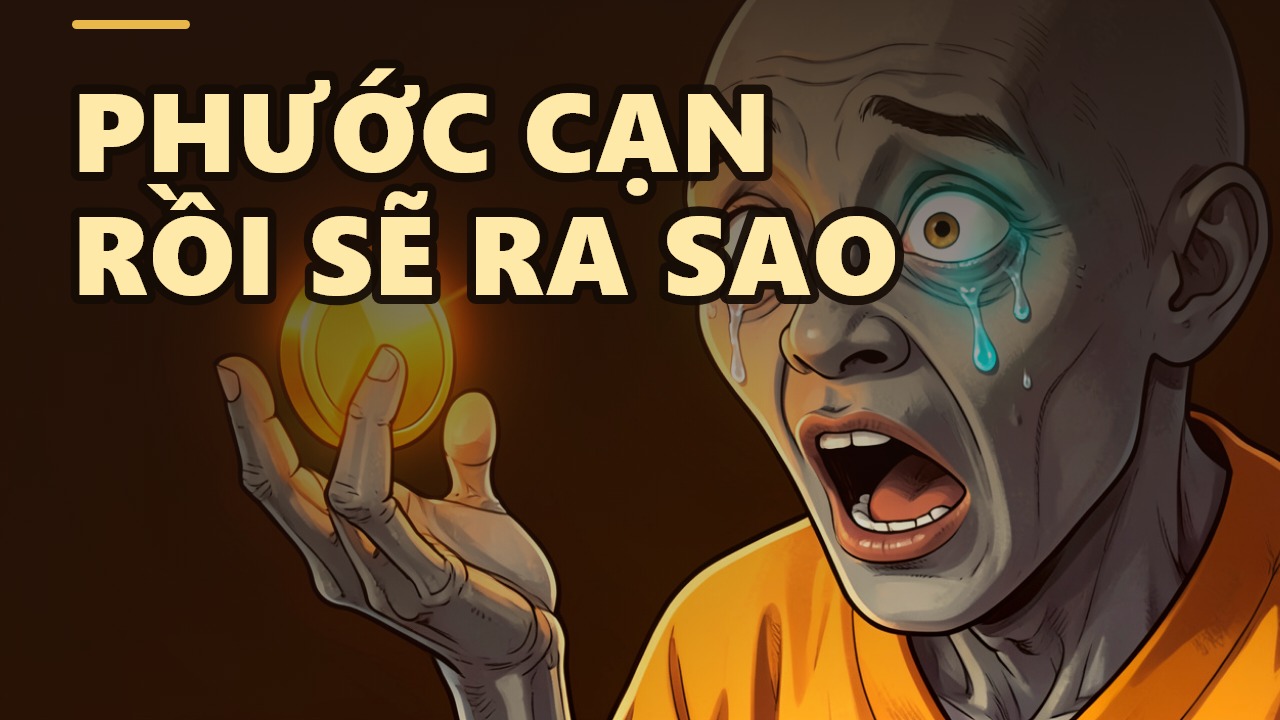
What is most frightening is when a person only knows how to eat and enjoy, without ever thinking of creating merit. Thay teaches that ninety percent of beings, when they die, fall into the realm of hungry ghosts — a realm with nothing to enjoy, no food, no clothing, yet the heart still craves.
"Beings in that realm crave enjoyment but have nothing to enjoy. They hunger day after day with nothing to eat. They see others loving one another while no one loves them."
Why is this so? Because while alive, they enjoyed all their merit without ever striving to contribute. They lived as though they were entitled to eat and wear things without doing anything in return. That is why they fall into a realm of emptiness, full of suffering.
Every Bowl of Rice Is a Debt
Thay teaches that a practitioner with wisdom will recognize that every spoonful of rice brought to the mouth carries a responsibility with it. We must do something worthy of the rice we eat. Thay shares:
"Every spoonful of rice brought to the mouth must be seen as a responsibility of mine, one that I must repay."
If one day he accomplishes nothing, he feels anxious, because that day he has eaten without contributing anything. For him, it is a debt to be repaid. But for many people, they eat every day without ever thinking about what value they have created. They regard food as something naturally owed to them. It is precisely this forgetfulness that leads them down the path of depleted merit.
Contribution Begins with the Smallest Things
So how should we contribute? We do not need to do anything grand. Thay suggests remarkably simple acts: a retiree can pick up litter along the streets, or plant greenery on the rooftop to help cool the Earth.
"If we can now plant greenery to cover our home — even if we have no wide land, we still have our own house — why not cover our rooftop, our walls? Just that small effort alone is already a contribution to this world."
Or consider the elderly woman who collected scrap and found five million yen, and immediately went to return it to its owner, then gave it to charity. A small act, yet filled with a wholesome heart — it is sure to create great merit.
Find Balance and Live a Truly Meaningful Life
Life is an equation between contribution and enjoyment. Do not let yourself be swept into the whirlpool of enjoyment while forgetting your responsibility. Ask yourself each day: "What have I contributed to the world today?" Whether it is a word of encouragement, a small act of helping someone, or one more blade of grass you have planted — all of it is a deposit into your account of blessings from merit.
Let us begin from this very moment, so that one day when we leave this world, we will not enter the realm of hungry ghosts, but be reborn in heavenly realms, enjoying blessings from merit ten thousand times greater.
AI-assisted translation from the Vietnamese original.
Read in Vietnamese →