
Meeting Everyone and Saying "You Will Become a Buddha": The Strange Practice of Bodhisattva Never Disparaging
Discover the strange practice of Bodhisattva Never Disparaging: greeting everyone with reverence because he saw a Buddha in each person. Learn how to transform arrogance into respect, and plant the seeds of Buddhahood.
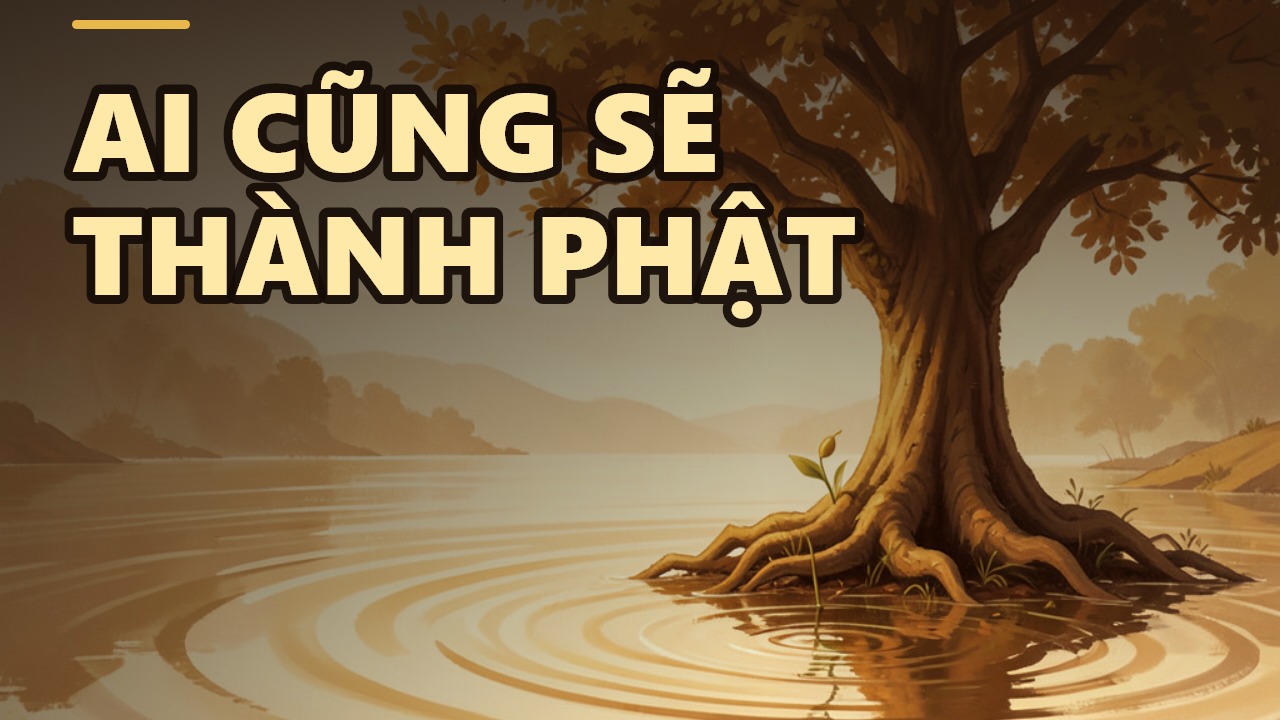
Have you ever met someone who suddenly bowed and said, "I dare not disparage you, for you will become a Buddha"? It sounds unbelievable, doesn't it? Yet that was exactly the practice of Bodhisattva Never Disparaging in the Lotus Sutra — a bodhisattva who spent his whole life doing only one thing: planting faith in the Buddha-nature within everyone he met.
The Bodhisattva Who Spoke Only One Sentence: "I Dare Not Disparage You"
In the chapter on Never Disparaging in the Lotus Sutra, there was a bodhisattva who did not teach the Dharma, had no supernatural powers, and performed no great deeds. He simply went everywhere, and whoever he met, he would bow and say: "I dare not disparage you, for you will become a Buddha." Many people thought he was insane, or mocking them. But in truth, he saw something that ordinary eyes could not see: within every person lies hidden a seed of Buddhahood.
"I dare not disparage you, for you will become a Buddha."
That was the words he repeated his entire life. Shakyamuni Buddha himself was later revealed to be that very bodhisattva. So what gave him such unshakable faith?
Understanding and Seeing: The Gap Between the Ordinary and the Noble
When we hear those words, they seem unrealistic. We know ourselves to be full of afflictions (kleshas) and karmic obstacles. But Never Disparaging clearly saw that every sentient being can become a Buddha, and it was precisely that seeing that shaped his actions. Thầy Thích Chân Quang shared:
"Understanding and seeing are separated by a great distance. That is the distance between the ordinary and the noble."
It is like the story of a haunted house: the person living there sees the ghost, while a passerby sees nothing. We understand the principle of impermanence (anicca), but only through realization do we see it plainly before our eyes. And seeing that truth is the first step of enlightenment.
Concentration and Wisdom: Two Gates of Enlightenment
There is an old story: a monk sat in meditative concentration for three or four days in deep absorption, and people believed he had awakened. But when the temple steward asked him a question, he could not answer. The steward said: "Venerable, even if you sat for three or four days until you passed away, and were cremated to yield a bushel of relics, it would not compare to the moment I asked you a question and you could answer even one sentence." Thầy Thích Chân Quang explained:
"The mind must enter concentration on one level, and wisdom must open up, before we can truly see. Otherwise, it is still only understanding."
Entering concentration does not mean one has seen the Way; it is wisdom that allows us to see the path clearly. When wisdom opens, we see impermanence, we see birth and death, and we are no longer deluded by life.
When the Heart Opens, Everyone Is a Buddha
Upon attaining the fruit of Stream-Entry, the bodhisattva saw within himself the path to Buddhahood, and he saw that all sentient beings carry that same potential. For this reason, boundless reverence arose in him. Thầy Chân Quang said:
"Sentient beings, you see, may sometimes be deluded, sometimes greedy, sometimes full of afflictions. And yet hidden within each one's heart is the capacity to attain the Way."
It was precisely this seeing of potential that made him no longer dare to look down on anyone. That is the virtue of the noble ones, and it is the path that led him to Buddhahood.
Practicing Reverence Today
We have not yet awakened, but we can imitate his practice. Thầy taught:
"We imitate him, and we too revere all people. In this way, we plant the seed of becoming noble ones."
In modern life, we can practice reverence at different levels:
Cherishing: When we meet fellow practitioners, we cherish them for sharing the same aspiration.
Respecting: When we see someone with good virtue — such as quietly cleaning the toilets for everyone — we respect them.
Never looking down on anyone: Seeing the Buddha-potential in every person, even if they are still ordinary beings.
When we plant the seed of reverence, we are walking the path of Never Disparaging, the path that leads to the fruit of Buddhahood.
Conclusion
The practice of Never Disparaging is not a flowery phrase, but an insight and a heart of compassion. Today, whenever we see anyone, we can quietly remind ourselves: "This person will become a Buddha." Let that reverence transform the way we treat others. Plant the seed of respect today, so that one day we and all beings may walk together on the path of enlightenment.
AI-assisted translation from the Vietnamese original.
Read in Vietnamese →