
Do Not Haste to Look Down on Others: Lessons from the Short Monk Who "Killed His Parents"
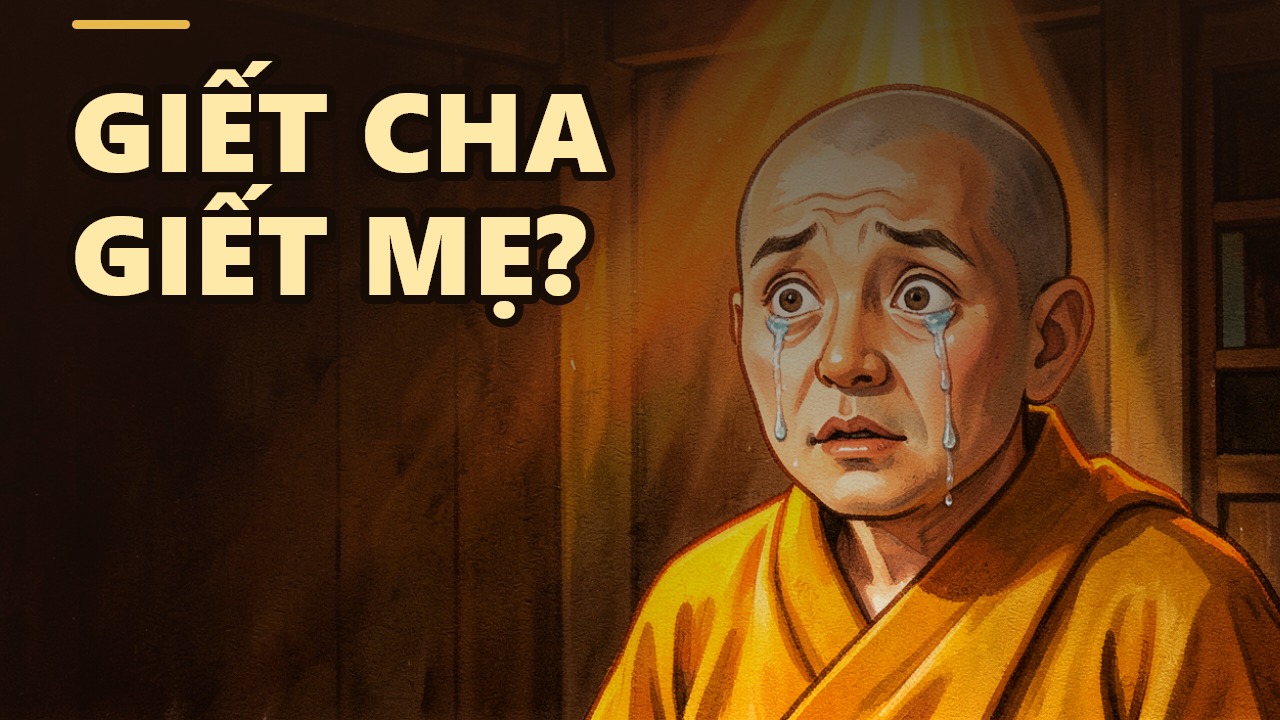
Venerable Thich Chan Quang’s teaching reveals the profound meaning behind the verse about "killing father and mother" in the Dhammapada. It reminds us not to judge others by their appearance, and to be cautious of our own pride. Have you ever seen a short, small person and briefly thought, "What is there to admire about this person?" Today, the Buddha shakes us with a shocking statement: "That monk has just killed his father and mother." Let us uncover the mystery of this strange verse, to see that it is not a terrible accusation, but a deeply profound lesson on ethics and wisdom.
## Killing Father and Mother? The Buddha's Shocking Verse
In the Dhammapada, there is a very unusual verse: "Having killed mother and father, having killed two Brahmin kings, having killed the kingdom and its subjects, one lives without sorrow." At first glance, it seems as if the Buddha is praising murder. In reality, He is using a skillful method to awaken understanding. The true meaning is: "A person who kills the father of craving and the mother of ignorance escapes suffering."
The Buddha uses jarring language to push listeners into a spiral of doubt, then slowly explains the truth. This sudden reversal is designed to wake up the mind.
## Father Is Craving, Mother Is Ignorance: Our True Enemies
In general teachings, parents are those who give birth to us. But here, the Buddha calls craving the father and ignorance the mother. These two forces lead us through samsara (cycle of rebirth). Craving gives rise to hatred, while ignorance is synonymous with clinging to self. We live in this world acting out of greed and anger, allowing ignorance to cover our wisdom. Only when we "kill" these metaphorical parents—by eradicating craving and ignorance—do we truly find peace and happiness.
## The Trap of Pride: Do Not Think You Will Attain Enlightenment Quickly
Hearing stories of Zen masters who attained enlightenment, many people assume that practice is easy and that they too will quickly achieve realization. However, this is precisely the trap of pride. The Buddha teaches that if one thinks they will attain enlightenment quickly, they will lose all blessings from merit. Therefore, each person should reflect deeply within: I am an ordinary being with low capacity; I must practice for a long time to achieve success. Through humility, one actually gains the opportunity for enlightenment in this life. "One must always think in their heart that it will take a thousand lifetimes to attain the Way. Those who think this way do not lose their merit."
## Repentance Is a Form of Morality
Ordinary people, when making mistakes, must know how to feel remorse and shame. These are beautiful virtues. But those who err without feeling regret or shame are incurable. Since we have not yet reached deep meditative concentration, let us use remorse as motivation to correct our errors, resolving never to repeat them again. "A person who makes mistakes without knowing repentance is incurable."
## Do Not Trust Appearances: Some Deceivers Wear Fine Cloaks
The Buddha tells of a short monk who was actually an Arhat. Master Shishuang in the Zen tradition also had an ugly appearance, yet he was an enlightened master. Conversely, there are people who always smile and speak warmly to us, but may be deceivers. Therefore, reduce your trust in appearances when judging others. Remember the story of the woodcutter’s son, who was protected and safe amidst the demons of Rajagriha because he constantly recited the Buddha’s name. This demonstrates the power of sincere mindfulness.
Through this story, let each of us adjust our own minds. Do not become wanderers in a world of appearances and afflictions (kleshas). Live with humility, know how to repent, and remain vigilant in reciting the Buddha’s name. Surely, the path of peace and joy will open before your eyes.
AI-assisted translation from the Vietnamese original.
Read in Vietnamese →