
Do Not Rush to Blame Others! Seek the True Cause of All Things
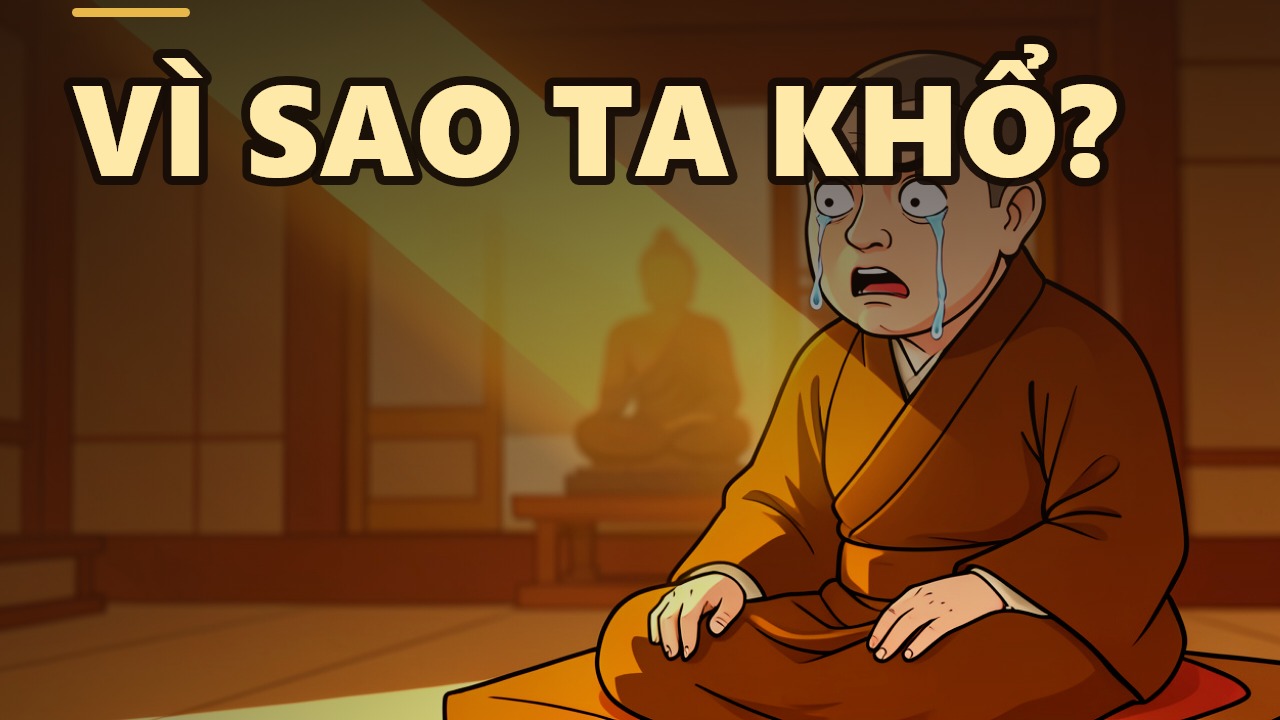
Why do some students excel while others struggle? Why are some people wealthy while others live in poverty? Why do some families experience harmony while others face constant conflict? We often rush to conclusions, saying, "It must be fate," or "It is because we are poor," or "The teachers did not teach well." But are these truly the real causes?
In a warm and intimate sharing of Dharma, Venerable Thich Chan Quang introduced a fascinating topic: finding the true cause. This lesson is not merely abstract theory; it is a vital life skill and a key to adjusting all aspects of our lives for the better.
## When We Misidentify the Cause, Our Corrections Only Make Things Worse
Everyone has experienced trying to solve a problem only to find it becoming more complicated. Venerable Chan Quang offered an example: when a student behaves poorly, parents quickly blame the teacher. But what fault does the teacher have? The real cause lies deeper. Similarly, couples who argue constantly may discover, upon inquiry, that their conflict stems from something as trivial as whether vegetables were boiled or stir-fried. Unable to find the root cause, they jump to false conclusions like, "He must have a lover," or "She no longer loves me," leading to misguided attempts at fixing the relationship.
"When we fail to find the true cause, every attempt to heal becomes more erroneous, and every correction makes things worse."
Venerable Chan Quang shared a very real story. A senior monk invited him to visit a newly built temple, lamenting that despite its beauty, no devotees came to worship. The teacher explained that even feng shui was not the root issue. The true cause lay in whether the abbot had formed karmic connections with sentient beings. If he had few good conditions from past lives, or if he had planted seeds of resentment, people would naturally not think of visiting the temple this life. To fix this, one might adjust the feng shui temporarily, but long-term improvement requires rebuilding connections by visiting households persistently over three or four years.
"The real cause is the connection... In past lives, you did not form good karmic ties with the sentient beings here."
## The Buddha’s First Teaching: The Ultimate True Cause
The world has countless problems, each requiring different methods to identify causes. However, only the Buddha could see through to the very root of everything. Upon attaining enlightenment, He taught His first dharma talk to the five ascetics led by Kondañña: the Four Noble Truths. These truths address suffering (dukkha), the origin of suffering, the cessation of suffering, and the path leading to the end of suffering.
"Only the Buddha saw the true cause behind every aspect of life. Before Him, no one could see it. After Him, no one can say otherwise."
The first truth the Buddha revealed is that life involves suffering. Many perceive life as joyful, but enlightened beings see that beyond such joy lies pain. What is the root of this suffering? The Buddha clearly stated: ignorance and attachment. We often blame our suffering on others, on poverty, or on disability. Yet these are merely superficial causes. The deep roots lie in delusion and craving, which those who have not practiced deeply cannot fully understand.
## Academic Success and Failure: Seeing Causes Correctly Opens Wisdom
Consider the matter of education. Why do some students succeed? Many attribute it to intelligence or diligence. However, the perspective of the Buddha's teachings goes deeper. Venerable Chan Quang identified three crucial causes from past lives: respecting teachers, teaching wholeheartedly without withholding knowledge, and always supporting the learning of others.
"To become a teacher, one must first respect teachers. If you study without honoring your instructors, do not expect to excel."
If one did not plant enough seeds in past lives, is it too late to save oneself in this life? The teacher said that while becoming exceptionally brilliant may be difficult, achieving moderate success is possible. One can plant new seeds by paying daily homage to the Buddha with absolute reverence, which opens wisdom. Cultivating compassion for all sentient beings is also a cause of wisdom. Surprisingly, the more we love, the more naturally intelligent and clear-minded we become.
## Do Not Let Arrogance Destroy Your Merit and Wisdom
The cause of losing wisdom is equally clear: when we are skilled, we look down on others, believing ourselves superior to all. Such arrogance destroys all merit related to wisdom. Venerable Chan Quang emphasized strongly, "Anyone who does not believe this loses half their life." Therefore, wise individuals must remain humble, emulating the earth, which accepts everything to hold all blessings.
## Start Today: Find the Cause in Every Breath
To uncover the true cause, we cannot rely on ordinary thinking or guesswork. We need wisdom, which arises only through practice. Begin by paying homage to the Buddha, cultivating compassion, and living humbly. Whenever unusual events occur, instead of rushing to blame others, turn inward and examine yourself. Ask, "What karma created this result?" Do not rush to fix things; seek the correct root first.
There is a story about a girl who fell ill due to the guitar music played by her neighbor every night as he courted someone else. It sounds strange, but it was the true cause. When our mind is sufficiently calm, we realize that subtle psychological vibrations can lead to great disasters. By seeing this, we can correct the root issue and build a genuinely peaceful life.
Each of us can become a "doctor" for our own destiny if we learn to see correctly. Today, in this present moment, begin to listen, reflect, and practice. This is the path that leads us out of confusion and toward nirvana right within our daily lives.
AI-assisted translation from the Vietnamese original.
Read in Vietnamese →