
Do Not Trust Your "Likes": Instinct and the Path of Practice
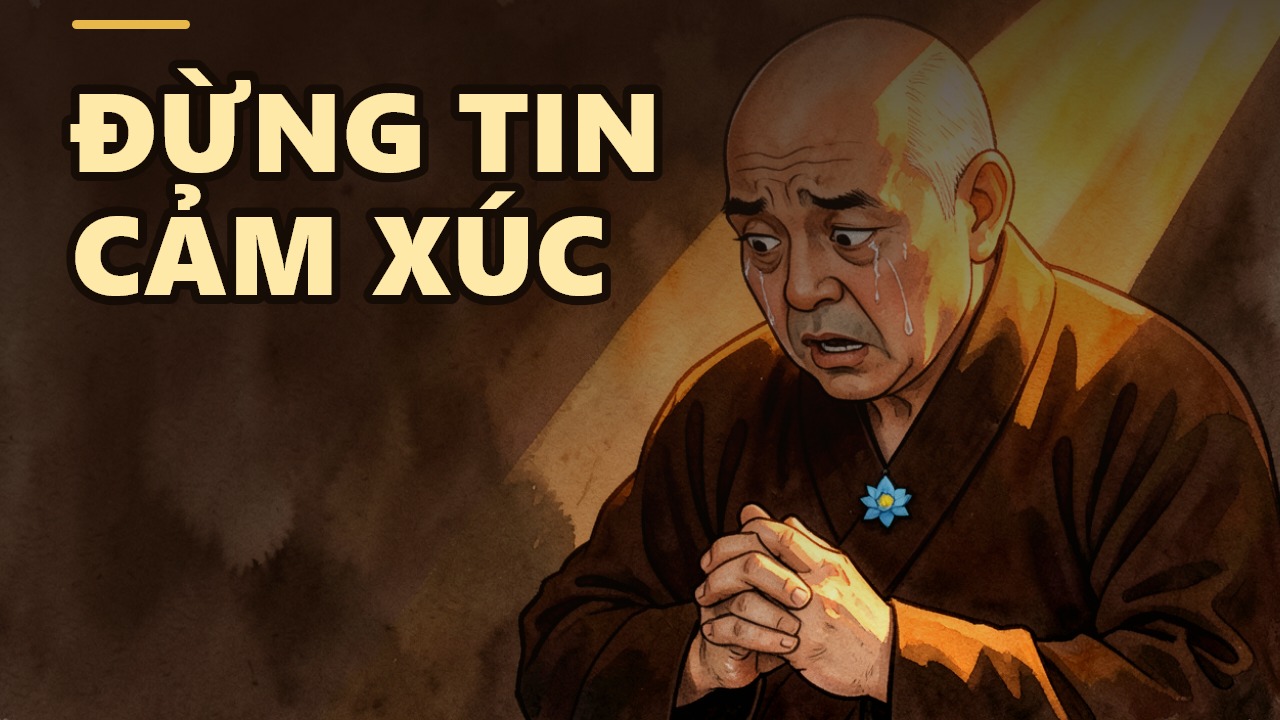
Have you ever wondered why you do something you know is wrong? The reason lies deep within your mind/heart: natural instincts act like pre-installed programs. And they are far more powerful than we think.
The Invisible Weapon in the Soul
Instincts are natural tendencies in the soul that arise without learning, simply by being. Like hunger urging us to eat, or sexual attraction drawing men and women together. These seem ordinary, yet they possess tremendous power. Venerable Thich Chan Quang clarifies this point:
"Instincts are considered natural and normal. But if pushed into certain circumstances, we will see their terrifying strength."
When hunger becomes fierce, people can lose their dignity; when lust is suppressed, evil-doers may commit grave crimes. Instinct is not merely "natural"—it is a hidden force capable of overturning all moral values.
No One Truly "Runs Out" of Instinct
It is important to note that instincts do not disappear with age. An elderly person of seventy or eighty years, leaning on a cane and trembling, still retains these natural tendencies intact. However, the difference between a dignified sage and a criminal lies not in the presence of instinct, but in the ability to restrain it. The Master advises:
"People differ based on whether they have restraint or not; everyone still harbors secret desires inside."
Therefore, a person’s value does not lie in having no darkness, but in having enough mindfulness and willpower not to indulge in it.
Fight or Surrender?
The modern world often praises absolute freedom: "Do whatever you like." Yet this is precisely the easy path that leads us away from humanity. The Master draws a clear distinction:
"What is an animal? Completely indulging instinct. What is a human? Struggling and fighting against instinct."
When we accept as natural that "everyone is selfish," we are surrendering. People invent arguments and philosophies to justify this capitulation—but in reality, they are merely covering up a defeat before themselves. Thus, the Master warns:
"Do not assume that whatever you like should be done. You must deeply doubt what you like. Because most things you like come from instinct. And instinct is the path to the realm of animals."
However, this does not mean we reject all preferences. The key is to observe and distinguish which instincts need taming and which healthy hobbies can be nurtured. Clarity is the essential tool.
Freedom or Liberation?
We often confuse "liberation" with "freedom." Many translate liberation as freedom—doing whatever one wants. But the Master explains very clearly:
"Liberation is the state of a noble one, while freedom is the instinctual tendency of an ordinary person. These two cannot be defined as the same."
Practitioners do not seek unrestrained freedom, but liberation from the bonds of instinct. Only when we are no longer dominated by instinct can our minds truly find peace and ease.
Education Begins with Restraint
Teaching children follows the same principle. A child prefers playing with friends over parents because of the sense of freedom and comfort. With parents, however, they must maintain etiquette, which tires their mind/heart. The Master advises parents to create a relationship that balances reverence and comfort, so the child is not driven out to the streets where many temptations await. This is the art of education—combining love with discipline, without indulging the child’s instincts.
The Journey to Becoming a Perfect Human
From stories about instinct, the Master guides us toward the noble goal of Buddhist practitioners: eradicating the three fetters—selfishness, doubt, and attachment. When achieved, we become perfect humans, no longer wrestling with base desires. This path begins with recognizing and mastering our own instincts.
Begin by observing yourself, so that each "like" is no longer your master, but only your servant. Practice is a silent battle, but the reward is liberation—a true freedom, unbound by instinct.
AI-assisted translation from the Vietnamese original.
Read in Vietnamese →