
Wrong That We Think Is Right, Right That We Think Is Wrong: Are You Mistaken?
A dharma talk by the Venerable Thích Chân Quang on verse five of the Dhammapada opens the story of Sariputta and Moggallana, along with a lesson on right view and wrong view, inviting us to look again at the "right and wrong" in our own lives.
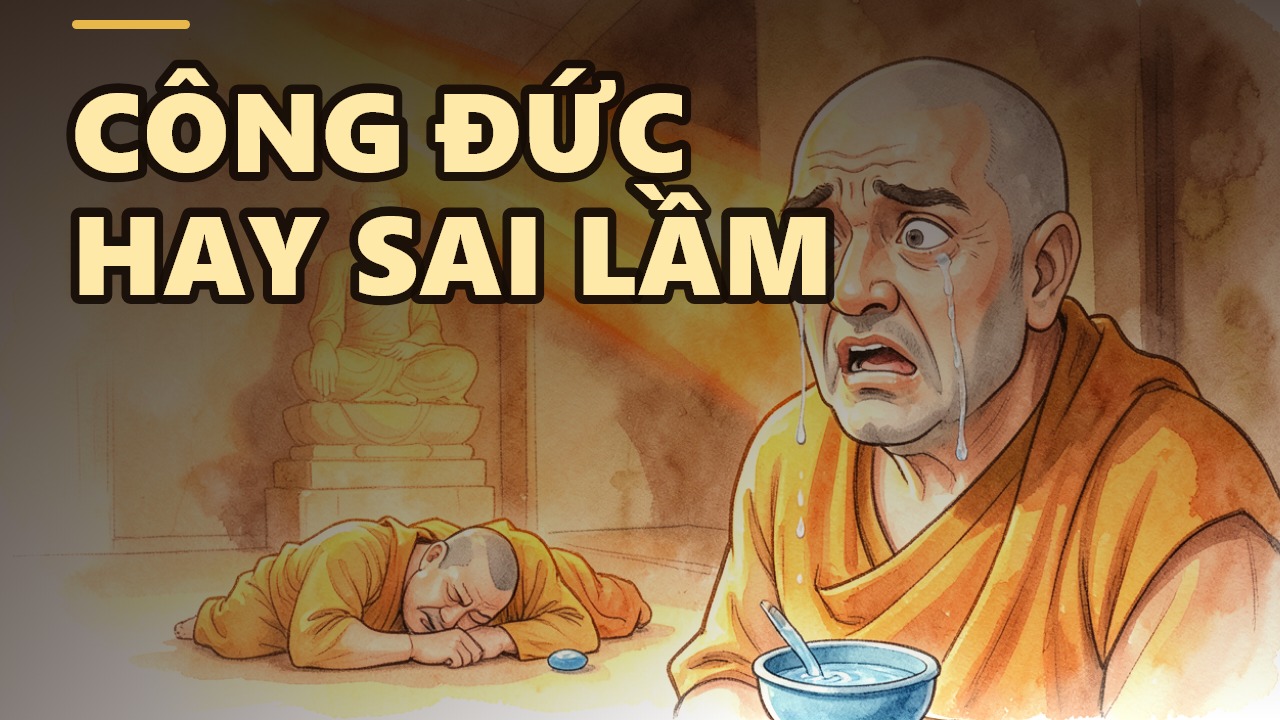
Have you ever believed you were doing something of great merit, only to find out it was actually a mistake? In life, we are often very confident in what we think and what we do. But is what we believe always the truth? The Buddha offered a profound lesson in the Dhammapada, and this dharma talk by the Venerable Thích Chân Quang will startle us into awareness.
The Story of Two Friends and a Teaching of the Buddha
The story goes that Sariputta and Moggallana were close friends who set out together in search of the truth. They studied with many teachers, among them Sanjaya, an ascetic famous for his large following. But when they heard a verse from Assaji, a disciple of the Buddha, both of them woke up and recognized the great truth. They went to Sanjaya to persuade him to come along, but their old teacher refused, replying with deep disappointment: "In this world, the foolish outnumber the wise. Those who have wisdom go to Gotama, while the foolish come to me. I need the crowds for my fame."
Sanjaya believed that having many disciples meant success, meant being right. In truth, he had chosen the crowd over the truth. The Buddha taught this verse:
"Wrong that we take for right, and right that we take for wrong. Sheltered within wrong view, we stand outside the path to enlightenment."
After the two great disciples left, all of Sanjaya's followers departed as well, and he coughed up blood and died. Such is the price of clinging to what is wrong while believing it is right.
When What We Believe Is Merit Is Not
In life, there are many things we expect to bring merit, yet they offer no spiritual benefit. Teacher Thích Chân Quang gives the example of the ancient fire-worshipping sect. People believed that making offerings of fragrant oil into the fire would carry their prayers up to heaven as the flames rose. They thought that bowing to fire was a great act of merit, but this was a misunderstanding. "Wrong is wrong, and if you keep clinging to it, it truly leads to rebirth in the lower realms."
Today, we too can be tempted by external forms of practice: visiting temples often, chanting sutras often, while forgetting the heart of compassion and wisdom. If we merely chase after outward forms without changing our mind to seek the truth, we may be falling into wrong view in the most subtle way.
How Can We Know Right from Wrong?
The Buddha taught that we must know clearly: when something is right, know that it is right; when it is wrong, know that it is wrong. What matters is to have wakeful awareness, not to blindly follow the crowd, and not to believe anyone without practicing and reflecting for ourselves. When we look into our own mind, we will see what leads to peace and liberation, and what only creates more afflictions (kleshas).
Applying This to Modern Life
In today's society, so many people chase after fame, wealth and the crowd, just as Sanjaya did. They believe that being well known is what gives life value, but when they look back, they realize they have lost themselves. Let us often ask ourselves: "Does what I am doing bring truth, compassion, and wisdom?" If not, we may be standing outside the path to enlightenment.
The Buddha's lesson is a gentle reminder for each day: let us hold our beliefs a little less tightly, and open our hearts to the truth. When we turn toward right view, the path of liberation draws so much closer. From now on, in every action, let us kindle right view, so that each step we take is a step of peace on the shore of awakening.
AI-assisted translation from the Vietnamese original.
Read in Vietnamese →