
Don't Be a Burden on Life: Four Things to Have in Abundance in Order to Become a Place of Refuge
Thầy Thích Chân Quang teaches: lacking health, knowledge, virtue, or merit makes us a burden; having these four in abundance makes us a place of refuge for others.
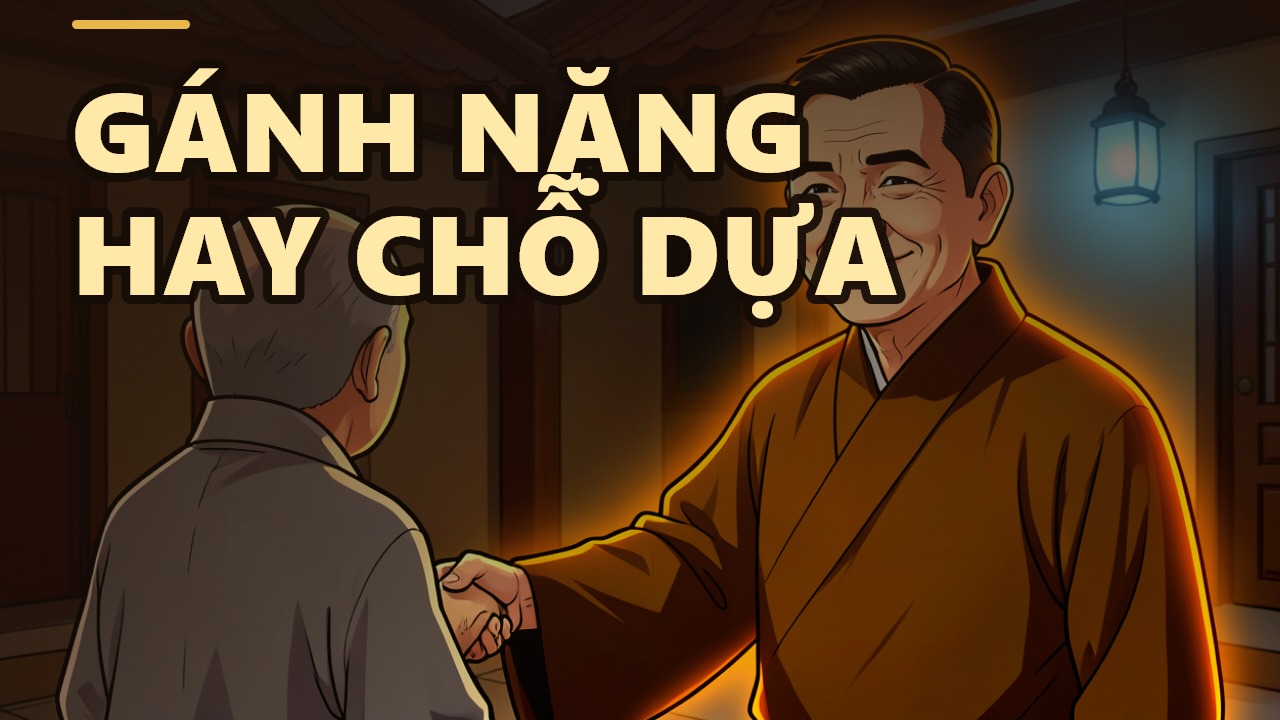
Have you ever walked into a room and wondered, "How are people looking at me?" Do they ignore you, turn away, or smile in greeting? Thầy Thích Chân Quang has pointed out that these very glances reflect your destiny. In his dharma talk "Don't Be a Burden on Life," Thầy invites us to look inward: is our presence a burden, or a place of refuge for others?
Four glances, four destinies
Thầy tells us there are four attitudes people may have when they see us: they ignore us, they frown and turn away, they smile and nod, or they run up to welcome us. These four attitudes reveal which of two roles we are playing: burden or refuge.
"Remember this: one, we are a burden to others. Two, our presence becomes a support, a source of joy, happiness, and well-being for others."
In childhood, we are a burden to our parents. In old age, we become a burden once again. But human value lies in the years between, when we have health, intelligence, and knowledge. If even then we remain a burden, our very existence is truly a misfortune.
Why do we become a burden?
Thầy explains: whether we become a burden or a refuge comes down to two words, "lacking" and "abundant." When we lack health, knowledge, virtue, or merit, we drag others down. Conversely, when we have these four in abundance, we become a refuge and a comfort to everyone.
"A person who lacks merit will become a burden to others. A person who has merit in abundance will become a refuge for others."
Health and knowledge: two things to have in abundance
When we lack health, we must rely on others to feed and care for us. With health, we can help everyone, climbing trees to pick coconuts, repairing houses, building roads. Thầy gives the example of a hunting party: when one member is injured deep in the forest, the whole group must stop to carry him. That is a burden.
When we lack knowledge, we can easily cause disaster. A careless welder can burn down an entire building, costing sixty lives. Conversely, a person with knowledge can save a child having a febrile seizure by knowing what to do. Knowledge is never superfluous. Learn a little more each day, for one day you may save a life.
Virtue: burden or refuge?
Virtue is the trust that people place in us. A person lacking virtue causes trouble every time they open their mouth, leaving family and neighbors anxious. Conversely, a person of virtue is always sought out for judgment and advice. Thầy tells the story of a father whose child did wrong. Instead of blindly defending his child, he went to apologize and cared for the victim. He became a pillar of the whole community.
Merit: borrowing and repaying debt
When we lack merit, we must borrow, borrowing money, borrowing help. Thầy warns about unsecured lending: "Loans with no collateral" sounds appealing, but afterward we may lose our entire home. And the root of all debt is the debt carried over from past lives. Thầy teaches that love in this world is itself a debt:
"Love in this world is never real; it is nothing but debt."
Therefore, we must repay that debt by creating merit and cultivating practice, so that in a future life we may be wealthy and repay our benefactors. If not, we will repay our debt in a state of poverty, or even as an animal, repaying with our flesh and our bones.
Conclusion: Strive to live in abundance
These four things, health, knowledge, virtue, and merit, we must strive to cultivate without pause. Thầy emphasizes: "These four things we must bring to fullness in our lives." Train the body, learn every day, live gently, and make merit without hesitation. When we live in abundance, we become the refuge of our family, our community, and all beings. That is the secret of a meaningful life, not being a burden on life, but helping to lift life up.
AI-assisted translation from the Vietnamese original.
Read in Vietnamese →