
Do Not Call Them "Ghost" – You May Be Diminishing Your Own Merit
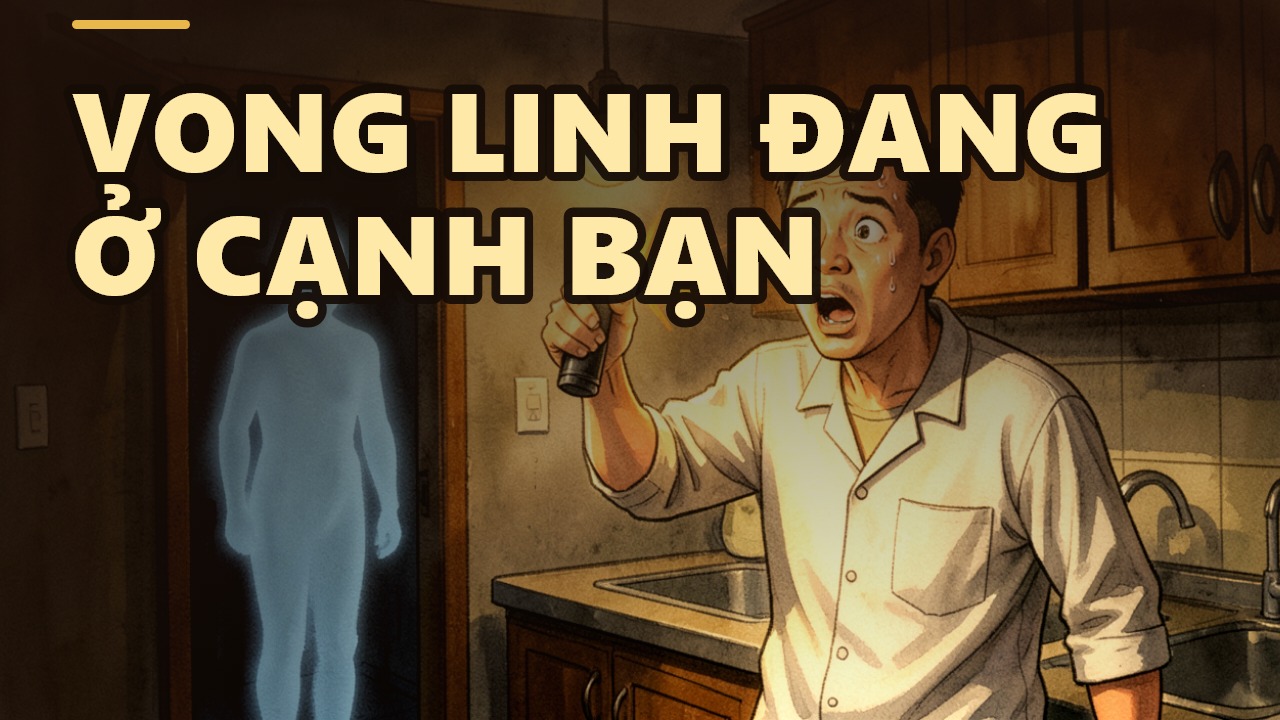
Have you ever heard strange noises in your house at midnight and wondered, "Is it a ghost?" Then you tell your friends, "There is a ghost in my home." But did you know that using such language might diminish your blessings from merit? In the dharma talk titled "Ghosts and Demons," Venerable Thich Chan Quang reveals many interesting and important truths about the metaphysical world that we often misunderstand.
### Are Ghosts and Demons Real? The Buddha’s Clear Teaching
The Buddha taught clearly that anyone who does not believe in heavenly realms or hells holds a form of wrong view. In a sutta addressed to Brahmins, He listed erroneous views that lead sentient beings to fall into lower states. One of these errors is denying the existence of metaphysical realms.
To deny the existence of heavens and hells is considered a type of wrong view.
Venerable Chan Quang emphasized that many people claim to be Buddhists yet reject the reality of hell and heavenly realms. This is a mistake. The realm of ghosts and demons also exists. Understanding them correctly helps us preserve our blessings from merit.
### Do Not Call Them "Ghost"
In Vietnamese culture, people often refer to departed spirits as "con ma," which translates literally to "ghost child" or simply "ghost." While this sounds familiar, it is actually quite disrespectful. Why? Because the word "con" is typically used for animals. By using it, we demean the deceased, who might even be our own ancestors.
Using the term "ghost" deeply offends those who have passed away.
When offended, these sentient beings may cause disturbances, leading to a loss of merit for us. Therefore, we must be careful with our words. If we do not know who they are, let us respectfully call them "departed spirits" or "the deceased."
### Why Do Ghosts Often Linger in Bathrooms and Kitchens?
Venerable Chan Quang shared an interesting truth: ghosts and demons frequently visit two places in a home—the kitchen and the bathroom. They go to the kitchen because they are hungry and seek leftover food. They linger in the bathroom because the foul odors attract them. This relates directly to their karma and ours.
The bad smell of a bathroom attracts spirits because their merit corresponds to that type of scent.
Each being has a unique "level" expressed through body odor, preferences, and perceptions. Those with high merit emit pleasant fragrances, while those with less merit emit unpleasant smells. Since ghosts and demons possess low merit, they are drawn to foul odors. This is not superstition; it is the law of cause and effect (karmic law).
### Interacting Correctly with Ghosts to Preserve Merit
The needs of ghosts and demons resemble human desires but are often more negative: hatred, selfishness, greed, and lust. They may cling to beautiful people or those with karmic debts. However, if we cultivate spiritual power through practice, bowing to the Buddha, and generosity, they dare not approach us. It is crucial to understand them correctly so we are not deceived by superstition.
People say there is a ghost in the house and ask a shaman for a talisman to suppress it. Little do they know that the talisman brings ten more ghosts along with it.
Many people, fearing ghosts, seek out shamans or fortune-tellers, but this only worsens the situation. Instead of fear, maintain a pure mind, live virtuously, and help suffering spirits by reciting the Buddha’s name and dedicating merit to them. This is the correct way to interact.
### Lessons from Meditation: Caring for the Lowest
In meditation, the principle is to bring the mind down to the lowest point, near the abdomen, to tame it. Venerable Chan Quang applies this principle to daily life.
The mind usually resides high up, in the head. But to tame this restless mind, we must focus on the lowest place.
This means that to improve the world, we must care for the poor, the marginalized, and the suffering spirits. When we uplift them, society progresses. This is the spirit of compassion that every Buddhist should practice.
Understanding ghosts and demons correctly is not meant to create fear, but to foster a respectful attitude free from insult and superstition. Start with small actions: change how you speak, recite the Buddha’s name, and dedicate merit to all sentient beings. Each of these acts increases your own merit.
AI-assisted translation from the Vietnamese original.
Read in Vietnamese →