
Do Not Hesitate When Doing Good: The Story of the One-Robed Man and Immediate Karmic Results
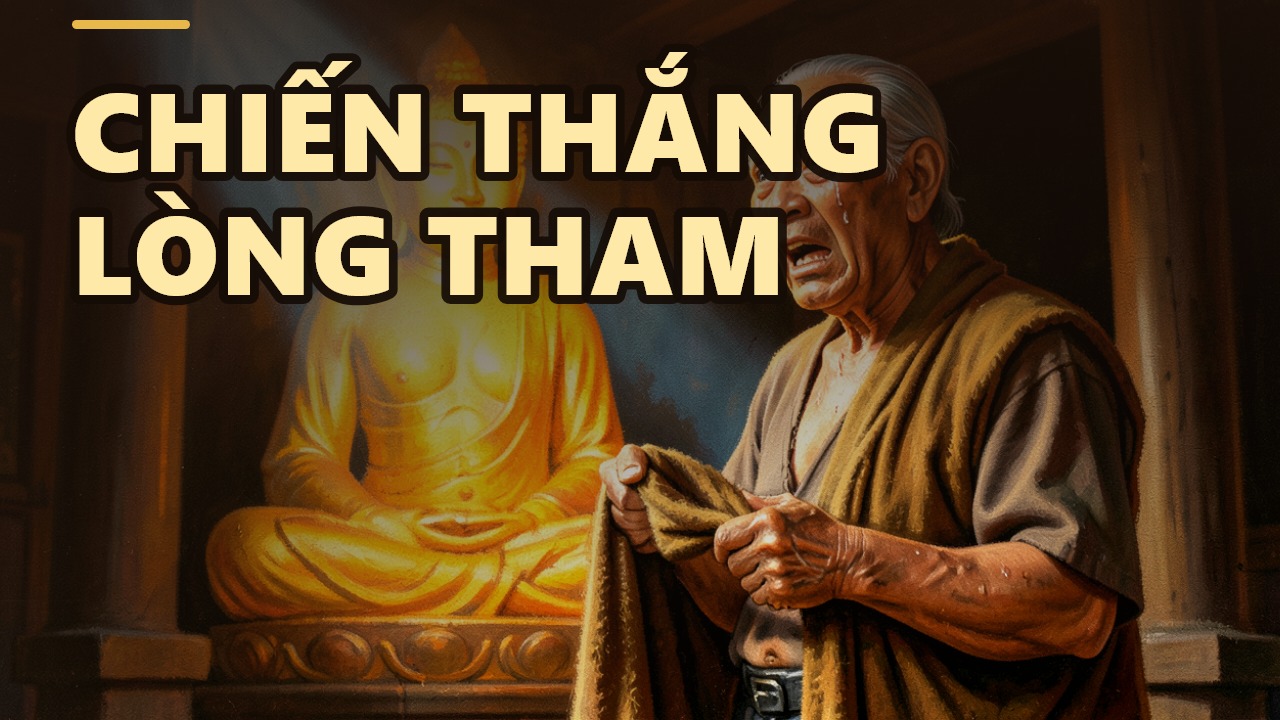
This is the story of a poor man who had only one robe to offer the Buddha during a night festival. He received immediate blessings of wealth in return. The lesson is clear: do not delay doing good, for even a moment’s hesitation allows unwholesome thoughts to take hold.
There was an old man so destitute that he possessed only a single garment. The villagers called him "the one-robe man" because whenever they saw his robe drying in the yard, they knew he was inside naked. At night, he waited until it was fully dark before crawling out, putting on his robe, and continuing his difficult life.
## The Decisive Moment of the Poor Man with Only One Robe
One night, he heard that the Buddha would be giving a dharma talk at the monastery, and King Pasenadi would also attend. He eagerly went to listen, but when the Buddha began to speak, he was captivated by the voice and compassionate presence of the Enlightened One. A desire arose within him to make offerings, yet his only possession was the robe he wore. He struggled with this thought all night long: should he offer his last remaining garment?
Finally, as dawn broke, he decided to make the offering. He removed his robe, placed it before the Buddha, and exclaimed, "I have won!" For he had conquered his own stinginess and attachment. King Pasenadi, moved by the man’s determination and sincere heart, bestowed many new robes upon him. The man offered those robes back to the Sangha, and the king continued to give rewards until the man became wealthy and comfortable.
The Buddha taught: "Hasten to do good deeds so that your mind does not dwell on evil. Whoever delays in doing good will find their mind turning toward evil."
## The Lesson of Non-Hesitation in Doing Wholesome Deeds
The hesitation of the one-robe man diminished his merit. The Buddha stated that if he had made the offering early in the night, the karmic results would have been far greater. But because he deliberated, that merit was eroded. When performing wholesome actions, we must not delay, for the longer we wait, the more easily we nurture negative thoughts.
In daily life, many people feel stuck between deciding whether or not to help someone. Just a minute of indecision allows selfishness to arise, and the opportunity to create merit vanishes. Remember that external actions do not just bring blessings; they also strengthen our inner state. When we act with goodwill, that very action nourishes a wholesome mind and drives away unwholesome tendencies.
## Karmic Results Arrive Quickly When Karma Is Light
The one-robe man had karma leading to poverty, but no grave sins. Because of this, the karmic results arrived immediately. Venerable Thich Chan Quang offers an example: a gentle person went fishing with friends one day and suffered a minor fall from his bike on the way home. That person realized the karmic result came early as a warning, because his karma was light. For those with heavy karma, results may manifest in future lives.
We should not anxiously await karmic results. We should simply do good, and merit will arrive at the right time, like flowers blooming when the season comes. We need only tend to the garden, without worrying about whether the flowers will bloom.
## How Ordinary Beings and Bodhisattvas View Karmic Results
Venerable Thich Chan Quang explains that there are two different perspectives. Ordinary beings often perform merit hoping for personal happiness in return. However, bodhisattvas clearly understand where karmic results lead and utilize them to continue saving sentient beings. When a bodhisattva helps a poor person, they calculate that this assistance creates conditions for that person to later hear the Dharma, practice, and attain liberation.
Venerable Thich Chan Quang shares: "Ordinary beings think of karmic results to seek happiness for themselves. Bodhisattvas think of karmic results to use them for the benefit of all sentient beings."
## Responsibility to Family – Do Not Recklessly Give Away Shared Assets
The story of the one-robe man involves a bachelor, so he could offer everything he had. But for those with families, generosity requires consideration. Family assets are shared property and require mutual agreement. If one unilaterally uses shared resources for making offerings, one may create harm within the family.
The teacher emphasizes that in married life, a husband should care for his wife’s family, and a wife should care for her husband’s family. "You must handle your family’s affairs, and I will handle mine"—through this cross-care, the family becomes closer and happier. Conversely, if each spouse prioritizes their own natal family first, division easily arises.
## Doing Good Externally Strengthens the Wholesome Mind Internally
An important principle shared by the teacher is that external actions reinforce internal states. A child trained to bow respectfully before guests arrives learns humility through practice; their ego shrinks, and virtuous qualities flourish. Similarly, if you are prone to arguing, practicing listening and praising others helps reduce stubbornness.
The Buddha warns that all of us carry seeds of greed, hatred, and delusion. If we do not actively engage in wholesome deeds, unwholesome minds will arise spontaneously like weeds. Therefore, let us actively learn, reflect, and practice goodness every day.
Venerable Thich Chan Quang advises: "Doing good yourself builds power for the future. Encouraging others to do good ensures that your companions will be powerful and influential."
## Conclusion
Remember that every wholesome action brings merit, but merit is most complete when we do not hesitate. Do not wait for perfect opportunities, for unwholesome minds only wait for our negligence to slip in. Start today—with a smile, a word of encouragement, or enthusiastic sharing. By giving in the present moment, we plant seeds for a peaceful future. May you always walk steadily on the path of goodness.
AI-assisted translation from the Vietnamese original.
Read in Vietnamese →