
Don't Walk Alone: The Spiritual Strength of the Vietnamese People
Discover the power of Buddhism in the spiritual life of the Vietnamese people: the law of cause and effect (karmic law), the rise of spirituality in the twenty-first century, and the journey of practice to transform greed, hatred and delusion.
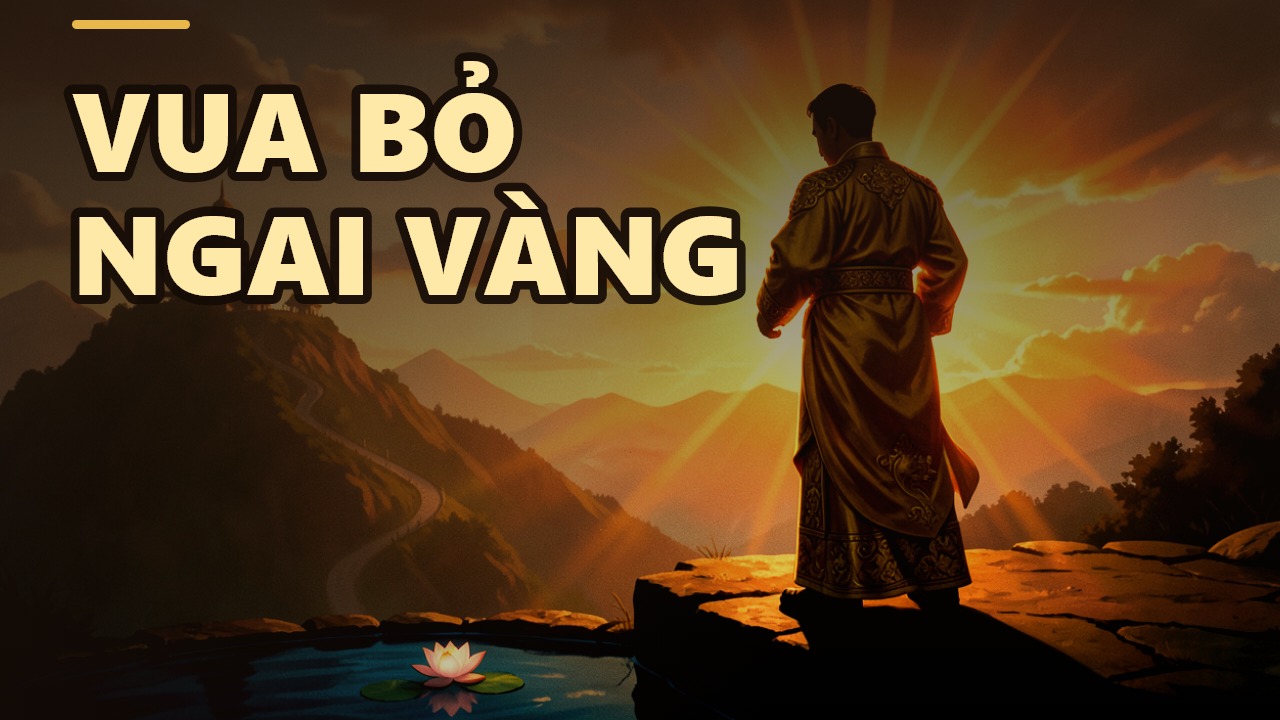
Do you know why a young king gave up his throne and fled to the mountains to become a monk? And why did that act change the attitude of an entire nation, from resentment to love, and then inspire them to rise up and defeat the most powerful enemy in the world? The longing to live in peace, to turn toward goodness, and to return to one's spiritual roots is not the story of any single person. It has quietly created a great strength for each individual and for the whole nation.
Spirituality in the Age of Science
In the seventeenth and eighteenth centuries, when science and technology exploded, many believed that spirituality and religion would be replaced. But reality has shown that the more technology advances, the more people turn toward their spiritual life. In a talk at a temple, Thích Chân Quang cited the observation of sociologists:
When science advances so far that we can fly to Mars and submarines can travel beneath the ocean, at that very moment spirituality and religion flourish strongly. And indeed, that is what happened. Religious movements arose, and among them Buddhism was restored and grew.
This shows that within every human being there is always a need to connect with the sacred, a refuge when facing the uncertainties of life.
The Law of Cause and Effect – The Foundation of Morality
One of the most fundamental teachings of Buddhism, and the one the Vietnamese people embrace most easily, is the law of cause and effect (karmic law). Thích Chân Quang said:
Plant melons and you harvest melons; plant beans and you harvest beans. That is the thought of Buddhism. Whoever lives gently in this world, helping others and treating them kindly, will receive blessings. But whoever lives cruelly, selfishly, competing and envying, will later carry that sin as karma left behind.
Believing in cause and effect (karmic law) helps people restrain themselves, not daring to do evil because they know they must bear the consequences. This is the very foundation of morality, something the law cannot replace. The law relies on coercion, while morality rests on willingness. And that willingness arises from faith in cause and effect (karmic law).
Buddhism – The Strength of the Vietnamese Nation
The Vietnamese people embraced Buddhism very early, as far back as the era of the Hùng Kings. Buddhism has walked alongside the nation, becoming a source of spiritual strength. The story of King Trần Thái Tông is a striking example. When the Trần dynasty came to power, the people could not help feeling resentment over the seizure of the throne from the Lý dynasty. But the news that the king had fled to become a monk moved their hearts. Thích Chân Quang recounted:
When people heard that there was a king who did not care for his throne and left to become a monk, the former resentment toward the Trần dynasty for taking the throne from the Lý... vanished in an instant. And from hating the Trần dynasty, they suddenly came to love it as they had once loved the Lý. How remarkable. And that love for the Trần dynasty bore fruit: we had the strength to unite and defeat the Yuan armies in three resounding victories.
Simply because a king believed in Buddhism, the people placed their trust and united. When united, the nation became invincible. Buddhism also accompanied the resistance wars against the French and the Americans, when many temples sheltered and hid resistance members, and many fighters meditated and recited the Buddha's name even as they fought. Buddhism is not merely a faith; it is part of the very flesh and blood, the spiritual strength of the nation.
Three Dimensions of Life: Material, Mental, and Spiritual
Human beings have three needs: material, mental, and spiritual. The material sustains our eating, clothing, and shelter. The mental brings knowledge and feeling, lifting us above the animals. But the spiritual is the highest level. Thích Chân Quang explained:
What is spirituality? Spirituality is what we cannot see, what science has not yet seen. That is why it is easily misunderstood and can become superstition. But spirituality is real.
Through intuition, we sense that although this body will perish, the mind and the karma continue. This is reflected in the words of Uncle Hồ in his testament: "I write these lines in case I should go to meet Uncle Marx and Lenin." He did not believe that death was the end, but that he would continue passing on his experience to later generations. That is spirituality, faith in a boundless life.
Practice – Transforming Greed, Hatred and Delusion
Many people say: I believe in cause and effect (karmic law), so I do not need to go to the temple. But Thích Chân Quang emphasized:
Believing in cause and effect (karmic law) is one thing, but one must also come to the temple to practice daily, weekly, monthly, in order to destroy one's own greed, hatred and delusion.
Belief alone is not enough, for when greed, hatred and delusion arise, we may still do wrong. Practice, reciting the Buddha's name, and sitting in meditation help us remain continually awake, master our own mind, cultivate morality, and transform our inner life. In this way, each person who practices contributes to protecting the flowing stream of the nation's spiritual culture.
Conclusion
Buddhism is not a foreign religion; it is a living source, the spiritual root of the Vietnamese nation. In this turbulent age, let each of us take time to enter the temple, listen to the sound of the bell, sit in meditative concentration to calm the mind, and study the teaching of cause and effect (karmic law). Because you should not walk alone – let the wisdom and compassion of the Buddha illuminate and guide you on every path.
AI-assisted translation from the Vietnamese original.
Read in Vietnamese →